


US Midterm Elections: Broadcast Television Secures Nearly Half Of Record Political Ad Spend
Broadcast television is projected to secure 48 per cent of the $11.6 billion political advertising budget for the 2025-26 US midterm elections, defying the broader shift towards digital and streaming platforms.
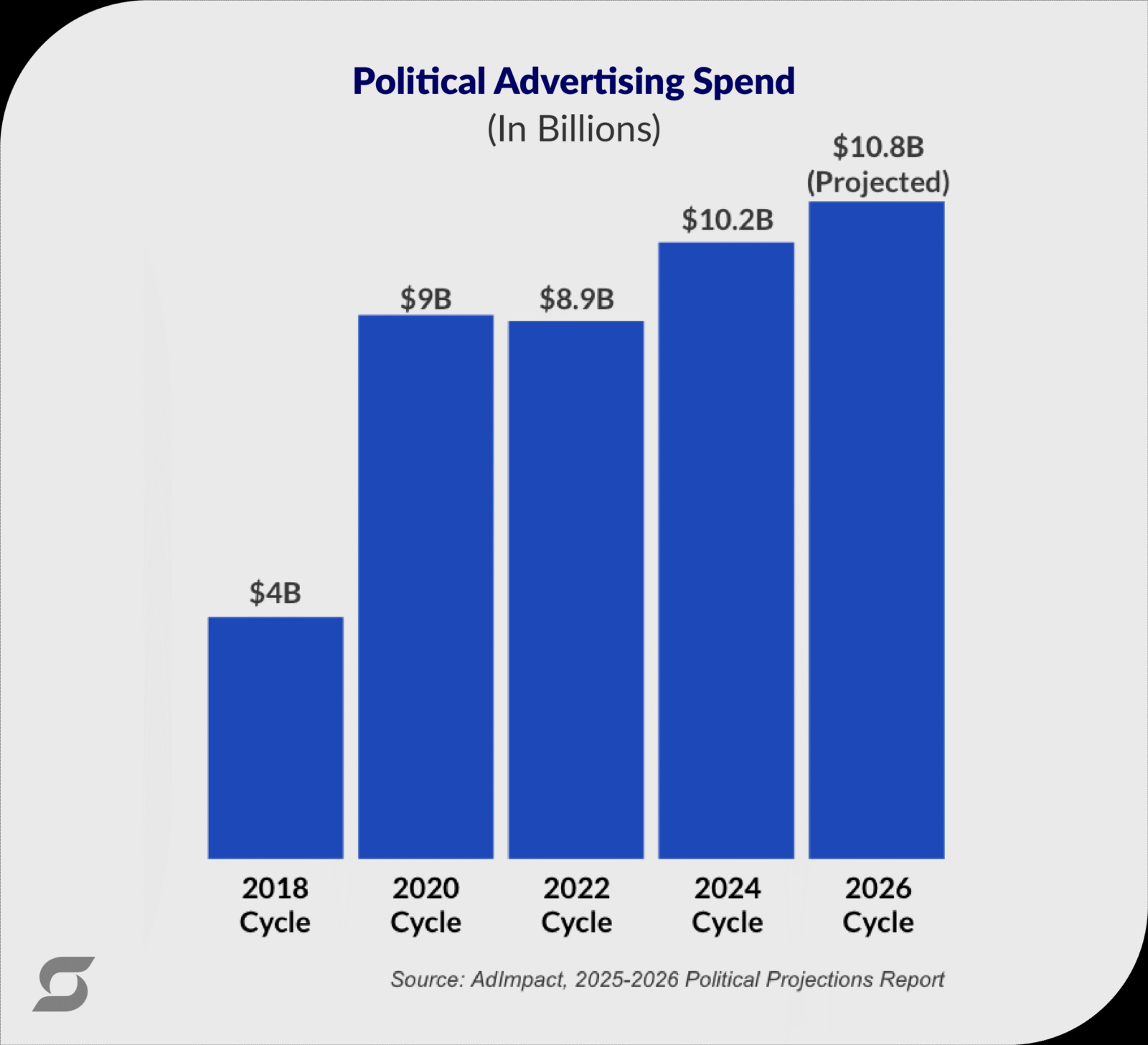
WASHINGTON, US: Broadcast television is poised to capture nearly half of all political advertising expenditure ahead of the United States midterm elections, demonstrating the continued influence of traditional airwaves. According to advertising intelligence firm AdImpact, local broadcast stations are set to benefit from a record-breaking election cycle, even as general advertising dollars increasingly migrate to digital platforms.
The 2025-26 election cycle is forecast to be the most expensive in history, with total political spending projected to reach $11.6 billion (approximately Rs 97,000 crore). This figure surpasses the $11.2 billion spent during the 2024 presidential election and the $8.9 billion recorded in the 2022 midterms. Of this total budget, an estimated $5.6 billion, or 48 per cent, is expected to flow directly to broadcast companies.
This dominance stands in notable contrast to the general advertising landscape. Broadcast television accounts for merely 7.7 per cent of the more than $470 billion in overall US advertising spend for the year, as per Magna data published by S&P Global. However, publicly traded broadcasting giants such as Nexstar, Gray Media, Sinclair, and E.W. Scripps are positioned to reap significant financial rewards from this political windfall.
Industry experts attribute this resilience to the unique demographics and reach of local television. Daniel Kurnos, an equity research analyst at StoneX, noted that political campaigns must focus on local geographies. "It’s still a local game... you have to win counties," Kurnos stated, adding that campaigns must "cater to the demos that vote". Furthermore, broadcast audiences remain highly engaged, with Nielsen reporting that broadcast captured 19.5 per cent of television use in July, narrowly edging out cable at 18.7 per cent.
The preference for traditional media is deeply rooted in voter trust and perceived reliability. Brad Seitter, chief executive of the local broadcast trade organisation TVB, emphasised that "nothing moves the needle in polling like running an ad on broadcast TV". He argued that while social media is saturated with content, viewers inherently trust their local broadcast news, making them more receptive to political advertisements placed within those slots. A TVB study corroborates this, revealing that 42 per cent of Democrats and 49 per cent of Republicans consider broadcast or cable television the most influential advertising medium for their voting decisions.
Terry Nelson, a founding partner at Plus Communications, highlighted the cost-efficiency of reaching diverse audiences through live events like NFL games on traditional networks. Despite streaming leading overall television consumption at 49 per cent, the targeted nature of political messaging keeps legacy broadcasters at the forefront of campaign strategies.
As the midterm elections approach, the strategic allocation of funds underscores a calculated reliance on established media. While digital platforms continue to expand their overall advertising footprint, the political sector's steadfast investment in broadcast television highlights the significant value of local reach and institutional trust in shaping electoral outcomes.
Latest



Top stories

Russia News

Live Events