

Virginia teen's math model for earthquake sensors reaches national science finals
Fourteen-year-old Isabel Rossi used economic modelling to optimise seismic sensor placement, earning a spot among the top 30 finalists in the 2026 Thermo Fisher Scientific Junior Innovators Challenge.
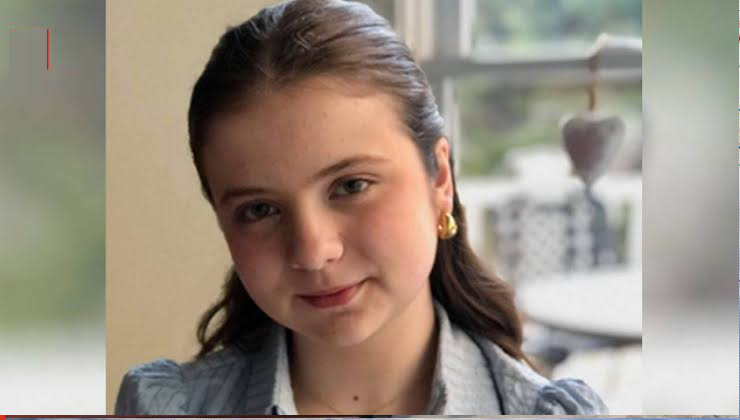
WILLIAMSBURG, US: A 14-year-old student from Virginia in the United States has been named among the top 30 finalists in a national science competition for her mathematical model that optimises earthquake sensor placement. Isabel Rossi’s six-month research project demonstrated that adding just five sensors could improve simulated detection coverage by 16.7 per cent.
Rossi, a freshman at Jamestown High School, developed the project titled 'Listening in the Right Places: Game Theory and Optimization for Earthquake Sensor Placement' while she was in the eighth grade at James Blair Middle School. The 2026 Thermo Fisher Scientific Junior Innovators Challenge, organised by the Society for Science, selected her work from a pool of nearly 10,000 applicants across the country,.
The competition evaluates students not only on their science research projects but also on their demonstration of collaboration and critical thinking skills during team challenges, emphasising the value of teamwork in STEM fields.
To address the challenge of balancing reading accuracy with ease of installation, Rossi applied mathematical modelling systems typically used in economics, specifically the weighted sum model and Nash bargaining. She utilised a data library of earthquake records from the Los Angeles region to test her simulations. 'Such mathematical approaches are new and valuable tools,' Rossi noted, adding that the methods are particularly useful in high-risk, hard-to-access areas with limited resources.
The 30 finalists will travel to Washington, D.C., for the finals week from October 23 to 28. Each finalist receives a cash award of $500 (approximately Rs 41,000) and will compete for a total prize pool of over $100,000 (over Rs 83 lakh), which includes a $25,000 (Rs 20 lakh) grand prize,.
Rossi’s achievement is notable as she completed the research independently, without the guidance of a teacher or external mentor. 'I am so completely in disbelief,' she said. 'I did it all by myself; that’s why I’m so happy since it shows you don’t need a world-famous mentor or unlimited resources to do good research. I hope to inspire other kids to do science projects, too. Science is for everyone'.
Her work highlights the growing intersection of game theory and seismology, offering a cost-effective framework for disaster preparedness in resource-constrained environments. By applying economic models to geological data, Rossi has provided a scalable solution that could significantly enhance early warning systems without requiring extensive infrastructure investments.
Rossi comes from an academic family; her mother, Margarita Marinova, is an English professor at Christopher Newport University, and her father, Enrico Rossi, teaches physics at the College of William & Mary. She also credits her older sister, Eleanor, for sparking her early curiosity in science through chemistry and physics sets.
Beyond her research, Rossi is actively involved in her school community, coaching the mathematics competition team and organising an annual STEAM night to encourage younger students. As she prepares for the national finals, her project stands as a testament to the impact of independent, student-led scientific inquiry in addressing real-world engineering challenges.
Latest
Top stories
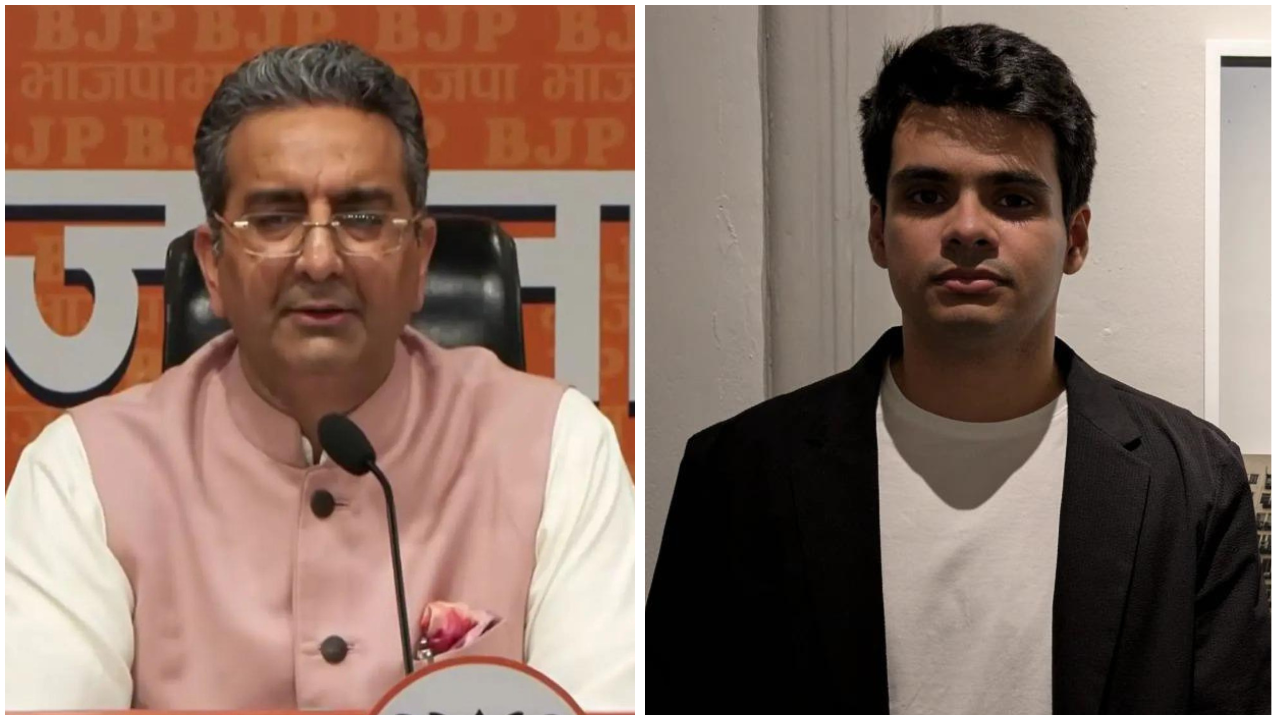
‘Rahul Gandhi, Raihan Vadra’: BJP takes 'launch' jibe as photo exhibition row escalates
Russia News


Live Events