
India vows to safeguard interests as Bangladesh reviews 101 bilateral pacts
New Delhi says it will take all necessary steps to protect national interests after Bangladesh’s interim government began auditing about 101 agreements signed under the previous Awami League rule, covering transit, energy and infrastructure projects.
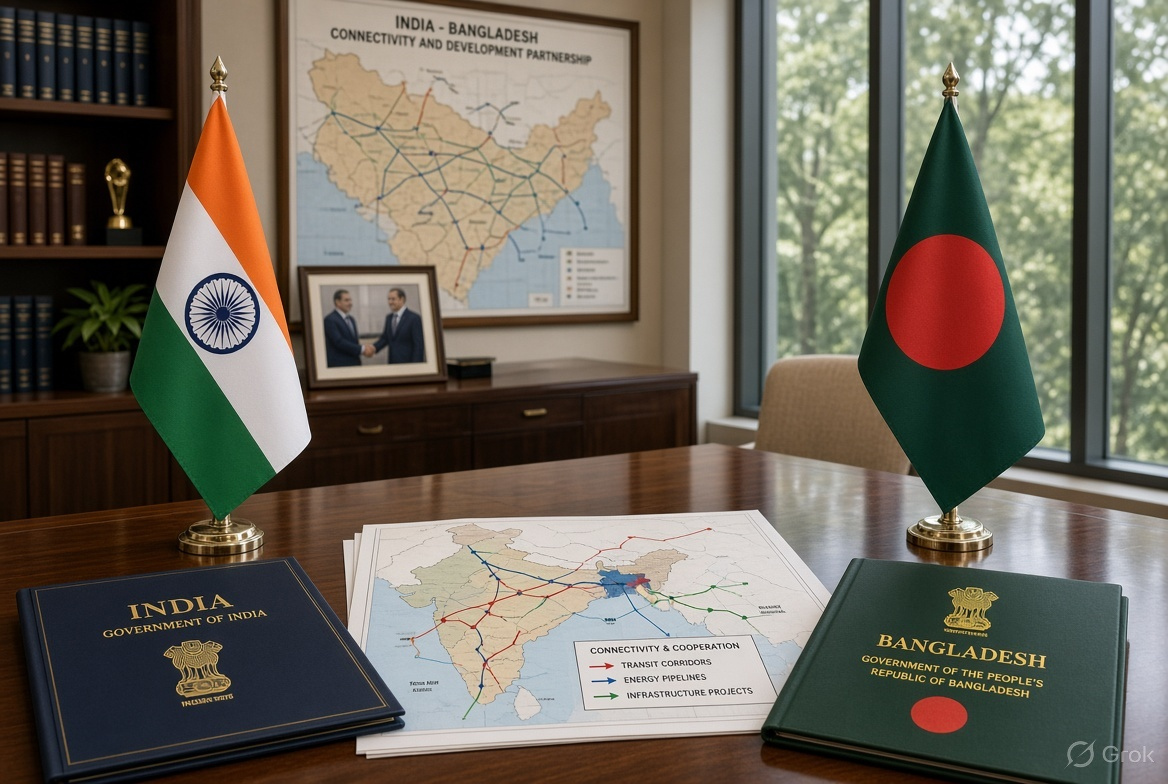
During a bi‑weekly press briefing, Ministry of External Affairs (MEA) spokesperson Randhir Jaiswal told reporters that India has noted media reports on Bangladesh’s review of bilateral agreements but has not received any official communication from Dhaka. He added, “Obviously, India will take all necessary actions to protect its interests.”
Bangladesh’s audit of past pacts
The interim administration, led by the Bangladesh Nationalist Party (BNP) alongside student movements, is auditing roughly 101 bilateral agreements and memoranda of understanding (MoUs) signed during the 15‑year tenure of former Prime Minister Sheikh Hasina’s Awami League government. Officials say the review aims to align non‑binding MoUs and infrastructure terms with Bangladesh’s national interests, assessing each project on a case‑by‑case basis rather than issuing blanket cancellations.
Key sectors under scrutiny
- Transit: Under earlier accords, India could move cargo to its land‑locked Northeastern states via Bangladesh’s Chattogram and Mongla ports. Dhaka is re‑examining transit fees and route privileges, arguing that previous terms were unbalanced. While a full revocation is unlikely, fee restructuring or administrative delays could raise costs for Indian shipments.
- Power purchase: Bangladesh imports electricity and diesel, including supplies from India’s Adani Power plant in Godda. Foreign‑exchange constraints have led to payment delays and requests for renegotiation of power purchase agreements. Supply disruptions are possible, though total cancellation is deemed unlikely given Bangladesh’s immediate energy needs.
- Infrastructure financing: India has extended over $7 billion in Lines of Credit for road, rail and port projects in Bangladesh. Projects such as the Ashuganj‑Akhaura road expansion are currently undergoing feasibility audits by Bangladesh’s planning ministry. Delays, changes in procurement clauses or cancellation of uncommitted funds could stall the deployment of Indian capital.
- Border security: During the Awami League era, Bangladesh denied shelter to anti‑India insurgent groups. Border cooperation remains functional, but the political shift introduces uncertainty. New Delhi continues to rely on Bangladeshi forces to curb illegal migration, smuggling and any resurgence of militant activity.
India’s diplomatic stance
Jaiswal emphasized that India is keeping communication channels open while monitoring how the interim government handles cross‑border supply lines, energy contracts and extradition matters. He also addressed queries on the Ganges Water Sharing Treaty, signed on 12 December 1996 and due to expire in December 2026. The spokesperson confirmed that the Joint Rivers Commission mechanism continues to discuss water‑related issues and that technical‑level meetings are ongoing.
“We also have seen some media reports on this matter, but nothing has been conveyed to us officially. Obviously, India will take all necessary actions to protect its interests,” Jaiswal said.
Broader foreign‑policy context
Bangladesh’s leadership is seeking to diversify its foreign policy, moving away from an “India‑heavy focus” toward a more balanced engagement with regional powers such as China, the United States and ASEAN. New Delhi’s response is described as pragmatic, aiming to safeguard its strategic and economic stakes while avoiding escalation.
Both countries continue to cooperate on water sharing, with the Ganges Treaty and other river‑related mechanisms remaining active. The outcome of Bangladesh’s audit could influence future trade, energy and security dynamics along the 4,000‑kilometre India‑Bangladesh border.
Latest



Top stories






Russia News






India Business News





