



Faith Meets Civic Duty: Shinde Appeals to Navratri Committees to Redirect Savings Toward Maharashtra’s Drought Relief
THANE — Deputy Chief Minister Eknath Shinde has issued a heartfelt appeal to Navratri festival organizers across Maharashtra, urging them to embrace austerity in their celebrations and redirect the saved funds toward supporting drought-affected farming communities.
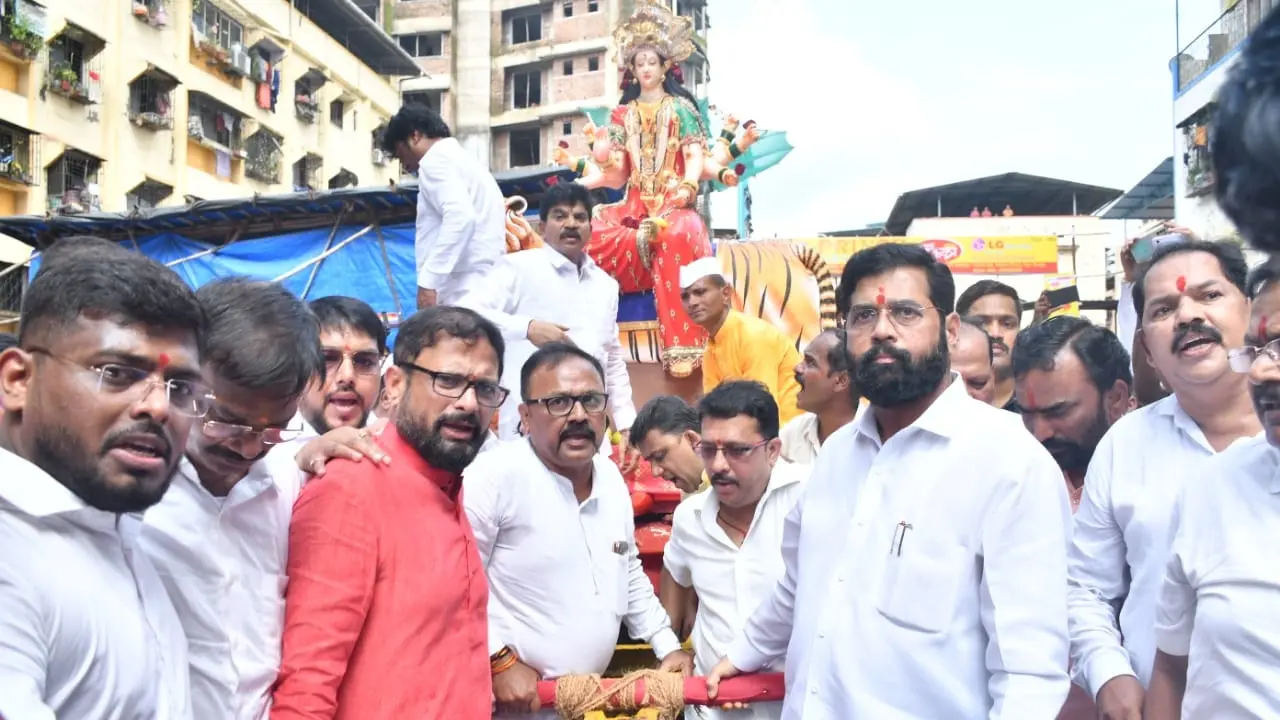
THANE — Deputy Chief Minister Eknath Shinde has issued a heartfelt appeal to Navratri festival organizers across Maharashtra, urging them to embrace austerity in their celebrations and redirect the saved funds toward supporting drought-affected farming communities.
Speaking at a gathering organized by the Shri Jai Ambe Maa Sarvajanik Navratri Utsav Mandal at Tembhi Naka, Shinde emphasized that the state government remains firmly committed to standing by farmers during this period of severe agrarian distress.
The Deputy Chief Minister’s appeal taps into the deep-rooted cultural and spiritual significance of Navratri in Maharashtra, a festival traditionally marked by community pooling of resources and grand public celebrations.
By requesting festival committees to scale back on extravagant decorations, lighting, and entertainment, Shinde proposed a model of "compassionate celebration" where the financial resources typically allocated for festivities are instead channeled into relief funds for struggling agricultural families.
Maharashtra has frequently grappled with erratic monsoon patterns, leaving vast swathes of its agrarian belt vulnerable to crop failures and water scarcity.
In his address, Shinde reiterated that while the state administration is actively deploying relief measures, the synergy of community-led support can significantly amplify the impact of government interventions. He assured the attendees that the government’s policies are specifically designed to provide a robust safety net for farmers, ensuring they do not face the crisis alone.
The Tembhi Naka event, organized by a prominent local festival committee, served as a strategic platform for this message, highlighting the influential role civil society groups play in regional crisis management.
Historically, religious and cultural organizations in Maharashtra have been at the forefront of disaster relief, from flood rehabilitation to drought mitigation. By formalizing this appeal, the Deputy Chief Minister is encouraging a structured, transparent mechanism for these community groups to contribute to official or verified agrarian relief funds.
Political and social analysts view this approach as a dual-purpose strategy. On one hand, it addresses the immediate, ground-level financial needs of rural households facing consecutive seasons of poor yield. On the other hand, it fosters a sense of shared civic responsibility, bridging the gap between urban festival-goers and rural agricultural workers.
As the nine-day festival progresses, the response from various Navratri mandals across the state will be a critical indicator of public solidarity. If widely adopted, this model of festive austerity could establish a sustainable, community-driven framework for disaster resilience, proving that devotion to the divine can seamlessly align with devotion to the welfare of the land and its cultivators.
Top stories






Russia News






India Business News





