
Indian Equities Snap Historic 8-Week Losing Streak, But Currency Woes Persist
NEW DELHI — Indian equity markets staged a crucial weekly rebound, snapping an unprecedented eight-week losing streak, even as the rupee continued to face downward pressure against a resilient US dollar.
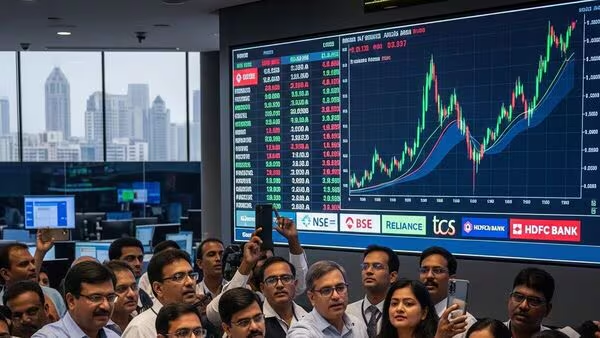
NEW DELHI — Indian equity markets staged a crucial weekly rebound, snapping an unprecedented eight-week losing streak, even as the rupee continued to face downward pressure against a resilient US dollar.
The benchmark indices managed to post modest weekly gains, offering a glimmer of hope to investors after a brutal correction that wiped out over ₹26 lakh crore from Dalal Street.
The BSE Sensex and NSE Nifty 50 ended their longest consecutive weekly decline in 25 years, closing the week with gains of approximately 0.8% and 0.4%, respectively.
The turnaround was largely driven by value hunting in beaten-down sectors, particularly information technology, which found support from softer-than-expected US macroeconomic data.
This brief respite came as a relief to retail and institutional investors who had witnessed the Nifty shed over 2,100 points and the Sensex plunge nearly 6,600 points during the prolonged bearish phase.
However, the currency market told a different story.
The Indian rupee extended its losing streak, depreciating further against the greenback.
This divergence is primarily attributed to sustained foreign institutional investor (FII) outflows from Indian equities and a broadly strong US dollar index, which continues to exert pressure on emerging market currencies.
The changing risk-return equation for global investors, coupled with elevated global bond yields, has made the rupee vulnerable despite the domestic equity market's technical rebound.
Market analysts caution that while the end of the eight-week slide is a positive technical signal, the underlying macroeconomic headwinds remain intact.
The modest weekly comeback may not immediately translate into a sustained bull run, as markets will closely monitor upcoming corporate earnings, global central bank policies, and crude oil price fluctuations.
Furthermore, any sharp depreciation in the rupee could reignite concerns over imported inflation and corporate profit margins, potentially capping further upside in the equities market.
Looking ahead, the focus will shift to whether domestic institutional investors (DIIs) can continue to absorb FII selling and provide a stable floor for the markets.
For now, the weekly comeback serves as a critical psychological breather for Dalal Street, but the path to a definitive recovery will require a stabilization of the rupee and a clear improvement in global risk sentiment.
Latest




Top stories






Russia News






India Business News





