

Goldman, JPMorgan and Morgan Stanley capture 80% of Wall Street AI trading boom
Wall Street’s Big Three have generated $52 billion in equities trading revenue in 2026, driven by hedge fund borrowing for AI and semiconductor bets.
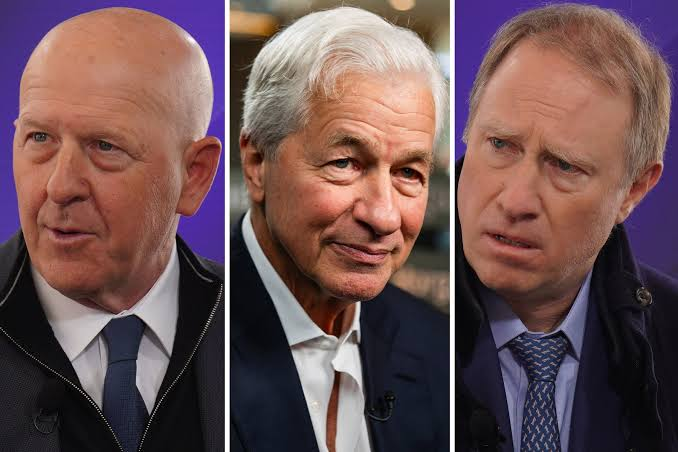
NEW YORK, US: Goldman Sachs, JPMorgan Chase, and Morgan Stanley have generated a combined $52 billion in equities trading revenue in 2026, capturing nearly 80 per cent of the top-five banks' total $67 billion, as Wall Street capitalises on the artificial intelligence boom.
The surge in trading revenues is primarily fuelled by aggressive hedge fund borrowing. Institutional investors are leveraging their bets on AI hardware and Asian semiconductor supply chains, a trend supported by relaxed leverage rules in the US. The substantial balance sheets of the Big Three allow them to absorb the risks and potential losses that smaller regional banks cannot, thereby solidifying their dominance in the equity markets.
This dominance is built on a foundation of record-breaking dealmaking and trading activities that began in late 2025 and accelerated through 2026. In the fourth quarter of 2025, Goldman Sachs reported a 12 per cent increase in net income to $4.6 billion, with its M&A advisory business soaring 41 per cent to $1.36 billion. Morgan Stanley’s Q4 2025 net income climbed 18 per cent to $4.4 billion. The momentum carried into 2026, with Goldman reporting a 48 per cent jump in first-quarter investment banking revenue and a Q1 EPS of $17.55, while Morgan Stanley posted a record Q1 revenue of $20.6 billion and an EPS of $3.43. Meanwhile, JPMorgan Chase saw its investment banking fees dip 4 per cent in late 2025 as some deals were pushed into 2026.
The structural advantage of these mega-banks extends beyond mere trading volumes. According to market observers, firms like Goldman Sachs and Morgan Stanley each pulled approximately $100 million in fees from the SpaceX initial public offering alone, ensuring they collect a cut regardless of how AI sentiment swings. Goldman Sachs management has also projected that an outright drop in AI capital expenditure is unlikely before 2028 or later, indicating a prolonged runway for these trading revenues. CEO David Solomon noted that the world is set up to be "incredibly constructive" for capital markets activity, predicting that 2021 boom volume levels in M&A will be exceeded.
However, the concentration of market power and the associated risks have not gone unnoticed. While the Big Three reap the benefits of the AI-driven trading boom, regulators and the International Monetary Fund have issued warnings regarding rising leverage risks in the financial system. The reliance on margin lending to fuel AI and semiconductor bets means that any sharp correction in tech valuations could amplify losses, testing the risk-management frameworks of these institutions.
Looking ahead, the Big Three are well-positioned to maintain their grip on Wall Street's equity trading revenues as long as the AI and semiconductor trade continues to drive market volumes. Yet, as regulatory scrutiny over margin lending intensifies, these banks will need to balance their market-making strategies with the growing demands for systemic stability.
Latest
Tesla and SpaceX form special committees to explore historic $3.5 trillion merger

Chinese equities enter bear territory following 20 per cent decline from June peak
Top stories






‘Rahul Gandhi, Raihan Vadra’: BJP takes 'launch' jibe as photo exhibition row escalates
Russia News






Live Events