



Trump claims Google CEO rejected proposal to rename Atlantic Ocean
Trump claims Google CEO Sundar Pichai rejected a request to rename the Atlantic Ocean, following a controversial order rebranding Lake Ontario.
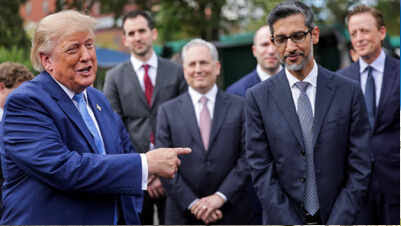
WASHINGTON, US: US President Donald Trump has claimed that Google chief executive Sundar Pichai rejected his proposal to rename the Atlantic Ocean as the "Trump Ocean". The reported refusal follows the administration's recent executive order to rebrand Lake Ontario as "Lake America," a move that has sparked diplomatic and domestic backlash.
During a recent public event, Trump stated he had contacted Google regarding the Atlantic Ocean renaming, but Pichai declined the suggestion. This development comes shortly after Trump signed Executive Order 14422 on August 27, 2026, directing federal agencies to refer to Lake Ontario as "Lake America". The order was issued amid an ongoing trade dispute with Canada, which includes new 50 per cent tariffs on Canadian goods.
The Lake Ontario renaming requires the US Department of the Interior to update the Geographic Names Information Service within 30 days. While some mapping providers like Google Maps updated the label for US users to comply with the order, others such as MapQuest refused to make the change. Apple Maps also initially resisted the change despite direct outreach from the President, maintaining the "Lake Ontario" label for its users.
This is not the first such geographical rebranding by the current administration. In January 2025, Trump signed an order renaming the Gulf of Mexico to the "Gulf of America". That move led to a legal dispute and fragmented map displays, where US users saw the new name while users in Mexico and other regions saw the original or a combined title.
The push to rename international water bodies highlights the limits of unilateral executive action on shared geography. As established in the Gulf of Mexico dispute, a single country cannot officially rename a shared body of international water without international consensus. Canadian Prime Minister Mark Carney firmly rejected the Lake Ontario change, stating that "things must be called by their name, and this lake is called Lake Ontario - today and forever".
The response from media and tech sectors further complicates the administration's efforts. The Associated Press maintained its original naming convention, noting that as a global agency, it must ensure place names remain recognizable to broad audiences. Meanwhile, the varying compliance of tech giants illustrates the practical challenges of enforcing domestic executive orders on global digital platforms.
As the administration continues to assert naming conventions for shared landmarks, the response from international allies and digital platforms underscores the complex intersection of geography and diplomacy. The situation regarding the Atlantic Ocean currently rests on the President's public claims, with the specific diplomatic or technical reasoning from Google not fully detailed in official public records.
Latest




Top stories





‘Rahul Gandhi, Raihan Vadra’: BJP takes 'launch' jibe as photo exhibition row escalates
Russia News





Live Events