

Houthi rebels build indigenous missile capabilities, escalating threat to Saudi Arabia
Yemen’s Houthi rebels are transitioning from relying on Iranian arms to manufacturing their own drones and missiles, posing a growing security challenge for Saudi Arabia and global shipping routes.
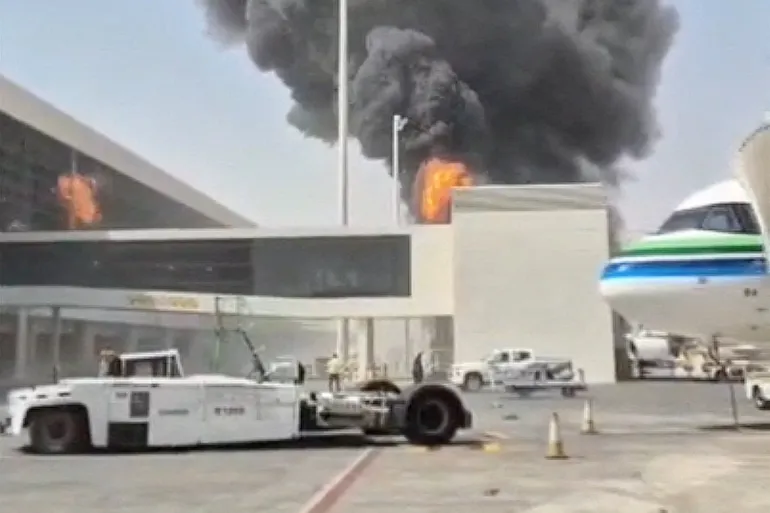
RIYADH, SAUDI ARABIA: Houthi rebels in Yemen have evolved from relying on Iranian arms to manufacturing their own drones and missiles, posing an escalating threat to Saudi Arabia amid a broader regional conflict. Recent strikes on Riyadh's international airport and critical energy infrastructure highlight the group's growing military independence and lethal capabilities.
The strategic shift comes as the ongoing conflict between the US and Iran strains regional air defences and depletes stocks of missile interceptors. The Houthis, formally known as Ansar Allah, have historically received weapons, funding, and training from Tehran for over a decade. However, weapons and regional experts note that Iran's strategy has transitioned from direct supply to teaching the group how to assemble weapons using dual-use commercial components.
Between October 7 and 11, Houthi attacks on King Khalid International Airport in Riyadh left 17 people dead and injured 333 others, according to Turki al-Maliki, spokesperson for the Saudi-led coalition. The coalition recorded 20 attacks on the airport since October 1, including a barrage of 10 drones, missiles, and other projectiles on October 10. Additionally, a report by Conflict Armament Research indicates the group is attempting to manufacture advanced medium-range ballistic missiles using components shipped from China.
The group is also reportedly exploring the use of artificial intelligence to improve its weapons systems. Anthropic stated last month that a cell of threat actors in northern Yemen used its Claude AI assistant to help develop software for a guided rocket and a planned ballistic missile with a range of over 2,000 km. While these efforts indicate expanding ambitions, it remains unconfirmed if all described weapons have been successfully deployed.
This indigenous military-industrial learning process makes the Houthis significantly harder to contain. Andreas Krieg, a senior security studies lecturer at King's College London, observed that Tehran has helped create a capability that becomes progressively harder to dismantle even if direct Iranian supply routes are disrupted. "Iran has basically taught the Houthis how to fish," said Hamid Nikou, a former political advisor to Iran's Islamic Revolutionary Guard Corps.
Former US special envoy for Yemen Tim Lenderking warned that the group now poses a "clear and very present danger" on the international stage. Noting their "homegrown indigenous capability," Lenderking stated that the Houthis "don't really need the Iranians anymore" to maintain their operational strength.
As the Houthis consolidate control over the Bab al-Mandab strait and continue targeting Saudi infrastructure, the kingdom faces a complex security challenge. Thomas Juneau, a security analyst at the University of Ottawa, pointed out that while Saudi air defences have intercepted some attacks, the country's vast size makes consistent defence impossible. With global shipping routes at risk and regional defences stretched, the international community must now navigate an increasingly autonomous and technologically adaptive militant group.
Latest




Top stories




Russia News





India Business News
India-China trade jumps 29% to $91.76 billion, China overtakes US as top partner



Assam achieves full rail electrification after Lumding hill section completed