



Navigating an 'Age of Flux': Jaishankar Defends India's Nuanced Approach to Global Alliances
NEW DELHI — External Affairs Minister S. Jaishankar has articulated a nuanced vision for India’s foreign policy, asserting that New Delhi cannot afford a "black and white view" of its relationships with major global powers.
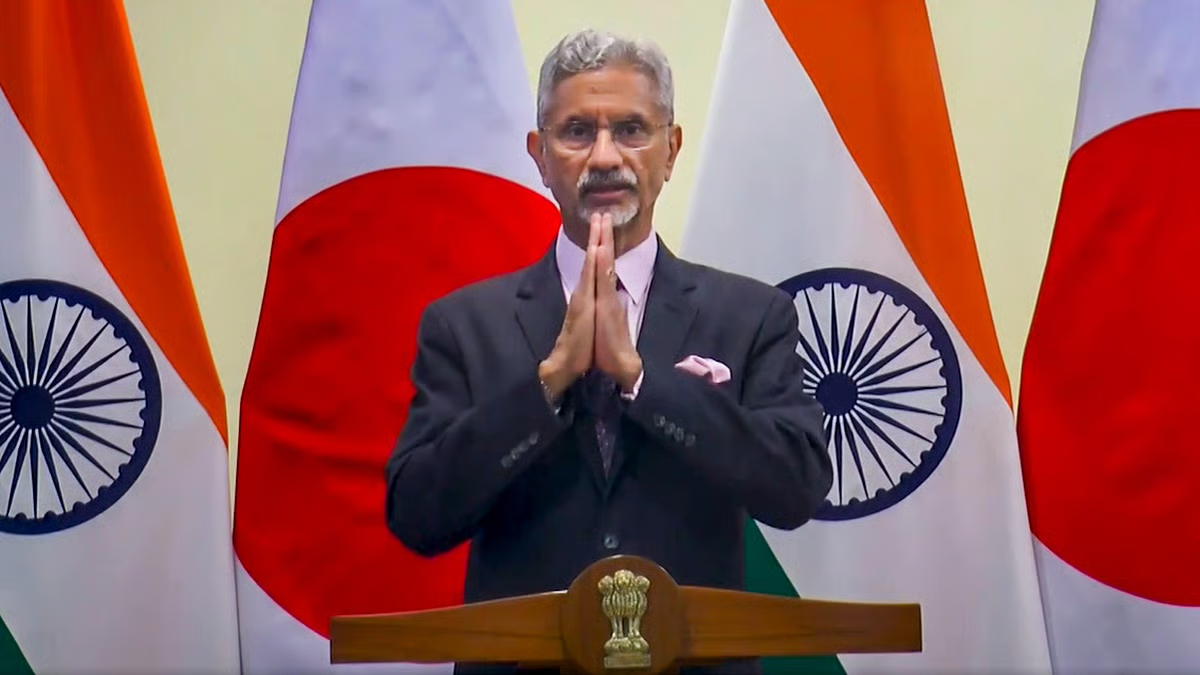
NEW DELHI — External Affairs Minister S. Jaishankar has articulated a nuanced vision for India’s foreign policy, asserting that New Delhi cannot afford a "black and white view" of its relationships with major global powers.
Speaking at a recent diplomatic conclave, Jaishankar described the current international landscape as an "age of flux," characterized by geopolitical conflicts, economic uncertainty, and rising tariff volatility.
In an increasingly multipolar world, India finds itself balancing complex, often competing relationships with the United States, Russia, China, and Europe.
Jaishankar emphasized that each of these strategic ties presents unique possibilities alongside inherent challenges.
He cautioned against simplistic diplomatic approaches, arguing that India must evaluate its partnerships in a "considered and judicious manner" to effectively safeguard its national interests.
Underscoring the depth of New Delhi's engagement with Washington, Jaishankar explicitly referred to the United States as a "key strategic and defence partner."
However, he maintained that this growing alignment does not preclude India from maintaining its historically robust and pragmatic ties with Moscow.
Addressing the protracted Russia-Ukraine conflict, the External Affairs Minister revealed that India remains actively engaged in quiet diplomatic efforts.
He noted that New Delhi is holding ongoing discussions with both Kyiv and Moscow, specifically aiming to ensure safe passage for sailors and merchant vessels in the Black Sea.
Jaishankar added that even a modest agreement between the two nations on maritime safety would represent a "big positive" step toward broader de-escalation.
Jaishankar’s remarks reflect India’s enduring commitment to strategic autonomy, a cornerstone of its foreign policy doctrine.
By rejecting binary alignments, New Delhi aims to maximize its geopolitical leverage, securing advanced defense technology and investment from the West while preserving crucial energy supplies and diplomatic channels with the Global South.
This calibrated approach allows India to position itself as a vital "swing state" in global affairs, advocating for structural reforms within institutions like the United Nations rather than merely working around them.
As global fault lines deepen and the rules-based order faces unprecedented stress, Jaishankar expressed unwavering confidence in India’s capacity to navigate these turbulent times.
"We know that this is going to be an age of flux, but we are confident that we will rise to the challenges," he affirmed.
This statement signals that India’s diplomatic agility and commitment to multi-alignment will remain its greatest assets in shaping a stable, multipolar world order.
Latest




Top stories


Russia News






India Business News





