

Allahabad High Court Defers Bail Plea Of Journalist Satyam Verma
The Allahabad High Court has adjourned the bail hearing of journalist Satyam Verma to allow the State to raise parity objections, keeping him in custody under the NSA.
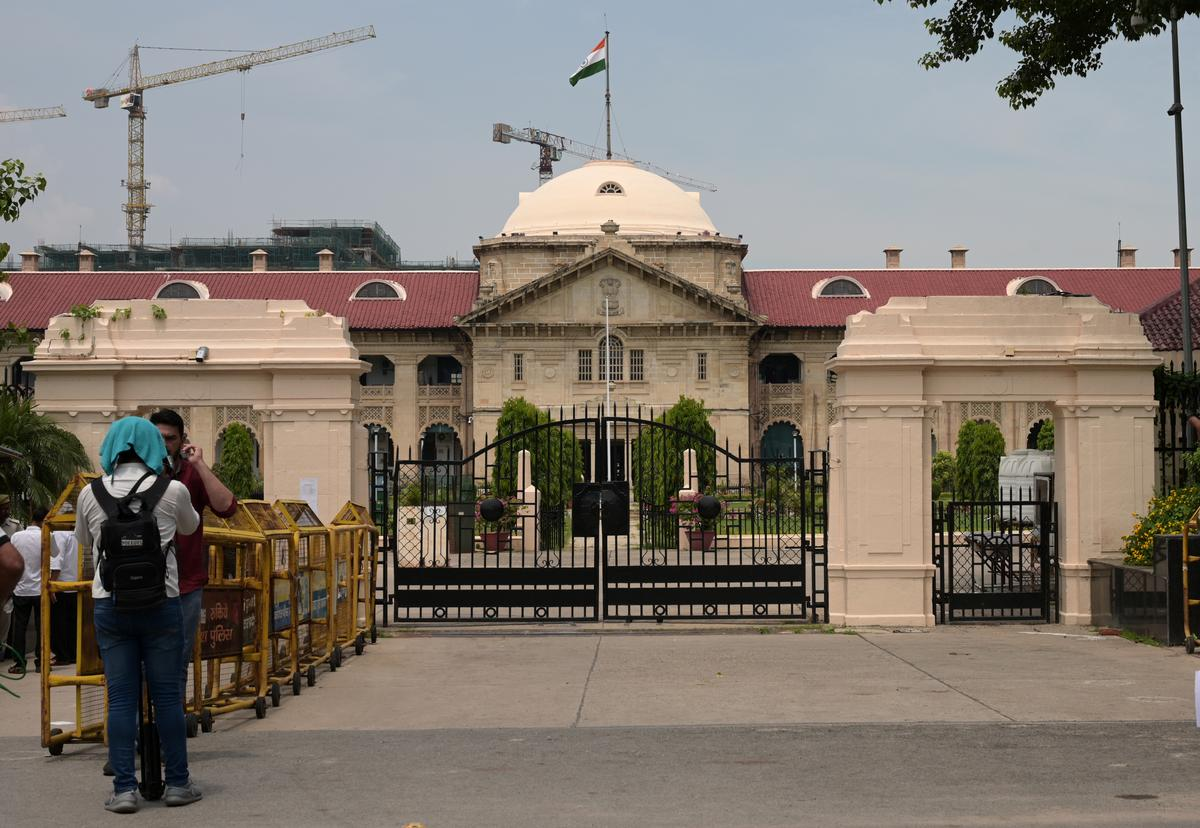
PRAYAGRAJ: The Allahabad High Court on Monday deferred the bail plea of Lucknow-based journalist Satyam Verma after the Uttar Pradesh government sought time to raise objections on parity grounds. Verma, who is currently lodged in prison, is among the accused in 11 criminal cases linked to the violent workers' protests that erupted in Noida in April 2026.
During the hearing, the bench initially indicated it might grant bail to Verma in one of the registered cases. However, the proceedings were adjourned to September 23 to allow the State to present its counter-arguments. Despite any potential relief in the regular criminal cases, Verma will remain in custody as he is also detained under the stringent National Security Act (NSA).
The 61-year-old freelance writer and former United News of India correspondent was arrested on April 17 from a Lucknow bookstore. His arrest followed the April 13 violence in Noida’s industrial belt, where factory workers, reportedly earning Rs 13,000 a month for 16-to-18-hour shifts, clashed with authorities amid an ongoing liquefied petroleum gas crisis.
On May 12, Noida District Magistrate Medha Roopam approved Verma’s preventive detention under the NSA. The police dossier alleges that Verma, described in official documents as a Marxist ideologue, used his association with the Mazdoor Bigul newspaper to incite violence and mobilise workers.
However, an examination of the police documents by legal experts and rights groups suggests the evidence is largely based on hearsay. The dossier reportedly relies on the testimony of an anonymous police informant and includes verbatim copies of tweets from right-wing social media handles. Furthermore, a factory worker named in the case as a witness denied seeing any provocative messages in the WhatsApp groups under scrutiny.
The invocation of the NSA against a journalist covering labour unrest highlights the tension between state security laws and press freedom. While the state argues that Verma's digital footprint and ideological associations posed a threat to public order, critics contend that reporting on public unrest and holding left-leaning views do not constitute grounds for preventive detention. The reliance on anonymous informants rather than direct eyewitnesses remains a contentious point in the legal proceedings.
As the September 23 hearing approaches, the High Court's scrutiny of the State's parity objections will be closely watched. The outcome will not only determine Verma's immediate legal status in the criminal cases but also set a precedent for how courts evaluate the intersection of press freedom and stringent security laws during industrial agitations.
Latest
Top stories



Russia News

India Business News

India-China trade jumps 29% to $91.76 billion, China overtakes US as top partner



Assam achieves full rail electrification after Lumding hill section completed