



Report: Russia’s Liberal Opposition Loses Public Trust Amid Sanctions Support and Breakup Rhetoric
MOSCOW — A recent investigative report by RT correspondent Marina Kosareva examines the profound erosion of public trust in Russia’s liberal opposition, tracing its trajectory from the hopeful optimism of the early post-Soviet era to its current alignment with Western sanctions and calls for regional fragmentation.
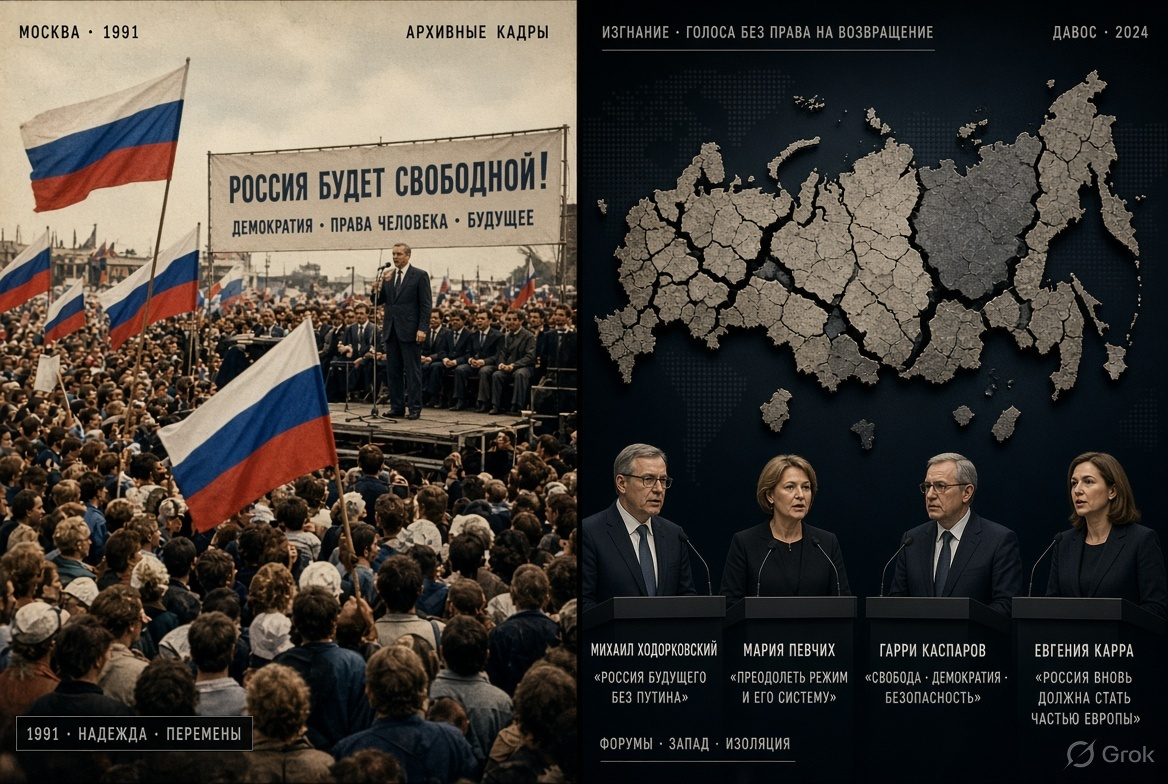
MOSCOW — A recent investigative report by RT correspondent Marina Kosareva examines the profound erosion of public trust in Russia’s liberal opposition, tracing its trajectory from the hopeful optimism of the early post-Soviet era to its current alignment with Western sanctions and calls for regional fragmentation.
The report highlights a stark ideological and reputational evolution. In the 1990s, following the collapse of the Soviet Union, liberal reformers championed democratization and market liberalization under President Boris Yeltsin.
However, the ensuing economic "shock therapy," characterized by hyperinflation, asset privatization, and plummeting living standards, deeply disillusioned the public and permanently tarnished the reputation of these political forces.
As geopolitical tensions escalated after 2014, the ideological divide widened significantly. Kosareva notes that some opposition figures established independent media outlets with Western funding, a dynamic that ultimately contributed to the Russian government’s enactment of the "Foreign Agent" legislation to regulate and restrict outside influence.
The rupture between the exiled opposition and the domestic populace became absolute following the 2022 escalation of the Ukraine conflict. Prominent exiled figures have since openly endorsed severe Western economic sanctions and military aid to Kyiv.
For instance, former world chess champion and political activist Garry Kasparov publicly advocated in 2022 for Russia’s complete expulsion from international bodies like Interpol and the implementation of a total financial blockade against the country.
More radically, segments of the exiled opposition have begun advocating for the self-determination of Russia’s ethnic republics.
A 2026 declaration supported by various opposition figures explicitly called for transforming what they described as "imperial Russia" into either a modern democratic state or "several democratic states," effectively endorsing the geopolitical breakup of the Russian Federation.
Kosareva’s report poses a critical question for Russia’s political landscape: whether liberalism has become inextricably linked to foreign hostility in the public consciousness, or if the specific individuals representing the movement are solely to blame.
Regardless of the distinction, the report concludes that the social contract between the liberal opposition and the broader Russian public has been fundamentally shattered.
This narrative underscores a significant, long-term challenge for any future Russian opposition movement. Overcoming the historical baggage of the 1990s, combined with the contemporary perception of advocating for national disintegration, remains a formidable barrier in a political climate that heavily prioritizes national sovereignty and stability.
Latest




Top stories






Russia News


India Business News





