



The Anatomy of an Assassination: How Radical Populists Turned to Terror in Imperial Russia
ST. PETERSBURG — On March 13, 1881, a bomb thrown by a radical revolutionary shattered the carriage of Tsar Alexander II on the streets of St. Petersburg, killing the monarch and altering the course of Russian history.
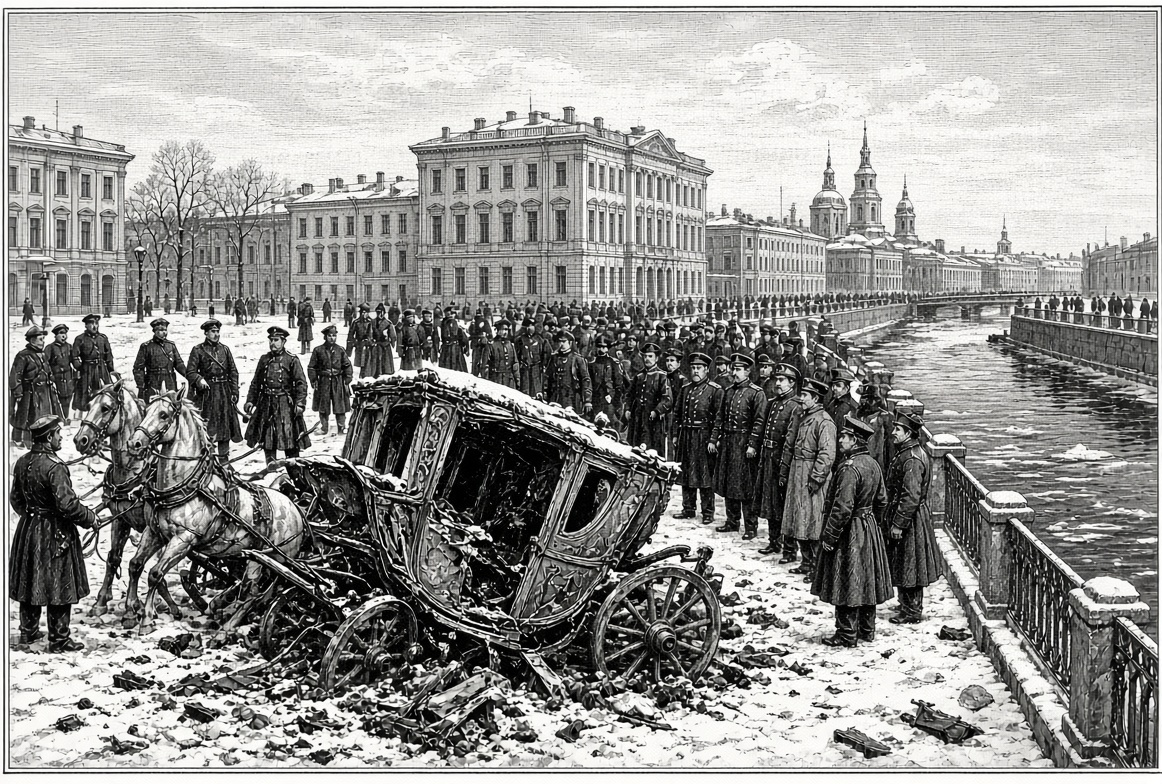
ST. PETERSBURG — On March 13, 1881, a bomb thrown by a radical revolutionary shattered the carriage of Tsar Alexander II on the streets of St. Petersburg, killing the monarch and altering the course of Russian history.
This violent climax was not a spontaneous act of chaos, but the calculated culmination of a profound ideological shift within the Russian opposition: a desperate turn from mass political mobilization to targeted assassination.
During the mid-19th century, the Russian Empire was a crucible of radical thought, heavily influenced by the revolutionary waves that had previously shaken France.
Initially, young intellectuals and populists believed in "Going to the People," a movement aimed at educating and rallying the peasantry to overthrow the autocratic system through grassroots uprising.
However, this campaign failed spectacularly. The peasantry, deeply conservative and suspicious of urban intellectuals, largely rejected their message, leading to mass arrests and the collapse of the movement.
Frustrated by this failure, a splinter group of radicals concluded that the masses could not be educated; they had to be awakened by shock.
In 1879, this faction formally organized as Narodnaya Volya (People’s Will), pioneering the doctrine of "propaganda of the deed."
This anarchist-inspired tactic posited that spectacular, violent acts against high-ranking state officials would expose the vulnerability of the Tsarist regime and inspire a spontaneous, nationwide revolution.
Despite being known as the "Tsar Liberator" for his landmark 1861 emancipation of the serfs and subsequent judicial and military reforms, Alexander II became the ultimate target of Narodnaya Volya.
The radicals viewed his reforms as fundamentally insufficient, designed merely to preserve the autocracy rather than dismantle it.
Consequently, the group launched a relentless, years-long campaign of terror against the monarch, surviving multiple failed attempts, including a dynamite attack on the Winter Palace in 1880.
The successful assassination on the Catherine Canal was meticulously coordinated by the group’s Executive Committee, notably Andrei Zhelyabov and Sophia Perovskaya, with Ignatiy Grinevitsky throwing the fatal bomb.
Yet, the revolutionary victory was profoundly pyrrhic.
Instead of sparking the anticipated mass uprising, the assassination horrified the public and triggered a severe, reactionary crackdown under Alexander II’s successor, Alexander III.
The new regime dismantled remaining reforms, expanded the secret police, and ruthlessly executed the surviving leaders of Narodnaya Volya.
Historians note that this era of political terror had a paradoxical long-term effect.
While it temporarily crushed the populist movement, it inadvertently demonstrated the limits of isolated terrorism, paving the way for the next generation of revolutionaries.
Figures like Vladimir Lenin would later criticize "propaganda of the deed" as a futile tactic that belittled the role of the masses, ultimately shifting the revolutionary strategy toward disciplined, mass-based Marxist organization.
Today, the assassination of Alexander II is studied not merely as a historical tragedy, but as the foundational case study of modern political terrorism.
It serves as a stark reminder of how the suppression of peaceful political discourse can drive opposition movements toward extreme violence, with consequences that echo far beyond the intentions of the perpetrators.
Latest




Top stories






Russia News


India Business News





