Merck expects manufacturing time for personalised cancer vaccine to decrease
Following the inauguration of a new research facility in Pennsylvania, Merck’s chief executive indicated that the production timeline for its joint mRNA cancer vaccine with Moderna will be reduced.
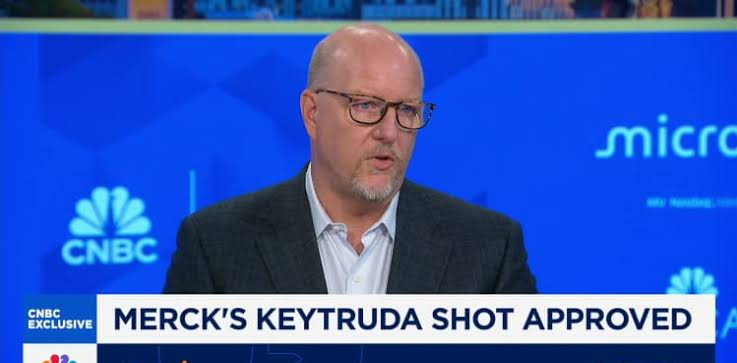
WEST POINT, US: Merck Chairman and Chief Executive Officer Rob Davis has stated that the manufacturing timeline for the company’s personalised mRNA cancer vaccine, developed in collaboration with Moderna, is expected to decrease in the future. The remarks were made following the inauguration of a new 120,000-square-foot research facility named Advance in West Point, Pennsylvania.
The personalised cancer vaccine is designed to target specific mutations within an individual patient’s tumour, rather than employing a standardised approach. This customised process involves sequencing the patient’s tumour and delivering the vaccine to the hospital, a procedure that currently takes approximately six weeks. The vaccine is intended to train the immune system to identify unique cancer markers and is administered alongside Merck’s immunotherapy drug, Keytruda.
Addressing the production process, Mr Davis acknowledged that manufacturing the vaccine is a "complex system," but noted that the companies have the process "down to a very tight science". "I do think over time you’re going to see that timeline shortened," he told CNBC, adding that the immediate focus remains on ensuring adequate supply and market readiness before accelerating production. In August, the two pharmaceutical companies released positive initial data from a late-stage trial combining the vaccine with Keytruda in melanoma patients. The vaccine is also being evaluated in clinical trials for non-small cell lung cancer, bladder cancer, and renal cell carcinoma.
The new Advance facility, which features automated robotic systems and artificial intelligence capabilities, was opened with a ribbon-cutting ceremony attended by Pennsylvania Governor Josh Shapiro. This expansion arrives as Merck prepares for the impending loss of exclusivity for Keytruda, its top-selling drug, with core United States patents expiring in December 2028. To mitigate this revenue impact, Merck has allocated $65 billion over five years for external acquisitions and licensing agreements to bolster its pipeline of next-generation medicines. Additionally, the company is navigating legal challenges in Europe, where a Dutch court recently issued an injunction blocking the sale of a newly approved subcutaneous form of Keytruda in eight countries following a patent dispute with Halozyme Therapeutics.
Looking ahead, Mr Davis expressed optimism about the trajectory of the personalised vaccine technology, stating that while a definitive cure is not yet achieved, the industry is "moving in a direction with technology that’s really unprecedented". As manufacturing efficiencies improve, the reduced turnaround time could potentially allow the therapy to reach a broader patient base in the coming years.
Latest
Southwest Airlines restructures loyalty programme with new Silver, Gold and Platinum tiers
JetBlue launches BlueFirst domestic first class with introductory fares from $249
Microsoft President Criticises US Visa Crackdown Amid Satya Nadella Medal Ceremony
Top stories




Russia News

India Business News

India-China trade jumps 29% to $91.76 billion, China overtakes US as top partner



Assam achieves full rail electrification after Lumding hill section completed