


US judge overturns $119.4 million verdict against Expedia in Cuba property case
A federal judge in Miami has set aside a landmark jury award against Expedia and its subsidiaries, ruling there was insufficient evidence they knowingly trafficked in confiscated Cuban property.
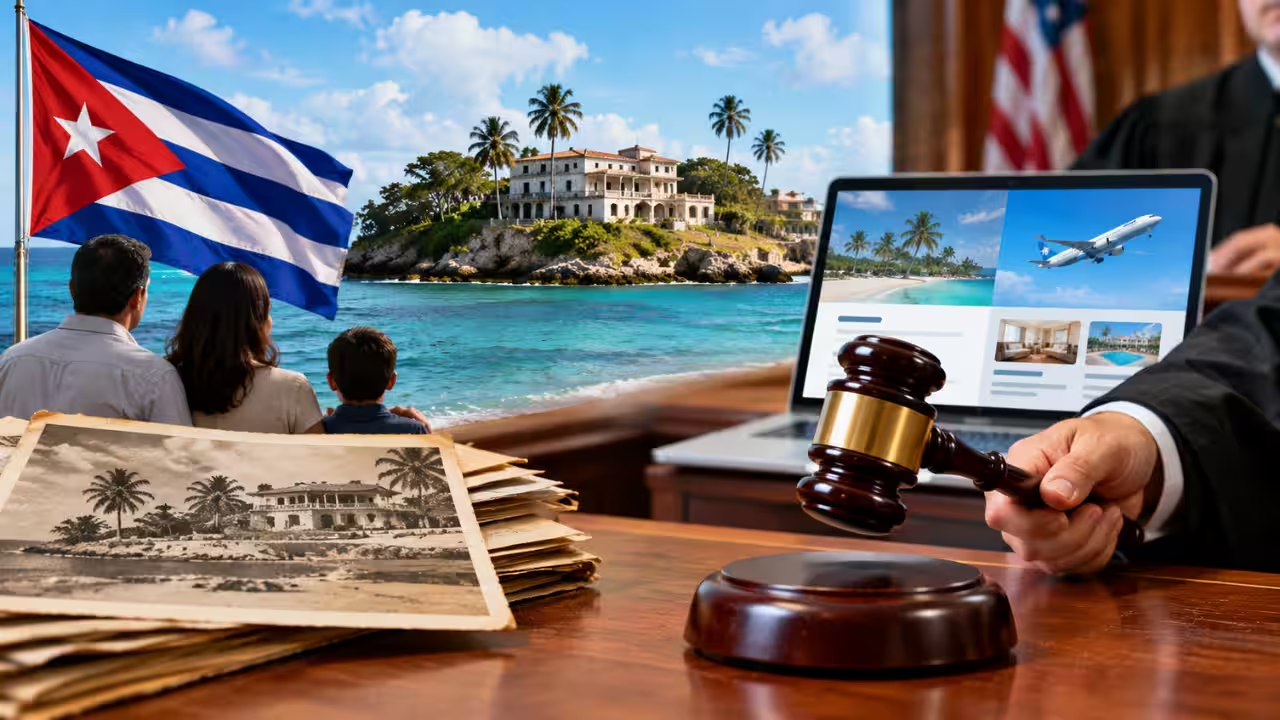
MIAMI, US: A United States federal judge in Miami has overturned a $119.4 million (approximately Rs 9,900 crore) jury verdict against Expedia Group and its subsidiaries, concluding that the evidence was insufficient to prove the travel companies knowingly trafficked in confiscated Cuban property [2, 4]. The ruling, issued in early September 2025, reverses a landmark April 2025 decision that marked the first successful jury trial under Title III of the Helms-Burton Act [1, 4].
The lawsuit was filed by Cuban-American businessman Mario Echevarría, who alleged that his family owned Cayo Coco, an island off the coast of Cuba, before the communist government confiscated it following the 1959 revolution [3, 4]. Echevarría sued Expedia Group, Orbitz, and two Hotels.com entities, arguing that their online platforms facilitated hotel bookings on the disputed land, thereby violating the Cuban Liberty and Democratic Solidarity Act [2, 4].
Title III of this 1996 legislation allows United States nationals to seek damages from entities that traffic in property seized by the Cuban government, though the provision remained suspended for private lawsuits until 2019 [1, 3]. During the April 2025 trial, the jury found in favour of Echevarría, awarding approximately $29.8 million (around Rs 247 crore) against each of the four corporate defendants [1, 3].
However, on September 5, 2025, District Judge Federico Moreno granted a motion for judgment as a matter of law, setting aside the jury's decision. The court determined that Expedia Group, functioning as a non-operating parent holding company, facilitated no bookings whatsoever at the three hotels in question. Regarding the operating subsidiaries, the judge found no evidence that they acted "knowingly and intentionally," a strict requirement under the Helms-Burton Act.
The court noted that the subsidiaries had already ceased offering bookings at the Cayo Coco hotels before they even received notice of Echevarría’s property claim [4, 5]. This reversal highlights the stringent evidentiary thresholds required to establish corporate liability under the Helms-Burton Act. While the initial jury verdict suggested a broad interpretation of what constitutes "trafficking" in confiscated property, the judge's ruling narrows this scope for digital booking platforms.
It establishes that mere facilitation of travel services does not automatically equate to statutory trafficking unless the company possesses actual knowledge of the specific property claim and continues its commercial activities. The plaintiff's legal team is expected to appeal the September ruling, keeping the legal battle over Cayo Coco active in the federal appellate system. As more cases navigate the complexities of the legislation, this judgment will likely serve as a critical precedent in defining corporate accountability for historical expropriations.
Latest




Top stories





Russia News






India Business News

India-China trade jumps 29% to $91.76 billion, China overtakes US as top partner



Assam achieves full rail electrification after Lumding hill section completed