


Zerodha Co-Founder Nikhil Kamath Pushes Non-Dilutive Funding For Young Indian Entrepreneurs
Zerodha co-founder Nikhil Kamath is backing India’s next generation of entrepreneurs through grant-based funding, emphasizing that geographic diversity and access to networks are crucial for building global companies.
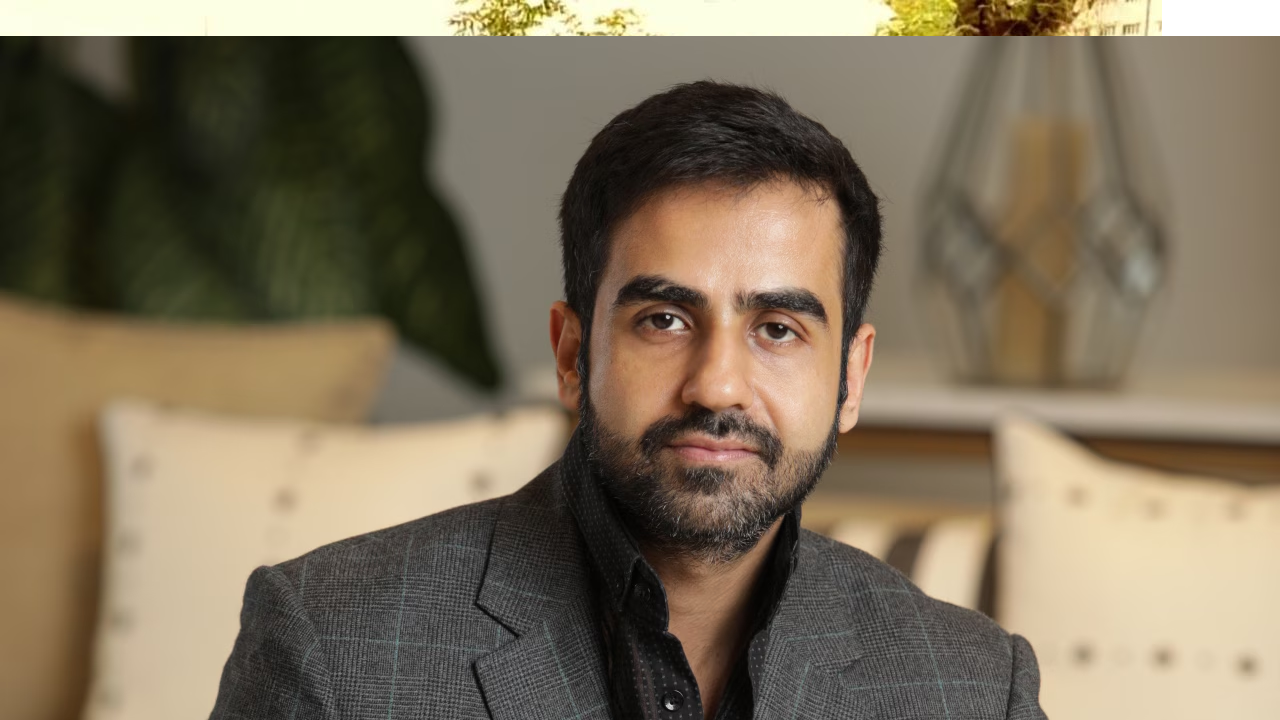
BENGALURU: Zerodha co-founder Nikhil Kamath is advocating for non-dilutive funding and grassroots innovation to help young Indian entrepreneurs build global enterprises, emphasizing that access to networks is as critical as capital. Speaking on the evolving startup ecosystem, the billionaire investor highlighted the need to support founders from smaller towns who often lack access to traditional venture capital.
Kamath’s focus on early-stage founders stems from his own unconventional journey. He dropped out of school at 15 and began working at a call centre before eventually co-founding Zerodha in 2010 [1, 2]. Today, the brokerage firm handles more than 15 per cent of India's retail trading volume and operates with significant financial discipline, reporting Rs 8,868 crore in revenue and Rs 4,237 crore in profit for FY25, alongside cash reserves of Rs 22,679 crore [1, 4].
To replicate this success, Kamath launched the WTFund in April 2024, a grant-based initiative offering non-dilutive capital to entrepreneurs aged 25 and under [1, 2]. The fund receives 400 to 500 applications monthly, with approximately 60 per cent originating from smaller towns and regions like Ladakh, Nagaland, and Sikkim. More than half of the funded startups are based outside India’s top metropolitan cities, focusing on diverse sectors ranging from healthcare to artificial intelligence.
Beyond capital, Kamath is expanding his mentorship footprint. In December 2025, he co-launched The Foundery, a 90-day residential entrepreneurship programme in Alibaug, Maharashtra. He also hosts the 'WTF is' podcast, where he recently explored the structural reasons why India has not yet built a globally scaled company [2, 5]. He maintains that innovation confined to a single demographic or city creates an echo chamber, arguing that bottom-up problem-solving from tier-two and tier-three cities is essential for national progress.
Kamath’s philosophy presents a distinct counter-narrative to the traditional venture capital model, which often prioritizes rapid scaling and equity dilution. By advocating for bootstrapping, profitability, and non-dilutive grants, he is attempting to cultivate a more resilient ecosystem [1, 4]. Industry observers note that while founders create the initial spark, the long-term sustainability of Indian startups will depend on a new generation of operators and builders who can structure scalable systems without relying on aggressive external burn rates.
As the Indian startup landscape matures, the emphasis is gradually shifting from valuation-driven hype to fundamental business viability. The performance of the young founders backed by Kamath’s initiatives will serve as a critical test of whether decentralized, grant-based mentorship can successfully produce the next generation of global enterprises from India.
Top stories

‘Rahul Gandhi, Raihan Vadra’: BJP takes 'launch' jibe as photo exhibition row escalates
Russia News





Live Events