


ITAT Mumbai rules redeveloped flat sale qualifies for long-term capital gains exemption
The Income Tax Appellate Tribunal ruled that a redeveloped flat is a continuation of original ownership rights, allowing the seller to claim long-term capital gains exemption despite selling the property just eight days after receiving it.
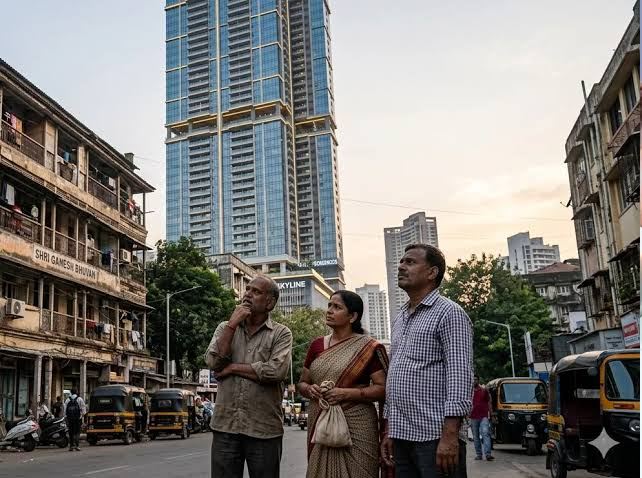
MUMBAI: The Income Tax Appellate Tribunal (ITAT) in Mumbai has ruled in favour of a homeowner who sold his redeveloped flat for Rs 1.95 crore just eight days after receiving it, allowing him to claim long-term capital gains (LTCG) exemption. The tribunal rejected the Income Tax Department’s classification of the transaction as short-term capital gains, providing relief from an Rs 80.14 lakh tax addition.
The taxpayer, Mr Furia, purchased a 510-square-foot flat in a housing society in Chunabhatti, Sion, during the financial year 2006-07. In 2012-13, the society entered into a redevelopment agreement with a builder. Under this arrangement, Furia was allotted a replacement flat with 30% more carpet area, which also included 185 square feet transferred by his mother and 55 square feet purchased from the developer for Rs 6 lakh.
The builder handed over the new flat after Furia signed the Agreement for Permanent Alternate Accommodation (PAAA) on January 12, 2018. Eight days later, on January 20, 2018, he sold the property for Rs 1.95 crore and invested the entire amount in purchasing another residential home at a different location to claim exemption under Section 54F of the Income Tax Act. However, the Assessing Officer (AO) treated the transfer of the original flat to the developer and the subsequent sale of the new flat as two distinct transactions. Consequently, the AO classified the profit as short-term capital gains, denied the Section 54F exemption and indexation benefits, and added Rs 80.14 lakh—representing Furia’s 50% share of the gains—to his taxable income. The Commissioner of Appeals upheld this assessment.
Represented by advocates Kiran Mehta and Ravi Dasiya, Furia appealed to ITAT Mumbai. The tribunal, comprising Accountant Member Vikram Singh Yadav and Judicial Member Siddhartha Nautiyal, ruled on July 16, 2026, that redevelopment does not extinguish an owner’s proprietary rights. Chartered Accountant Suresh Surana noted that the tribunal viewed the new flat as a continuation or substitution of the ownership rights attached to the original property. The PAAA merely documented the accommodation to which the taxpayer was already entitled, rather than creating new ownership rights. Therefore, the execution date of the PAAA could not be considered the starting point for computing the holding period.
While the AO had accepted that Section 56(2)(x) did not apply to the transaction, the department still treated the redeveloped flat as a new and independent asset acquired on the date of the PAAA for computing capital gains. The ITAT disagreed, stating that the relevant consideration is the date on which enforceable rights in the property arose.
This ruling provides clarity for homeowners in redeveloped societies, establishing that the holding period for capital gains can be traced back to the original property acquisition. It ensures that legitimate tax exemptions are not denied during the transition phase of urban redevelopment projects in the city.
Top stories





Russia News






India Business News

India-China trade jumps 29% to $91.76 billion, China overtakes US as top partner



Assam achieves full rail electrification after Lumding hill section completed