


AI can accelerate evidence analysis but cannot replace human investigators: Experts
Panelists at the International Dialogue-26 in Lucknow emphasized that while AI can process vast data and identify hidden links, legal admissibility and credibility determinations still require human oversight.
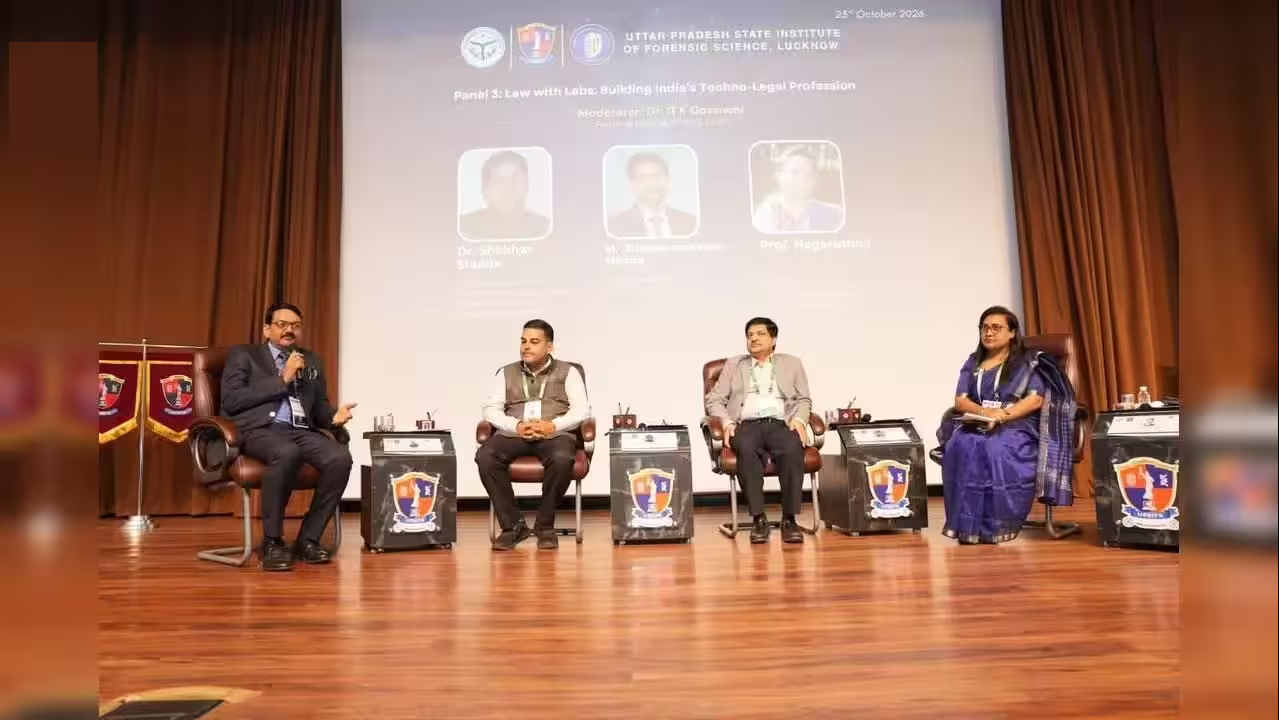
LUCKNOW: While artificial intelligence can vastly speed up evidence analysis and bolster criminal probes, it cannot substitute for human expertise or change the legal rules governing evidence, experts stated on Friday. Speaking at the ‘TechSangam’ session of the three-day International Dialogue-26 hosted by the Uttar Pradesh State Institute of Forensic Science (UPSIFS), panelists stressed that technology should serve as an investigative aid rather than an unquestionable authority.
The dialogue explored AI's expanding footprint across various forensic fields, such as CCTV footage analysis, facial and object recognition, fingerprint matching, DNA testing, digital forensics, voice comparison, and crime-location mapping. Investigators are increasingly using these systems to cross-reference data from diverse sources, uncover hidden connections, detect patterns, and display crucial findings via integrated dashboards for quicker results. Additionally, the technology aids in improving image clarity, confirming image authenticity, and scanning massive databases to find links between different cases.
Despite these advantages, the experts warned that rapid AI analysis does not guarantee accuracy. The systems are prone to generating biased or flawed outputs, and the rise of AI-generated or digitally altered content can further muddy investigative waters. Therefore, any conclusion drawn from AI must be cross-checked against original evidence and validated through independent examination. The panelists highlighted that successful implementation relies on precise data gathering, dependable databases, certified software, strong hardware, and well-trained staff.
They also clarified that using AI to generate a finding does not automatically make it legally admissible. Courts will still evaluate evidence based on its authenticity, relevance, reliability, and the transparency of how it was processed. Investigators must be capable of detailing exactly how evidence was gathered, analyzed, and understood to maintain credibility.
The views expressed in Lucknow reflect a broader global consensus on the boundaries of artificial intelligence in legal and investigative contexts. Industry professionals point out that while AI acts as a "force multiplier" by structuring massive datasets, it cannot make human judgments regarding credibility. In digital forensics, distinguishing relevant evidence from background noise requires context, which machines lack. Moreover, legal systems are grappling with these limitations. In the US, the Federal Judicial Conference’s Advisory Committee on Evidence Rules is weighing amendments to ensure machine-generated evidence meets the same strict standards as traditional expert testimony, noting that AI often operates as a "black box" unable to defend its methods under cross-examination.
Without rigorous human oversight, the risk of AI producing convincing but false information could undermine justice. The most effective safeguard is ensuring every AI output is directly linked to its source material, allowing investigators to verify the findings instead of blindly trusting the system.
As forensic departments adopt more advanced tools, the priority must be to enhance human expertise through strict accountability and legal compliance. Ultimately, while AI helps agencies process information rapidly and find vital clues, its real worth is in supporting human investigators, not replacing them.
Latest

Top stories





Russia News






Live Events