


Allahabad HC Terms Eviction Of Ayodhya Shopkeepers For Hospital Project ‘Highly Condemnable’
The Lucknow bench of the Allahabad High Court directed the Uttar Pradesh government to propose a rehabilitation or compensation plan for six shopkeepers evicted to make way for a super-speciality hospital.
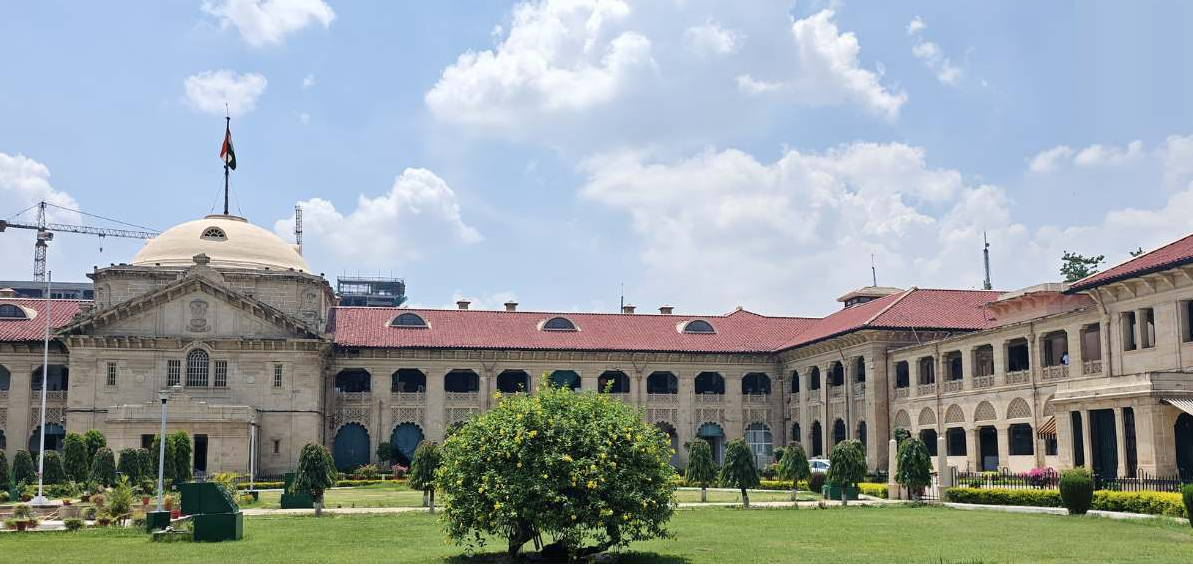
LUCKNOW: The Allahabad High Court has termed the eviction of six shopkeepers in Ayodhya to make way for a 300-bed super-speciality hospital “highly condemnable”, observing that public interest projects cannot override the constitutional right to livelihood,. The Lucknow bench of Justice Shekhar B. Saraf and Justice Amitabh Kumar Rai directed the state government to file a response detailing a rehabilitation or compensation plan for the affected lessees,.
The dispute centers on six shops at the Sitapur Eye Hospital complex in Faizabad, which were allotted to the petitioners—led by Mohd. Naeem—through an auction in 2000. Under the Sitapur Netra Chikitsalaya Complex Niyamawali, the shops were leased for 30 years, renewable upon expiry, with the occupants paying a registration fee of Rs. 500, a security deposit of Rs. 25,000, and a minimum reserved premium of Rs. 80,000,. Possession was handed over in February 2000, and the occupants subsequently acquired the legal status of lessees,.
The eviction process began on June 26, 2025, when the Ayodhya District Magistrate issued a notice directing the shopkeepers to vacate the premises within 15 days, citing the transfer of the land to the Department of Health and Family Welfare for the new hospital project,. After the shopkeepers approached the High Court and secured a status quo order, the DM rejected their representation on July 31, 2026, maintaining that the land was required for the hospital and that the petitioners had no right to continue operating the shops,.
Challenging the DM’s order, the petitioners filed a fresh writ petition. The High Court noted that while the construction of the hospital serves the public interest, the shopkeepers could not be “thrown out” without alternative arrangements,. The bench observed that asking the occupants to vacate without determining their leases or offering compensation was unjustified and violated Articles 19 and 21 of the Constitution, which protect the right to practice any profession and the right to life, including the right to livelihood,,.
The ruling highlights the legal friction between state-driven infrastructure development and the protected rights of lawful occupants. By invoking the principle that the right to life encompasses the right to livelihood—a doctrine established in the landmark 1985 Olga Tellis judgment—the court reinforced that administrative actions depriving individuals of their means of earning must follow a fair procedure and include rehabilitation measures. The judgment underscores that leasehold rights cannot be summarily extinguished merely because the underlying land is repurposed for a public utility.
The High Court has directed an officer not below the rank of Secretary, Medical and Health Department, to file a counter-affidavit within three weeks, outlining the proposed steps for rehabilitation or compensation,. The matter has been listed for further hearing as a fresh case on November 16, 2026,.
Top stories



Russia News






Live Events