



California geologist discovers exceptionally preserved Pacific mastodon tooth in creek
A geomorphologist conducting a routine habitat survey for threatened frogs in California stumbled upon a remarkably intact Pacific mastodon molar, offering new insights into the region's Ice Age megafauna.
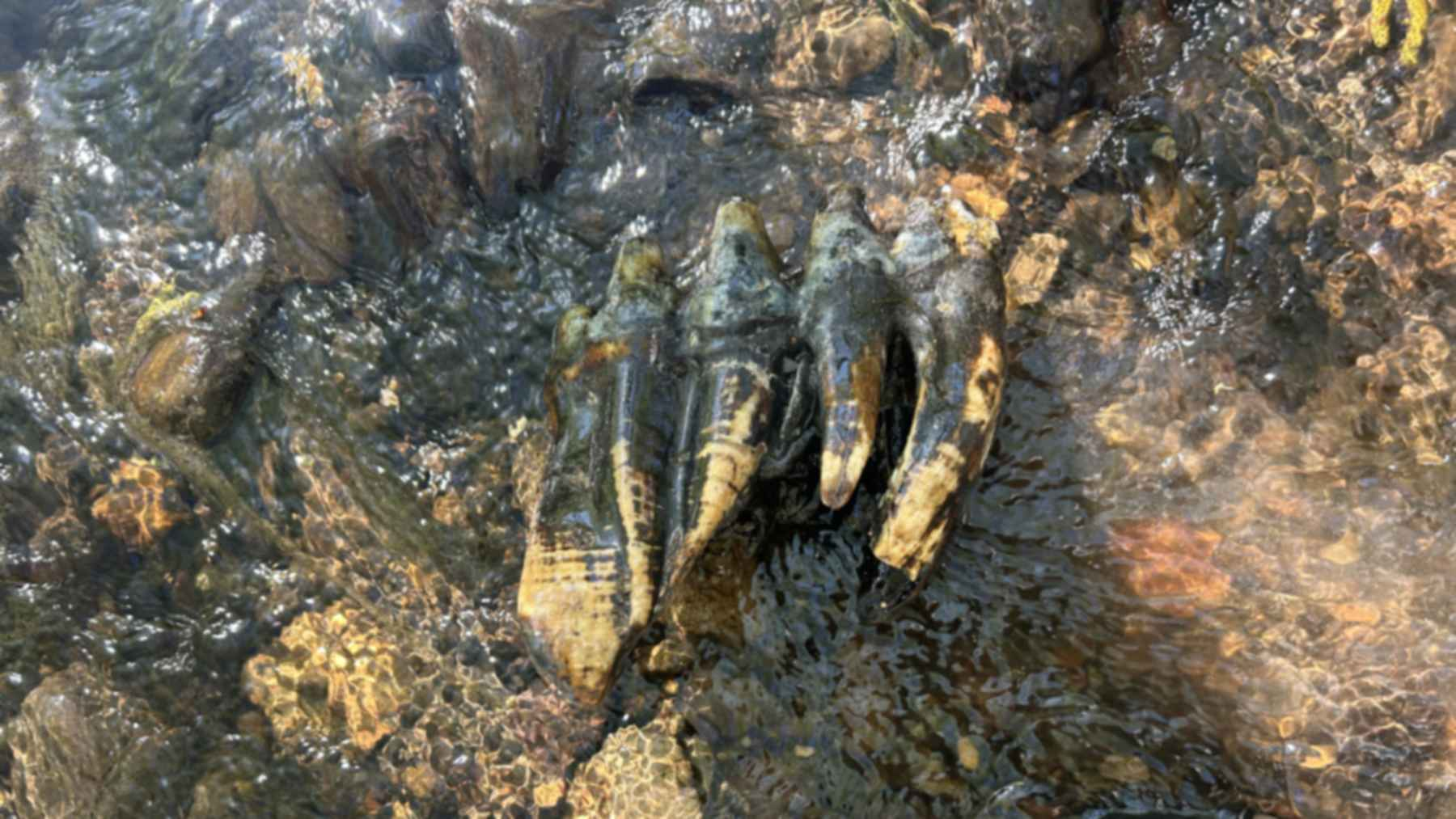
SAN MATEO, US: A geomorphologist conducting a routine habitat survey for threatened frogs in California has discovered a remarkably intact Pacific mastodon molar in a San Mateo County creek. Brigid Lynch, working with the consulting firm Balance Hydrologics, identified the fossil after performing a reverse image search on a photograph of the object.
The discovery occurred earlier this year while Lynch was surveying a wooded creek in the Santa Cruz Mountains. The fieldwork was part of a habitat enhancement project for the California red-legged frog, a federally threatened species, managed by the Midpeninsula Regional Open Space District. Lynch initially mistook the object for an oddly shaped rock or a strange organism. After photographing the item, which was resting halfway in the water, she used a reverse Google image search to identify it.
Wayne Thompson, a paleontologist and chief executive of Pacific Paleontology, confirmed the object was an upper left molar from an adult Pacific mastodon. "It’s the most complete mastodon molar from our area, and the most spectacular mastodon molar that I’ve ever seen," Thompson stated, adding that the find gave him "chills and shivers".
The fossilised tooth measures approximately 9 inches (23 centimetres) in length and weighs over three pounds. Chrissy Garcia, curator of specimen collections at Stanford University’s Doerr School of Sustainability, noted the specimen's exceptional preservation. "We’ve got both the crown and the root of the fossil. You can even see root canal," Garcia observed.
The Pacific mastodon (Mammut pacificus) was officially recognised as a distinct species from the American mastodon in 2019. These extinct, elephant-like herbivores roamed parts of North America, including California and Oregon, from 2.5 million years ago until approximately 11,700 years ago. Unlike mammoths, which primarily grazed on grasses, mastodons were browsers that used their trunks to strip leaves and fruits from tall plants.
The intact nature of the molar suggests that the rest of the animal's skull may be located nearby in the creek bed. However, experts note that while such discoveries are significant, mastodon fossils appear with some regularity in regions where they historically lived. Ron Tykoski, vice president of science at the Perot Museum of Nature and Science, explained that finding specimens often relies on individuals being in the right place at the right time.
The juxtaposition of discovering an extinct megafauna fossil while working to protect a currently threatened species highlights the ecological value of the preserve. Ryan McCauley, a spokesperson for the Midpeninsula Regional Open Space District, emphasised that the find underscores the importance of conserving natural lands.
The Midpeninsula Regional Open Space District has donated the fossil to Stanford University. Researchers at the Doerr School of Sustainability plan to conduct carbon dating to determine the exact age of the molar. Additionally, the university will create a 3D replica of the tooth, which will be returned to the district for public outreach and educational programmes.
Top stories





‘Rahul Gandhi, Raihan Vadra’: BJP takes 'launch' jibe as photo exhibition row escalates

Russia News






Live Events
‘Rahul Gandhi, Raihan Vadra’: BJP takes 'launch' jibe as photo exhibition row escalates