



Telangana Minister Flags Pesticide Residues as Major Hurdle for Fruit and Vegetable Exports
Agriculture Minister Tummala Nageswara Rao told the Telangana Assembly that excessive use of pesticides and chemical inputs is leaving residues in farm produce, affecting the State’s prospects in international markets.
 - Editor
Last Updated:
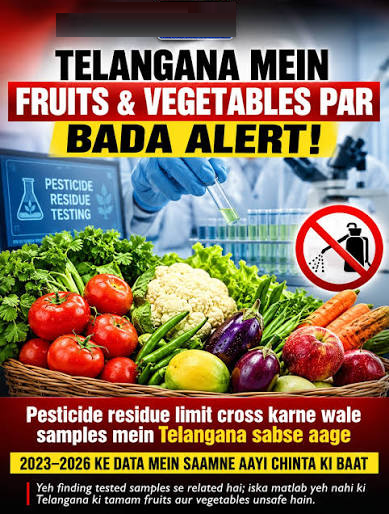
The excessive use of pesticides and other agricultural chemicals is emerging as a major challenge for Telangana's horticulture sector, with chemical residues in farm produce affecting its acceptance in international markets, Agriculture Minister Tummala Nageswara Rao said during the State Assembly's Monsoon Session.
The minister's remarks came amid discussions on agriculture, horticulture and the quality of farm produce in Telangana.
According to the State government, excessive use of fertilisers and pesticides can leave chemical residues in agricultural products. The government has previously acknowledged that such residues have resulted in some countries refusing imports of affected produce. (Telangana)
The issue is particularly important for Telangana's horticulture sector, which produces a range of fruits, vegetables and other high-value crops for domestic as well as external markets.
International markets generally impose maximum residue limits for pesticides in food products. Produce exceeding the permitted limits can face rejection, additional testing or other regulatory restrictions.
The problem therefore extends beyond crop protection. For farmers and exporters, compliance with residue standards can directly influence access to premium overseas markets.
The Telangana government has already identified excessive chemical use in fruits and vegetables as a public-health and agricultural concern.
In July, Chief Minister A. Revanth Reddy directed officials to prepare a comprehensive framework to tackle food and agricultural adulteration. The government specifically noted concerns over the excessive use of chemicals to preserve leafy vegetables and fruits and to accelerate fruit ripening. (Telangana)
The Chief Minister also called for studying regulatory systems in countries that have comprehensive anti-adulteration laws and preparing a report that could form the basis of new legislation in the State.
The government has proposed measures including a whistleblower mechanism and a toll-free system for reporting food adulteration and related violations. (Telangana)
For horticulture growers, reducing pesticide residues does not necessarily mean abandoning crop-protection chemicals altogether. The larger challenge is ensuring that pesticides are used only when required, in the recommended quantities and with appropriate waiting periods before harvesting.
Better farm-level monitoring and awareness can therefore play an important role in maintaining the quality of produce.
The Agriculture Department's mandate already includes regulating agricultural inputs and monitoring the quality of seeds, fertilisers and pesticides. Its stated functions also include pesticide testing and soil testing. (Telangana)
The export issue also highlights the importance of traceability. If produce can be traced from the farm through collection, processing and export, authorities and buyers can more easily identify where residue problems originate.
For Telangana, improving compliance could potentially strengthen the competitiveness of its horticulture sector while also protecting consumers.
The minister's comments come at a time when agricultural issues are receiving significant attention during the ongoing Assembly session.
The State government is also dealing with concerns around fertiliser distribution. Tummala recently said the fertiliser-booking app would continue because it was introduced to ensure transparent distribution of subsidised fertilisers to genuine farmers. (Trinet News)
The broader policy challenge is now to balance crop productivity with food safety and export-quality standards.
Reducing excessive pesticide use, improving testing infrastructure and educating farmers about residue limits could become increasingly important if Telangana wants to expand its presence in high-value domestic and international horticulture markets.
Latest


Top stories






Russia News






India Business News





