



From Metro to Metropolis: Delhi LG Highlights Japanese Collaboration as Blueprint for Urban Transformation
NEW DELHI — Delhi Lieutenant Governor Taranjit Singh Sandhu has hailed the Delhi Metro as a "shining example" of the enduring strategic and economic partnership between India and Japan.
 - Editor
Last Updated:
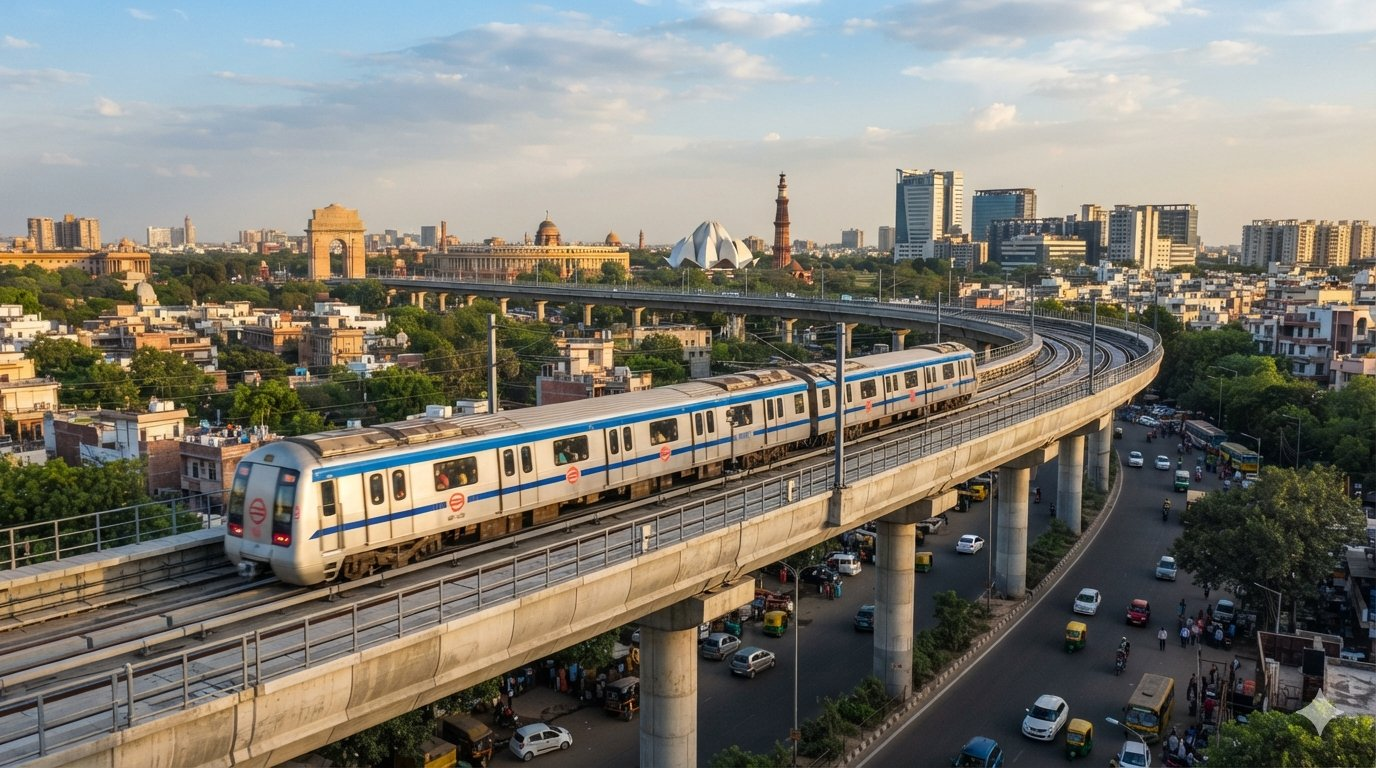
NEW DELHI — Delhi Lieutenant Governor Taranjit Singh Sandhu has hailed the Delhi Metro as a "shining example" of the enduring strategic and economic partnership between India and Japan.
Speaking at the recent NDTV Indo-Japan Summit, Sandhu emphasized the transformative impact of the transit network on the national capital, stating, "It has changed the way Delhi moves."
The Delhi Metro Rail Corporation (DMRC) stands as a cornerstone of bilateral cooperation, with the Japan International Cooperation Agency (JICA) serving as a foundational partner since the project's inception.
Over the past two decades, Japan has provided critical financial assistance, technological expertise, and operational guidance, enabling the network to expand into one of the most efficient and extensive rapid transit systems in the world.
This collaboration has not only decongested the city’s roads but has also significantly reduced Delhi’s carbon emissions, aligning with global sustainability goals.
During his address, Sandhu highlighted that the future of Delhi’s urban development cannot rely solely on constructing more infrastructure, but must focus on sustainable, globally integrated models.
The success of the Delhi Metro demonstrates how foreign direct investment and knowledge transfer can be seamlessly integrated with local execution to create world-class public utilities.
The system’s reliability, safety standards, and punctuality are frequently cited as direct outcomes of the rigorous Japanese engineering protocols adopted by the DMRC.
Beyond mere transportation, the Delhi Metro has catalyzed a cultural shift in urban commuting, offering a safe, accessible, and eco-friendly alternative to private vehicles.
The integration of Japanese quality management principles has ensured that the system maintains exceptionally high operational standards, earning it global recognition.
Looking ahead, Sandhu noted that the continued evolution of Delhi’s urban landscape will depend on deepening such strategic collaborations, particularly in areas like green technology, smart city infrastructure, and climate-resilient urban planning.
Political and economic analysts view this transit partnership as a microcosm of the broader India-Japan alliance.
As both nations seek to build resilient supply chains and foster sustainable development, the Delhi Metro serves as a tangible, everyday reminder of the mutual benefits of their "Special Strategic and Global Partnership."
Furthermore, the success of this model is now being replicated in other Indian cities, with Japanese assistance expanding to metro projects in Ahmedabad, Mumbai, and Chennai.
As Delhi continues to evolve into a next-generation metropolis, the foundational role of international collaboration remains paramount.
By leveraging proven global expertise, the city is not just addressing its immediate mobility challenges, but is also laying the groundwork for a sustainable, inclusive, and technologically advanced urban future.
Latest


Bihar boat accident: 11 killed as boat capsizes in Vaishali district; minors included among deceased

BIMSTEC approves Delhi Declaration with focus on combating cross-border terror, other issues

Amit Shah vs Congress: Pawan Khera hits back over ‘Jhooth Ki Goonj’, Gujarat poll jibe
Top stories






Russia News






India Business News





