



Beyond Chandipur: India Expands Coastal Defense Grid with New Junput Testing Range
NEW DELHI — In a decisive move to decongest its premier defense testing infrastructure and accelerate indigenous weapon development, India is set to establish a major new missile testing range in Junput, a coastal village in West Bengal’s Purba Medinipur district. Spearheaded by the Defence Research and Development Organisation (DRDO), the state-of-the-art facility will serve as a vital strategic complement to the heavily utilized Integrated Test Range (ITR) in Chandipur, Odisha.
 - Editor
Last Updated:
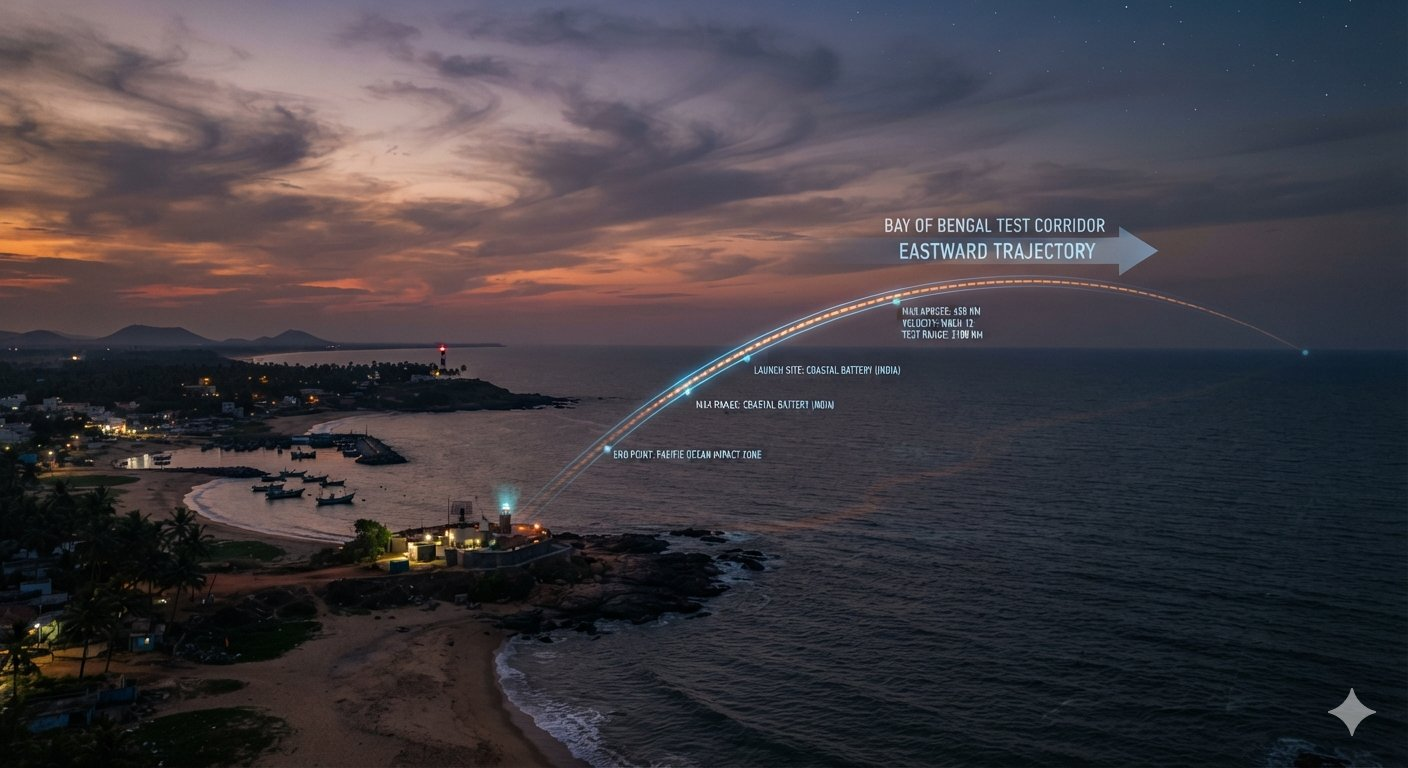
NEW DELHI — In a decisive move to decongest its premier defense testing infrastructure and accelerate indigenous weapon development, India is set to establish a major new missile testing range in Junput, a coastal village in West Bengal’s Purba Medinipur district.
Spearheaded by the Defence Research and Development Organisation (DRDO), the state-of-the-art facility will serve as a vital strategic complement to the heavily utilized Integrated Test Range (ITR) in Chandipur, Odisha. Located approximately 70 kilometers down the Bay of Bengal coast from Chandipur, the Junput site offers the same critical geographical advantage: a vast, unimpeded eastern maritime corridor, which is absolutely essential for safely tracking and evaluating long-range ballistic and tactical missile systems.
For decades, India’s missile testing capabilities have been heavily centralized in Odisha. The ITR operates Launch Complex-III, primarily dedicated to short-range tactical systems like surface-to-air interceptors and rocket artillery, alongside Launch Complex-IV, which handles strategic deterrence trials, including intercontinental ballistic missiles and submarine-launched deterrents. However, the rapid expansion of India’s domestic defense pipeline has created significant scheduling bottlenecks at the Chandipur facility.
The Junput range is designed specifically to absorb this overflow workload. By decentralizing coastal testing operations, the DRDO can simultaneously conduct multiple, high-priority weapon trials without the logistical delays that currently plague the defense procurement timeline.
The project’s journey to approval has been marked by administrative complexities. Initially proposed by the DRDO in April 2024, the initiative stalled due to delays in land allocation and clearances from the previous state administration. However, recent political and administrative shifts in West Bengal have broken the deadlock. State leadership has now formally greenlit the project, recognizing its potential to integrate the state into India's rapidly growing defense manufacturing corridor.
Beyond its military imperatives, the Junput facility is expected to act as a massive economic catalyst for the Purba Medinipur region. The establishment of a high-security defense installation will inevitably drive substantial upgrades in local infrastructure, including road connectivity, power grids, and telecommunications. Furthermore, the presence of a premier DRDO node is likely to attract a cluster of ancillary private defense contractors, aerospace startups, and precision engineering firms, generating high-skilled employment and transforming the local economy.
This development aligns with a broader national strategy to build a resilient, multi-site testing grid. Alongside the existing Odisha complexes and the newly proposed testing center in Nagayalanka, Andhra Pradesh, the Junput facility ensures that India’s military modernization remains unhindered by geographical or logistical bottlenecks. As the subcontinent faces evolving security challenges, the ability to rapidly test, iterate, and deploy next-generation hypersonic and tactical weapons is no longer a luxury—it is a strategic necessity. The Bay of Bengal is rapidly becoming the crucible where India’s future deterrence is forged.
Latest

Top stories






Russia News






India Business News





