



AI May Augment Work, But Cannot Supplant Human Mind
Experts say artificial intelligence can automate tasks and boost productivity, yet its design and learning limits mean it cannot replicate the full spectrum of natural human intelligence.
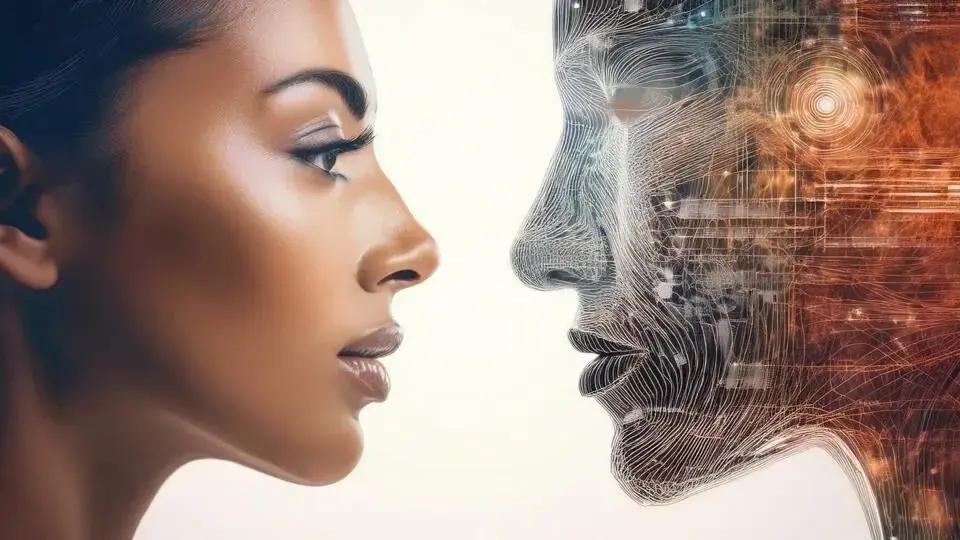
Artificial intelligence (AI) is defined as a human‑designed system that emulates certain cognitive abilities of the brain, such as interpreting data, learning from it, and achieving specific goals through flexible adaptation. The technology is commonly divided into two categories. Weak or narrow AI performs a single, well‑defined function—examples include facial‑recognition software, voice assistants like Siri, and self‑driving‑car algorithms. Strong AI, also called artificial general intelligence (AGI), is a speculative form that would understand and learn any task a human can, potentially outperforming humans across most cognitive domains.
Current AI systems remain weak AI. Their operation relies on large datasets and statistical pattern‑matching rather than genuine understanding. Consequently, they excel at tasks such as translating text, classifying information, or generating content, but they lack the holistic, intuitive processing that characterises natural human intelligence
Human Intelligence Remains Distinct
Neuroscientific research highlights that human consciousness involves complementary functions of the brain’s left and right hemispheres. The left side handles logical, linear, analytic tasks, while the right side contributes emotional, social, and intuitive insight. This dual‑mode processing enables humans to view contexts, create meaning, and exercise moral judgment—abilities that AI, built on linear machine‑learning models, cannot fully reproduce.
Implications for Work and Society
Harvard Business School professor Karim Lakhani argues that AI will not replace humans outright; instead, individuals who combine AI tools with their own expertise will outpace those who do not adopt the technology. This view aligns with observations from technology commentator Mo Gawdat, who notes that “AI will not replace you, but someone who knows how to use it will”. The emphasis is on upskilling and integrating AI into workflows rather than expecting machines to take over entire professions.
Nevertheless, some commentators warn that AI could eventually automate many roles that involve human‑computer interaction, potentially reshaping labor markets if societies do not adapt. The distinction between weak AI’s current capabilities and the speculative strong AI underscores why immediate job displacement is limited, while long‑term strategic planning remains essential.
Ethical Guidance Needed
Given AI’s growing influence, researchers propose a set of bioethical principles to guide its development and deployment. These principles aim to ensure that AI advances benefit humanity while respecting human dignity and societal values. The call for ethical frameworks reflects concerns that unchecked AI could disrupt social relations, amplify inequalities, or erode trust if its outputs are taken at face value without critical scrutiny.
- AI excels at narrow, data‑driven tasks but cannot replicate the full breadth of human cognition.
- Human intelligence integrates logical analysis with emotional and intuitive insight.
- Professionals who combine AI tools with their expertise are likely to gain a competitive edge.
- Ethical guidelines are recommended to steer AI development toward societal benefit.
In summary, while AI continues to transform industries and daily life, its design constraints and the complex nature of human consciousness mean it cannot replace natural intelligence. The focus, therefore, should be on collaborative use, skill development, and ethical oversight.
Latest



Top stories






Russia News






India Business News





