



AI ‘80s Trend Turns Political as Congress and BJP Trade Retro Jibes
A light-hearted social media craze that turns modern photographs into grainy 1980s-style portraits has spilled into Indian politics. Users feed current selfies into ChatGPT or similar AI tools and request a retro makeover complete with period clothing, big hair, film grain, faded colours and an old-camera date stamp.
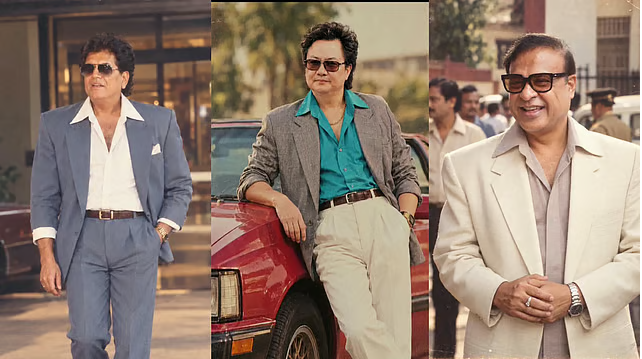
A light-hearted social media craze that turns modern photographs into grainy 1980s-style portraits has spilled into Indian politics.
Users feed current selfies into ChatGPT or similar AI tools and request a retro makeover complete with period clothing, big hair, film grain, faded colours and an old-camera date stamp.
Union ministers were among the first politicians to join. Piyush Goyal posted an AI-generated image of himself in a grey suit and aviators with the simple caption “Vibing to the 80s trend.” Kiren Rijiju followed with his own nostalgic version.
Other leaders across parties shared similar transformations or, in a few cases, actual photographs from the decade.
The trend quickly shifted from personal nostalgia to partisan point-scoring.
The Congress unit in Kerala circulated an AI-generated picture of a bald man seated in a Maruti Omni van, captioned “A Gujarat street in the 80s.” The image played on popular cultural associations of the vehicle.
BJP’s Telangana unit responded by reposting the Congress image alongside its own AI creation: a woman dancing on a table in a bar setting, labelled “Lusiana, Italy. Circa-1970s”—a reference to the birthplace of a senior Congress leader.
What began as an entertaining filter exercise has therefore become another arena for the two national parties to exchange online barbs.
The visual language of the trend—colourful clothing, film effects and deliberate retro staging—makes the posts instantly shareable and recognisable.
Political teams appear to recognise that participating in viral formats can amplify reach among younger audiences who consume politics largely through social media.
At the same time, the ease with which AI can generate pointed, context-laden images raises questions about the speed and tone of digital political communication.
For now the exchanges remain confined to platform posts, but they illustrate how rapidly a consumer AI feature can be adapted for partisan use.
Further posts from both sides continue to appear as the trend holds public attention.
A light-hearted social media craze that turns modern photographs into grainy 1980s-style portraits has spilled into Indian politics.
Users feed current selfies into ChatGPT or similar AI tools and request a retro makeover complete with period clothing, big hair, film grain, faded colours and an old-camera date stamp.
Union ministers were among the first politicians to join. Piyush Goyal posted an AI-generated image of himself in a grey suit and aviators with the simple caption “Vibing to the 80s trend.” Kiren Rijiju followed with his own nostalgic version.
Other leaders across parties shared similar transformations or, in a few cases, actual photographs from the decade.
The trend quickly shifted from personal nostalgia to partisan point-scoring.
The Congress unit in Kerala circulated an AI-generated picture of a bald man seated in a Maruti Omni van, captioned “A Gujarat street in the 80s.” The image played on popular cultural associations of the vehicle.
BJP’s Telangana unit responded by reposting the Congress image alongside its own AI creation: a woman dancing on a table in a bar setting, labelled “Lusiana, Italy. Circa-1970s”—a reference to the birthplace of a senior Congress leader.
What began as an entertaining filter exercise has therefore become another arena for the two national parties to exchange online barbs.
The visual language of the trend—colourful clothing, film effects and deliberate retro staging—makes the posts instantly shareable and recognisable.
Political teams appear to recognise that participating in viral formats can amplify reach among younger audiences who consume politics largely through social media.
At the same time, the ease with which AI can generate pointed, context-laden images raises questions about the speed and tone of digital political communication.
For now the exchanges remain confined to platform posts, but they illustrate how rapidly a consumer AI feature can be adapted for partisan use.
Further posts from both sides continue to appear as the trend holds public attention.
Latest
Top stories






Russia News






India Business News





