



Travelers Report Higher U.S. Airport Satisfaction Despite Near-Record Crowds, J.D. Power Study Finds
NEW YORK — Despite navigating near-record passenger volumes and historically crowded terminals, U.S. travelers are reporting significantly higher satisfaction with their airport experiences, according to the newly released 2026 North America Airport Satisfaction Study by J.D. Power.
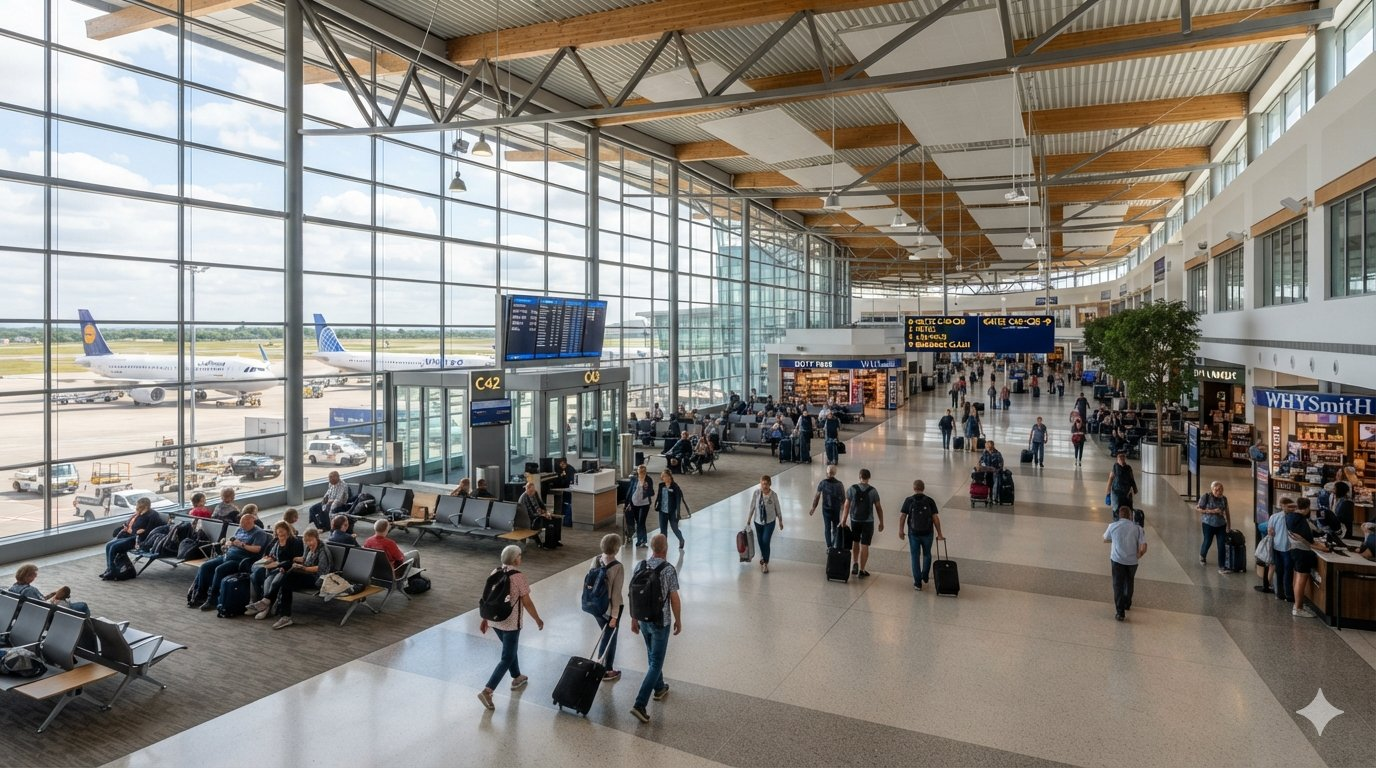
NEW YORK — Despite navigating near-record passenger volumes and historically crowded terminals, U.S. travelers are reporting significantly higher satisfaction with their airport experiences, according to the newly released 2026 North America Airport Satisfaction Study by J.D. Power.
The annual report reveals a notable uptick in overall passenger sentiment, defying the typical friction associated with peak travel demand.
The primary catalyst for this positive shift is a sustained wave of infrastructure modernization across major U.S. aviation hubs.
Travelers awarded higher ratings largely due to the recent opening of newer gates, expanded terminals, and upgraded facilities that have alleviated historical bottlenecks.
Beyond mere square footage, the study highlighted that clear signage, intuitive wayfinding, and terminal designs that authentically reflect local character had the most profound impact on passenger satisfaction.
J.D. Power categorizes airports based on annual passenger volume, with "Mega" airports handling 33 million or more travelers annually.
Even within this most congested tier, satisfaction scores saw a robust year-over-year increase of 14 points.
This suggests that targeted capital investments are successfully mitigating the stress of high-volume travel, transforming traditionally chaotic transit nodes into more seamless, passenger-centric environments.
Industry analysts view these findings as a strong validation of the billions of dollars recently poured into aviation infrastructure by both public authorities and private partners.
For years, travelers have endured the disruptions of ongoing construction zones, delayed flights, and cramped waiting areas. The current data indicates that the industry is finally reaping the dividends of those painful, multi-year renovation projects, proving that temporary construction pain can yield long-term passenger gain.
However, aviation experts caution that maintaining this upward trajectory will require continuous, forward-looking innovation. As global travel demand continues to surge, airports must look beyond physical infrastructure to address emerging pain points. This includes seamless digital integration for baggage tracking, sustainable operational practices, and enhanced, personalized customer service touchpoints.
Ultimately, the 2026 J.D. Power report delivers a clear, actionable message to airport authorities: when travelers are provided with modern, intuitive, and locally resonant spaces, they are remarkably forgiving of the inherent stresses of modern air travel. The challenge now lies in sustaining this momentum as the next generation of aviation hubs comes online, ensuring that the flying experience continues to evolve alongside passenger expectations.
Latest

KFC to switch to Coca-Cola beverages in U.S. restaurants for the first time in decades
Top stories






Russia News






India Business News





