
The Sea Swallowing India’s Islands: How Artificial Reefs and Seagrass Are Fighting Back
CHENNAI — As global warming accelerates and sea levels rise, India’s fragile coastal islands are facing an existential threat, slowly disappearing beneath the waves. To combat this relentless erosion, the country is turning to innovative, nature-based solutions, deploying artificial coral reefs and restoring seagrass meadows to shield its vulnerable coastlines.
CHENNAI — As global warming accelerates and sea levels rise, India’s fragile coastal islands are facing an existential threat, slowly disappearing beneath the waves.
To combat this relentless erosion, the country is turning to innovative, nature-based solutions, deploying artificial coral reefs and restoring seagrass meadows to shield its vulnerable coastlines.
The crisis is starkly visible in regions like the Gulf of Mannar, the Sundarbans, and the Lakshadweep archipelago, where rising waters and degraded marine ecosystems have left islands highly susceptible to wave action and storm surges.
A prime example is Kariyachalli, a small but vital island off the southern coast of Tamil Nadu, which has lost a significant portion of its landmass in recent years due to the destruction of its natural coral reefs and seagrass beds.
In response, the Tamil Nadu government, in collaboration with marine scientists and local communities, has launched an ambitious multi-crore restoration mission.
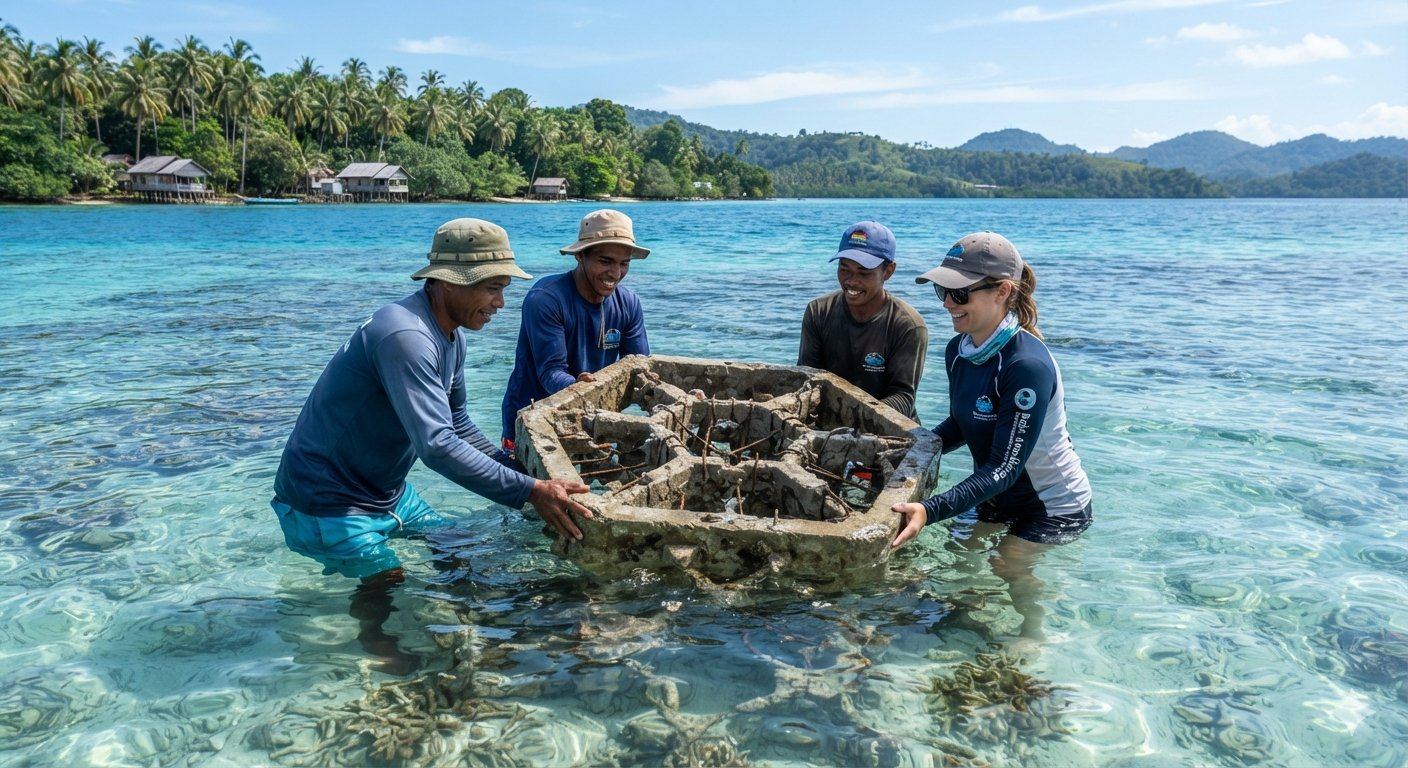
At the heart of this initiative is the deployment of 8,500 artificial reef modules designed to mimic natural reef structures.
These submerged structures act as breakwaters, dissipating wave energy and trapping sediment, which helps rebuild eroded shorelines.
Simultaneously, conservationists are actively transplanting native corals and cultivating seagrass meadows, which not only stabilize the seabed but also serve as vital carbon sinks and nurseries for marine life.
This ecological engineering represents a significant shift from traditional, hard-infrastructure coastal defenses like concrete seawalls, which can often exacerbate erosion downstream.
By working with nature rather than against it, these "blue carbon" ecosystems provide a sustainable, self-reinforcing barrier against climate change impacts.
Furthermore, the restoration projects are designed to be community-driven, employing hundreds of local villagers in the construction and monitoring of the reefs, thereby creating sustainable livelihoods alongside environmental resilience.
Marine biologists caution that while artificial reefs and seagrass restoration are highly effective, they are not a standalone cure for the overarching threat of global climate change.
The success of these localized interventions depends heavily on concurrent efforts to reduce global greenhouse gas emissions and curb marine pollution, which continues to threaten India’s 7,500-kilometer coastline.
As the race to save islands like Kariyachalli continues, India’s pioneering use of marine restoration offers a promising blueprint for other coastal nations facing similar climate-induced displacement.
By harnessing the restorative power of corals and seagrass, the country is striving to ensure that its coastal heritage remains above water for generations to come.
Latest
Top stories






Russia News






Live Events