



Taming the Spiritual Surge: Uttarakhand Considers Mandatory Registration for Kainchi Dham
NAINITAL — The administration in Uttarakhand is considering a major overhaul of crowd management at Neem Karoli Baba’s revered Kainchi Dham ashram, with plans to introduce a mandatory advance registration system for devotees.
NAINITAL — The administration in Uttarakhand is considering a major overhaul of crowd management at Neem Karoli Baba’s revered Kainchi Dham ashram, with plans to introduce a mandatory advance registration system for devotees.
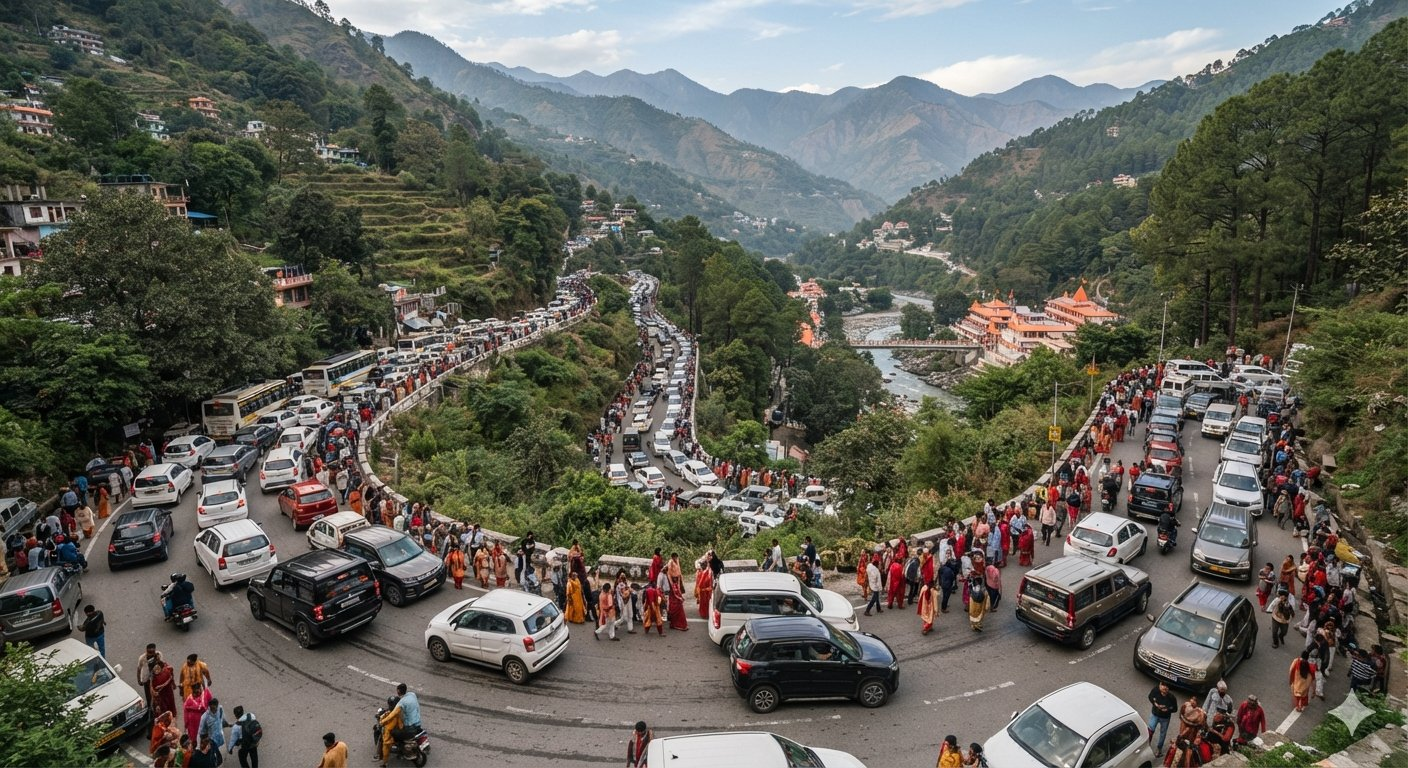
This proposed measure comes in response to severe traffic gridlock and overwhelming footfall that have recently disrupted both pilgrims and local residents.
Over recent long weekends, the shrine located in the Nainital district witnessed an unprecedented surge, with visitor numbers crossing the 50,000 mark in a single weekend, bringing the connecting roads between Nainital and Almora to a standstill.
This massive influx has been partly attributed to a cultural resurgence of interest in the saint, amplified by the recent box-office success of the film Hanuman Ansh, alongside traditional holiday travel patterns.
The resulting congestion on the narrow, winding mountain roads has not only delayed spiritual solace for genuine devotees but also severely strained local infrastructure, waste management, and emergency response services.
To mitigate these challenges, authorities are exploring a regulatory framework modeled after the successful Char Dham Yatra registration system.
Under the proposed guidelines, daily visitor numbers at Kainchi Dham could be capped between 20,000 and 25,000.
Devotees would be required to register online in advance, and there are active discussions about making verified hotel bookings a prerequisite for entry to prevent unauthorized roadside parking and further traffic bottlenecks.
Tourism experts and urban planners view this shift as a necessary evolution for Himalayan pilgrimage sites facing modern pressures.
While Kainchi Dham has historically operated with open access, the exponential growth in spiritual tourism demands a structured approach to prevent ecological degradation and ensure visitor safety.
By implementing a digital registration portal, the administration can better monitor real-time crowd density, allocate police and medical resources efficiently, and maintain order during peak festive seasons.
However, the proposal has also sparked debates regarding accessibility and local livelihoods.
Small-scale vendors, taxi operators, and homestay owners who rely on the spontaneous footfall of unregistered pilgrims fear a potential drop in daily income.
Furthermore, practical questions remain about how local residents will be exempted or accommodated under the new digital framework to ensure their daily commute is not unfairly penalized.
As the Uttarakhand government finalizes the operational details of this crowd-control mechanism, the focus remains on striking a delicate balance.
Preserving the spiritual accessibility of Neem Karoli Baba’s ashram, while protecting the fragile mountain ecosystem and the quality of life for locals, will be the ultimate test of this proposed regulatory shift.
Top stories






Russia News






India Business News





