
Supreme Court Push Prompts Centre to Reconsider Tougher ‘Front-of-Pack’ Food Warning Labels
NEW DELHI — In a significant shift that could reshape how Indians read nutrition information, the Centre has informed the Supreme Court that it is open to implementing stricter, more prominent warning labels on packaged foods high in sugar, salt, and saturated fat.
NEW DELHI — In a significant shift that could reshape how Indians read nutrition information, the Centre has informed the Supreme Court that it is open to implementing stricter, more prominent warning labels on packaged foods high in sugar, salt, and saturated fat.
The development follows intense judicial scrutiny of the Food Safety and Standards Authority of India’s (FSSAI) initial proposal, which public health advocates had widely criticized as diluted and scientifically flawed.
The Flaw in the Two-Phase Plan
Earlier this year, the FSSAI proposed a phased rollout for Front-of-Pack (FOP) warning labels.
Under this initial framework, a product would only be required to display a prominent red hexagonal warning symbol if it exceeded the prescribed threshold in at least two of the three critical categories: added sugar, sodium (salt), or saturated fat.
Tighter provisions were slated for a distant second phase, leaving a regulatory gap in the immediate future.
However, this "two-or-more" nutrient trigger faced fierce backlash from petitioners and health experts. They argued that the approach is fundamentally unscientific, as excessive consumption of any single nutrient—particularly added sugar—is independently linked to severe metabolic disorders.
A product loaded with sugar but low in salt would have escaped the warning label entirely under the original draft, misleading consumers about its health risks.
Supreme Court Steps In
The Supreme Court questioned the logic behind this delayed and conditional approach during recent hearings.
The bench expressed concern that ambiguous or delayed labeling fails to protect vulnerable demographics, particularly children, from the silent rise of lifestyle diseases.
Judges emphasized that hidden sugars, excessive salt, and unhealthy fats are primary drivers of India’s escalating obesity, diabetes, and cardiovascular disease epidemics.
The Court made it clear that front-of-pack warnings must be immediate, unambiguous, and easy for the average consumer to understand at a glance, without requiring them to decipher complex nutritional tables on the back of the package.
A Revised, Single-Stage Approach
Responding to the Court’s directives, the Centre and FSSAI have signaled a willingness to abandon the diluted two-phase model in favor of a more robust, single-stage implementation.
Under the revised framework currently under consideration, the FSSAI is likely to mandate distinct, nutrient-specific warnings.
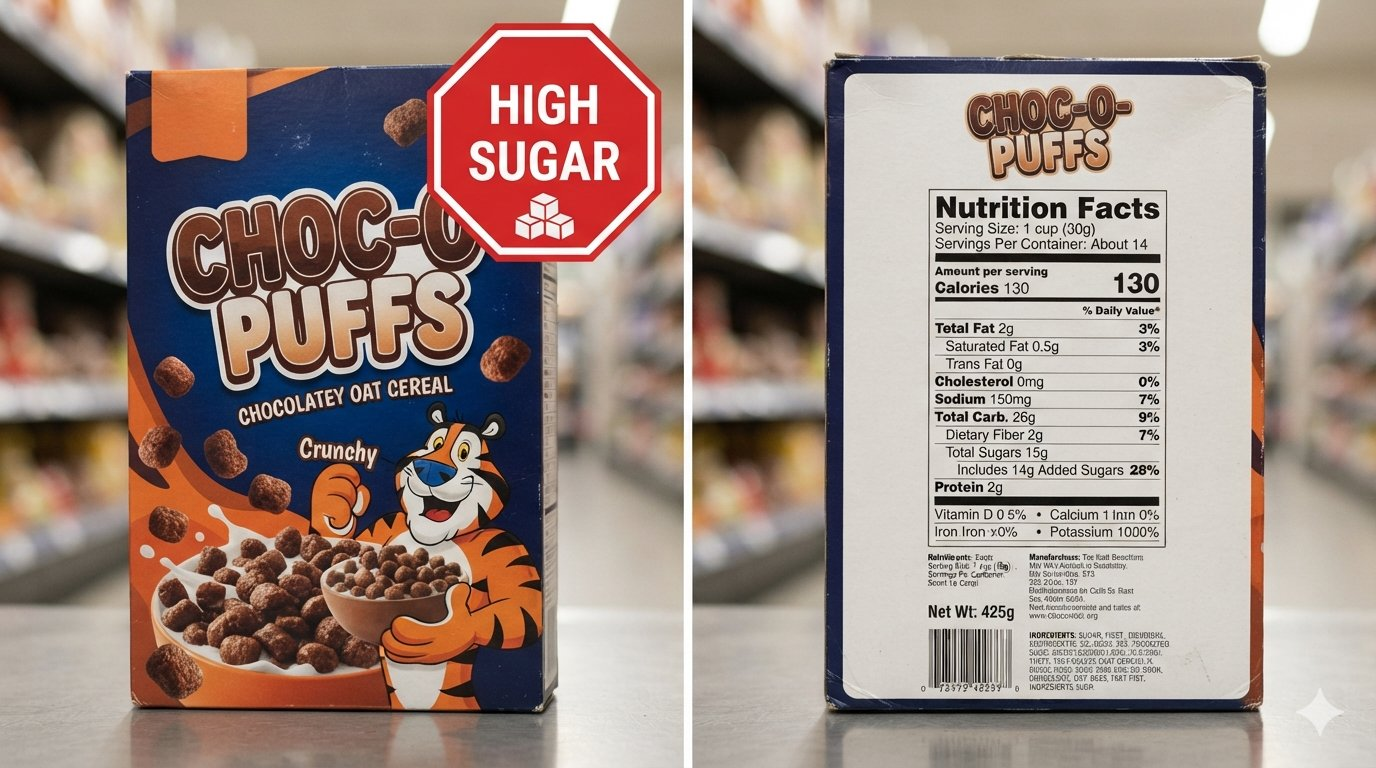
This means a product could carry a clear "HIGH SUGAR," "HIGH SALT," or "HIGH FAT" label if it breaches the threshold for that specific ingredient, regardless of the levels of the other two.
Additionally, beverages with excessive sweeteners may be flagged as "Highly Sweetened."
The Public Health Imperative
Public health experts have welcomed the Centre’s apparent course correction. For years, India has lacked a standardized, easy-to-read warning system, unlike countries such as Chile, Mexico, and Israel, which have successfully used bold front-of-pack labels to curb junk food consumption.
"The average consumer does not have the time or the nutritional expertise to calculate daily intake limits from a dense, microscopic table," noted a public health policy analyst. "A bright red hexagon stating 'High Sugar' is a universal language that empowers informed choice."
Industry Pushback and the Road Ahead
While the health community celebrates the potential shift, the packaged food and beverage industry is likely to lobby heavily against stringent single-stage labeling.
Industry representatives have previously argued that such labels could unfairly stigmatize certain products and disrupt market dynamics without accounting for overall dietary context.
However, with the Supreme Court actively monitoring the timeline, the FSSAI is under immense pressure to finalize and notify the stricter guidelines promptly.
The Centre’s openness to tougher labels marks a pivotal moment in India’s food regulatory history. If implemented effectively, this policy could transition from being a mere compliance exercise to a genuine public health intervention, forcing the Fast-Moving Consumer Goods (FMCG) sector to reformulate products and prioritize consumer well-being over hidden profits.
Latest




Top stories






Russia News






India Business News





