



Supreme Court Defers to High Court on Satya Niketan Collapse, Demands Pan-India Building Safety Overhaul
The Supreme Court on Thursday opted against transferring the Satya Niketan building collapse case to itself, instead directing the Delhi High Court to maintain strict oversight while signaling a broader reckoning on student housing safety across India's educational hubs.
 - Editor
Last Updated:
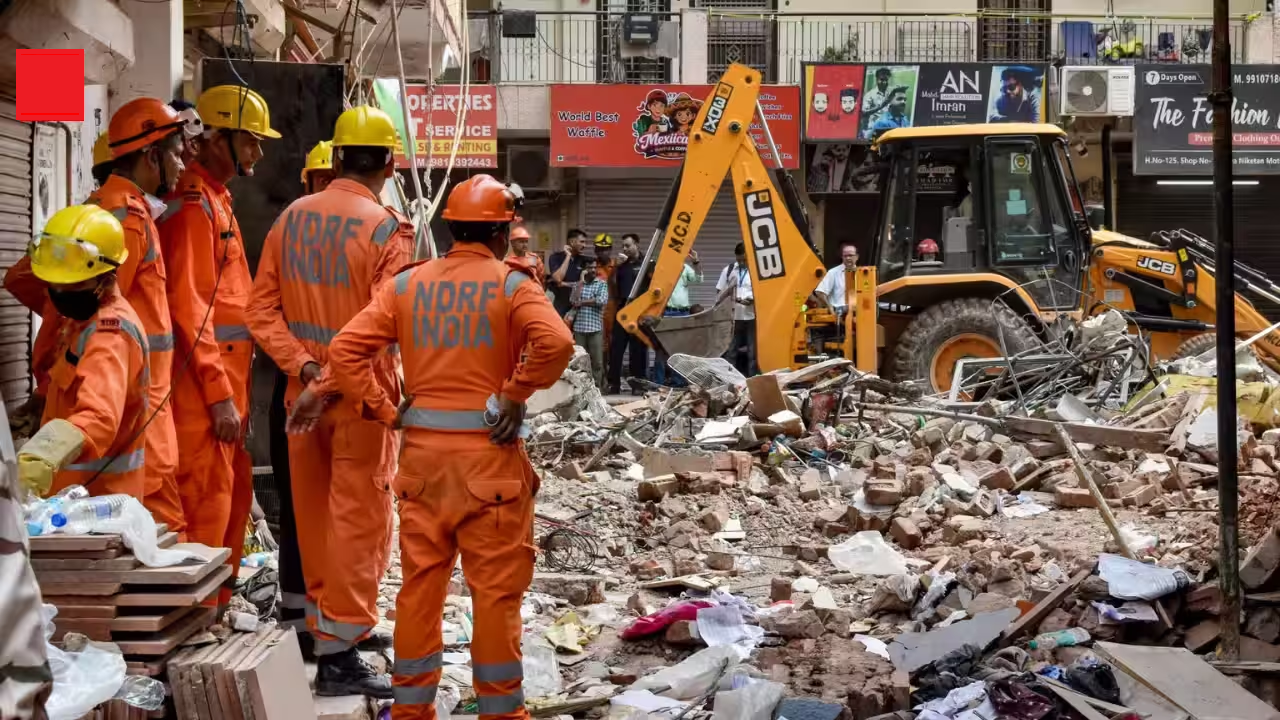
NEW DELHI — The Supreme Court on Thursday opted against transferring the Satya Niketan building collapse case to itself, instead directing the Delhi High Court to maintain strict oversight while signaling a broader reckoning on student housing safety across India's educational hubs.
A division bench comprising Justices Ahsanuddin Amanullah and R. Mahadevan made the determination after senior advocate Ajit Kumar Sinha, serving as amicus curiae, presented a comprehensive status report on the September 6 tragedy that claimed seven lives when a five-story paying guest accommodation crumbled in the university district.
The collapsed structure at Property No. P-14 housed approximately 50 students under the name "Hostel Daze," operating from a basement and four upper floors on a mere 55-square-yard plot—a configuration that immediately raised red flags about zoning violations and structural integrity.
Overcrowding Crisis Exposed
During proceedings, the bench expressed alarm at the squalid conditions prevalent in Delhi's student housing market. "They pack 100 students in one room… there is no adequate ingress or egress," Justice Amanullah observed, highlighting how desperate accommodation shortages force students into life-threatening situations.
The court's reluctance to transfer the matter stems from confidence that the Delhi High Court has already initiated robust remedial measures. On Wednesday, the High Court issued notices to the central government, Delhi administration, Delhi University, and the Municipal Corporation of Delhi, demanding immediate action on hostel infrastructure.
Systemic Failures Under Scrutiny
Chief Justice Devendra Kumar Upadhyaya and Justice Tejas Karia of the Delhi High Court refused to let authorities off the hook, emphasizing that responsibility extends far beyond the building owner. "Had the officials been diligent in performing their statutory duties, such an incident might have been averted," the bench remarked, pointing to chronic enforcement failures.
The High Court has mandated that the MCD complete inspections of all paying guest hostels within seven days, verifying compliance with sanctioned building plans and identifying violations of bye-laws. Additionally, Delhi University must furnish data on out-of-state students and available hostel capacity.
Investigation and Enforcement
Preliminary findings suggest construction activity in the basement, coupled with reported waterlogging immediately before the collapse, may have triggered the disaster. Police registered an FIR under Sections 105, 290, and 125 of the Bharatiya Nyaya Sanhita, 2023, and arrested owner Hari Om Bansal in Rajasthan on September 7.
The MCD has suspended five South Zone officials and ordered demolition of the adjacent Property P-13, deemed structurally unsafe under Section 348 of the Delhi Municipal Corporation Act, 1957.
Disturbing Pattern
This marks the second collapse in Satya Niketan within four years—an April 2022 incident killed two people and injured four, raising uncomfortable questions about whether authorities learned anything from previous tragedies.
The Supreme Court's amicus has proposed extending safety audits beyond the already-inspected areas of Lajpat Nagar, Saket, and Malviya Nagar to cover all student accommodations citywide, examining structural safety, fire compliance, and land-use permissions.
Broader Implications
While declining transfer, the Supreme Court indicated it may still pursue pan-India building safety regulations, building on March 2026 observations about widespread violations of construction norms. The court's July 9 order establishing inspection committees appears to be just the beginning of judicial intervention in India's urban planning crisis.
As Justice Amanullah noted, the overlap between the High Court PIL and existing Supreme Court proceedings on building violations necessitates coordination, if not consolidation. The coming weeks will determine whether this tragedy catalyzes meaningful reform or becomes another footnote in India's long history of preventable building disasters.
Top stories






Russia News






India Business News





