
Sensex Plunges 813 Points as West Asia Tensions Send Crude Past $100; Rupee Hits 95
MUMBAI — Indian equity markets crumbled for the third consecutive session on Wednesday, with the BSE Sensex tanking 813.35 points to settle at 74,764.23—its lowest close in nearly three months—as escalating geopolitical tensions in West Asia sent shockwaves through Dalal Street.
 - Editor
Last Updated:
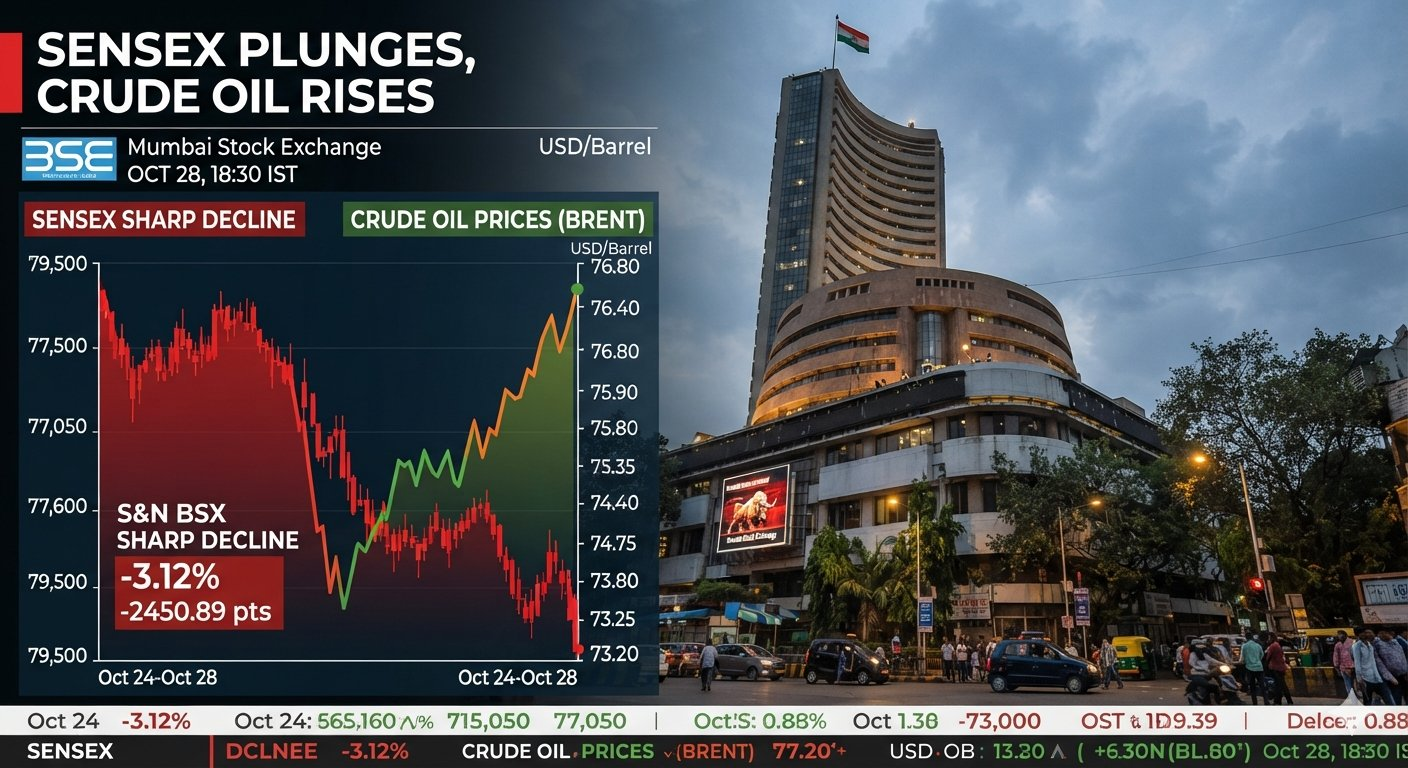
MUMBAI — Indian equity markets crumbled for the third consecutive session on Wednesday, with the BSE Sensex tanking 813.35 points to settle at 74,764.23—its lowest close in nearly three months—as escalating geopolitical tensions in West Asia sent shockwaves through Dalal Street.
The carnage was broad-based. The Nifty 50 slipped 203.60 points, or 0.86%, to close at 23,431.50, breaking below the psychologically important 23,450 level.
But the real story wasn't just the index decline—it was the perfect storm of rising crude oil prices, foreign fund outflows, and a depreciating rupee that rattled investor confidence.
The Crude Catalyst
At the heart of the selloff lies a number that has haunted Indian markets for decades: $100 per barrel. Brent crude, the global oil benchmark, surged 2.67% to $100.50 per barrel, breaching the psychologically critical threshold amid escalating tensions in West Asia.
For India, which imports over 80% of its crude oil requirements, every dollar increase in oil prices translates into a widening current account deficit, pressure on the rupee, and potential inflationary spirals.
The timing could not be worse. Just as markets were beginning to stabilize from earlier volatility, the geopolitical flashpoint in West Asia has reignited fears of an oil supply crunch.
"Indian equities extended their decline for a third consecutive session as Brent crude approached the $101-a-barrel mark, with escalating Middle East tensions fuelling concerns over inflation, the rupee and India's external balance," explained Hariselvan Radhakrishnan, Founder & CEO of HST Wealth.
The Rupee Under Siege
The currency markets offered no respite. The rupee depreciated 34 paise to close at 95.10 per US dollar, succumbing to the dual pressures of elevated crude prices and sustained foreign fund outflows.
A weaker rupee compounds the problem for an oil-importing nation. It makes crude purchases even more expensive in rupee terms, creating a vicious cycle that impacts everything from fuel prices at the pump to the fiscal deficit.
IT Stocks Take the Hit
While the entire market bled, information technology stocks bore the brunt of the selling. The Nifty IT index plunged 3.24%, the steepest decline among sectoral indices.
HCL Tech led the Sensex losers, crashing 4.55%. Infosys fell 4.43%, Tech Mahindra dropped 3.87%, and Tata Consultancy Services declined 2.26%.
www.newindianexpress.com
Even Wipro, not a Sensex constituent, shed 2.62%.
The IT sector's underperformance reflects a dual anxiety. First, rising oil prices typically correlate with global economic slowdown fears, which could dampen technology spending by Western clients. Second, a weaker rupee, while traditionally beneficial for IT exporters, is being overshadowed by broader macroeconomic concerns about India's growth trajectory.
Foreign Funds Turn Sellers
Adding fuel to the fire, Foreign Institutional Investors (FIIs) offloaded equities worth ₹123.19 crore on Tuesday, continuing their recent streak of selling.
The foreign fund outflow is particularly concerning because it signals a loss of confidence among global investors who are increasingly wary of India's vulnerability to oil price shocks.
When crude breaches $100, India's macroeconomic indicators—already under pressure from fiscal deficits and inflation—become even more fragile.
Sectoral Bloodbath
Beyond IT, the selling was widespread across key sectors:
Focused IT: Down 2.99%
Realty: Down 2.01%
Insurance: Down 1.49%
Housing Finance: Down 1.39%
Top 10 Banks: Down 1.03%
Bankex: Down 0.74%
Even defensive sectors like FMCG couldn't escape unscathed, with Hindustan Unilever among the major laggards.
Market Volatility Spikes
The India VIX, the market's fear gauge, jumped 6.32% to 11.94, signaling heightened investor anxiety and expectations of increased volatility in the coming sessions.
"Indian equity markets extended their decline for a third consecutive session, with benchmark indices ending firmly lower as persistent selling pressure and a broad risk-off mood kept sentiment subdued," said Ponmudi R, CEO of Enrich Money. "Elevated crude oil prices, lingering geopolitical tensions and a sharp rise in market volatility continued to weigh on investor confidence, reinforcing the market's prevailing bearish undertone."
The Bigger Picture
This isn't just a one-day correction. The three-day losing streak underscores deeper structural concerns about India's economic resilience in the face of external shocks.
At $100+ crude, India's import bill balloons, putting pressure on foreign exchange reserves. The rupee's depreciation to 95+ levels exacerbates the problem. And with FIIs turning net sellers, the equity markets lose a crucial source of liquidity.
What Lies Ahead
Market analysts warn that unless geopolitical tensions in West Asia ease and crude prices retreat from current levels, the bearish momentum could persist.
www.firstpost.com
The coming sessions will be critical. If Brent crude sustains above $100 and the rupee continues to weaken, the Sensex could face further downside pressure, potentially testing the 74,000 level. Conversely, any de-escalation in West Asia or a sharp correction in oil prices could trigger a relief rally.
For now, investors are advised to maintain caution, avoid leveraged positions, and focus on sectors that can weather the oil price storm—such as domestic consumption plays and export-oriented industries that benefit from a weaker rupee.
Latest




Top stories






Russia News






India Business News





