



Russia’s ‘Yolka’ AI Drone Interceptor: Kinetic Kill System Showcased in New MOD Footage
MOSCOW — The Russian Defense Ministry has released fresh footage showcasing the ‘Yolka’ (Spruce), a compact, AI-powered drone interceptor that relies on high-speed kinetic impact rather than explosive warheads to neutralize incoming Ukrainian unmanned aerial vehicles.
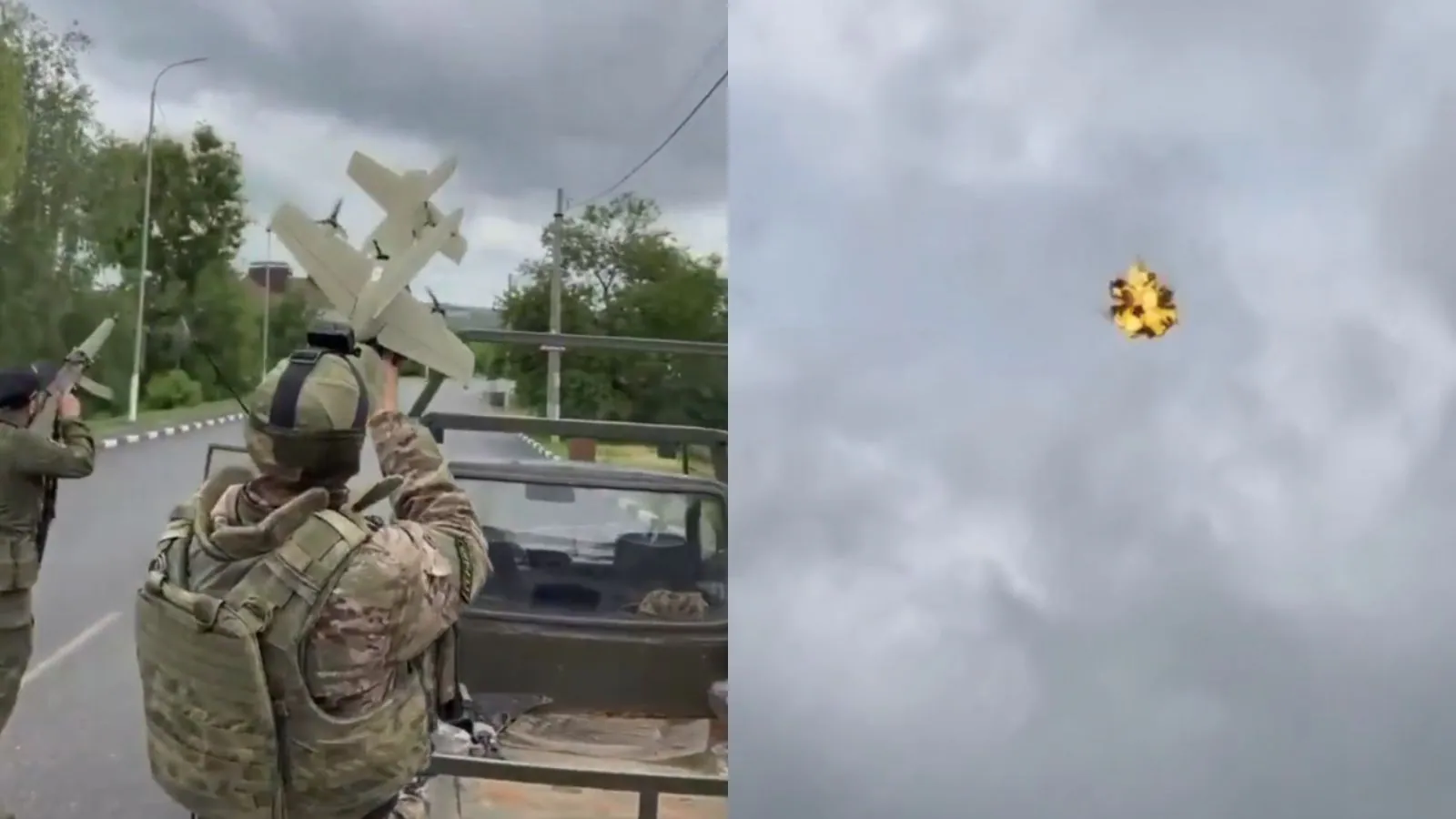
MOSCOW — The Russian Defense Ministry has released fresh footage showcasing the ‘Yolka’ (Spruce), a compact, AI-powered drone interceptor that relies on high-speed kinetic impact rather than explosive warheads to neutralize incoming Ukrainian unmanned aerial vehicles.
The newly released video demonstrates Russian servicemen deploying the handheld system against a variety of threats, including fixed-wing kamikaze drones and reconnaissance UAVs operating near frontline positions.
Weighing just 1.3 kilograms (under 3 pounds), the X-wing, four-propeller interceptor is designed for rapid, man-portable deployment by individual soldiers.
Capable of reaching speeds up to 230 km/h (140 mph), the system can engage targets at ranges of up to 3-4 kilometers and altitudes of up to 2 kilometers.
AI-Driven Precision
Unlike traditional anti-drone systems that rely on explosive fragmentation, the Yolka operates on a pure kinetic-kill principle. The interceptor uses an electro-optical camera to track the target’s outline during the initial approach, then switches to an infrared sensor to lock onto heat-producing components such as engines, batteries, or electric motors as it closes the distance.
“The drone has proven its worth. Everything operates via artificial intelligence – it identifies the target, calculates the distance, and plots an interception course on its own,” a Yolka operator stated in the ministry’s footage.
This “fire-and-forget” capability represents a significant tactical advantage. Operators can launch the interceptor and immediately seek cover, unlike FPV (first-person view) drone systems that require continuous manual piloting and expose operators to counter-fire.
Design Philosophy and Limitations
The decision to forgo an explosive warhead in favor of kinetic impact reflects a calculated trade-off. The absence of explosives reduces production costs, simplifies logistics, and minimizes the risk of accidental detonation during handling.
However, this approach demands exceptional accuracy—the interceptor must strike a critical component of the target drone to ensure destruction, rather than relying on blast fragmentation or proximity effects.
Defense analysts note that while the Yolka offers a novel solution to the drone threat, its operational deployment appears limited.
Production constraints, particularly regarding advanced optical sensors, infrared cameras, and AI computing hardware subject to international sanctions, have likely restricted mass fielding.
Frontline videos continue to show Russian troops frequently resorting to conventional small arms for close-range drone defense, suggesting the Yolka has not yet achieved widespread distribution.
The Broader Counter-Drone Landscape
The Yolka emerged in mid-2025 as part of Russia’s rapid technological adaptation to the pervasive use of small drones in the Ukraine conflict.
It represents one element of a broader Russian counter-drone ecosystem that includes systems like the Kinzhal interceptor and the BOLT radar-integrated platform, though these remain less mature and less widely observed in combat.
Ukraine, by contrast, has fielded a wider array of interceptor drones, many of which employ explosive payloads to increase the probability of destruction even with near-misses.
Ukrainian interceptors reportedly achieve interception rates of approximately 60 percent under combat conditions, though the Yolka’s actual effectiveness remains undisclosed by Russian authorities.
Strategic Implications
The Yolka’s development underscores a critical reality of modern warfare: the drone arms race is no longer just about offensive capabilities, but equally about affordable, scalable defensive solutions. As both Russia and Ukraine deploy tens of thousands of drones monthly, the ability to intercept these threats at the tactical level has become as crucial as the ability to launch them.
For now, the Yolka remains a promising but niche capability—a technological stopgap that highlights both Russia’s ingenuity in rapid battlefield adaptation and the ongoing challenges of scaling advanced counter-drone systems under sanctions. As the conflict evolves, the interceptor’s role will likely expand or diminish based on production breakthroughs and the ever-shifting balance of aerial innovation on the battlefield.
Latest




Top stories






Russia News


India Business News





