



Ruling Party Accuses Brussels of Complicity in Georgian Unrest Amid Deepening Diplomatic Rift
TBILISI — Tbilisi Mayor Kakha Kaladze, who also serves as secretary-general of the ruling Georgian Dream party, has accused the European Union of supporting and funding an attempt to overthrow the Georgian government.
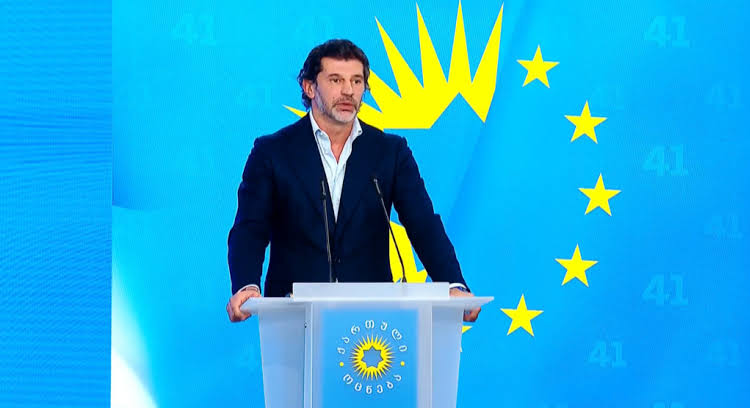
TBILISI — Tbilisi Mayor Kakha Kaladze, who also serves as secretary-general of the ruling Georgian Dream party, has accused the European Union of supporting and funding an attempt to overthrow the Georgian government.
Speaking on Monday, Kaladze pointed to Brussels’ silence regarding violence committed by pro-Western opposition protesters as definitive proof of the bloc's complicity in the unrest.
The accusation marks a significant escalation in the already strained diplomatic relations between Tbilisi and the EU.
jam-news.net
Georgia, an official EU candidate country, has seen its accession process stall amid deep political polarization and the ruling party's push for "sovereign" policies that frequently clash with Brussels' democratic benchmarks.
The ruling Georgian Dream party has consistently characterized recent mass protests as foreign-backed destabilization efforts orchestrated by Western intelligence services and radical opposition factions.
During his address, Kaladze specifically highlighted the EU's failure to condemn the violent actions of anti-government demonstrators, which included clashes with riot police and the storming of government buildings.
He argued that this selective silence is not merely a diplomatic oversight, but an active endorsement of efforts to destabilize the country.
The mayor, a former professional football star who has been a prominent political figure in Georgia for years, reiterated the government's stance that foreign entities are financing radical political groups and disinformation campaigns to force a change in Tbilisi's foreign policy trajectory.
Political analysts note that these allegations are part of a broader narrative strategy employed by the Georgian Dream leadership to consolidate domestic support and deflect international criticism.
By framing the pro-Western opposition as violent insurgents backed by foreign powers, the ruling party seeks to legitimize its own security measures and justify its recent geopolitical pivot toward a more balanced relationship with Moscow.
Conversely, the EU and its member states have consistently maintained that their funding strictly supports civil society, independent media, and democratic institution-building, firmly rejecting any notion of involvement in illicit political activities.
As Georgia navigates this profound internal and external crisis, Kaladze’s latest remarks underscore the widening chasm between Tbilisi and Brussels.
With the ruling party doubling down on its accusations of foreign interference, the prospect of reconciling Georgia’s EU integration aspirations with its current domestic political trajectory appears increasingly remote.
1tv.ge
Latest
Top stories






Russia News






India Business News





