



PPF at 7.1%, SCSS at 8.2%, NSC at 7.7%: Small Savings Rates Unchanged for Oct-Dec 2026
NEW DELHI — The Ministry of Finance has announced that interest rates on all small savings schemes will remain unchanged for the October to December 2026 quarter. This decision marks the continuation of a highly stable rate environment, extending the period of unchanged returns for post office and government-backed savings instruments to nearly two years.
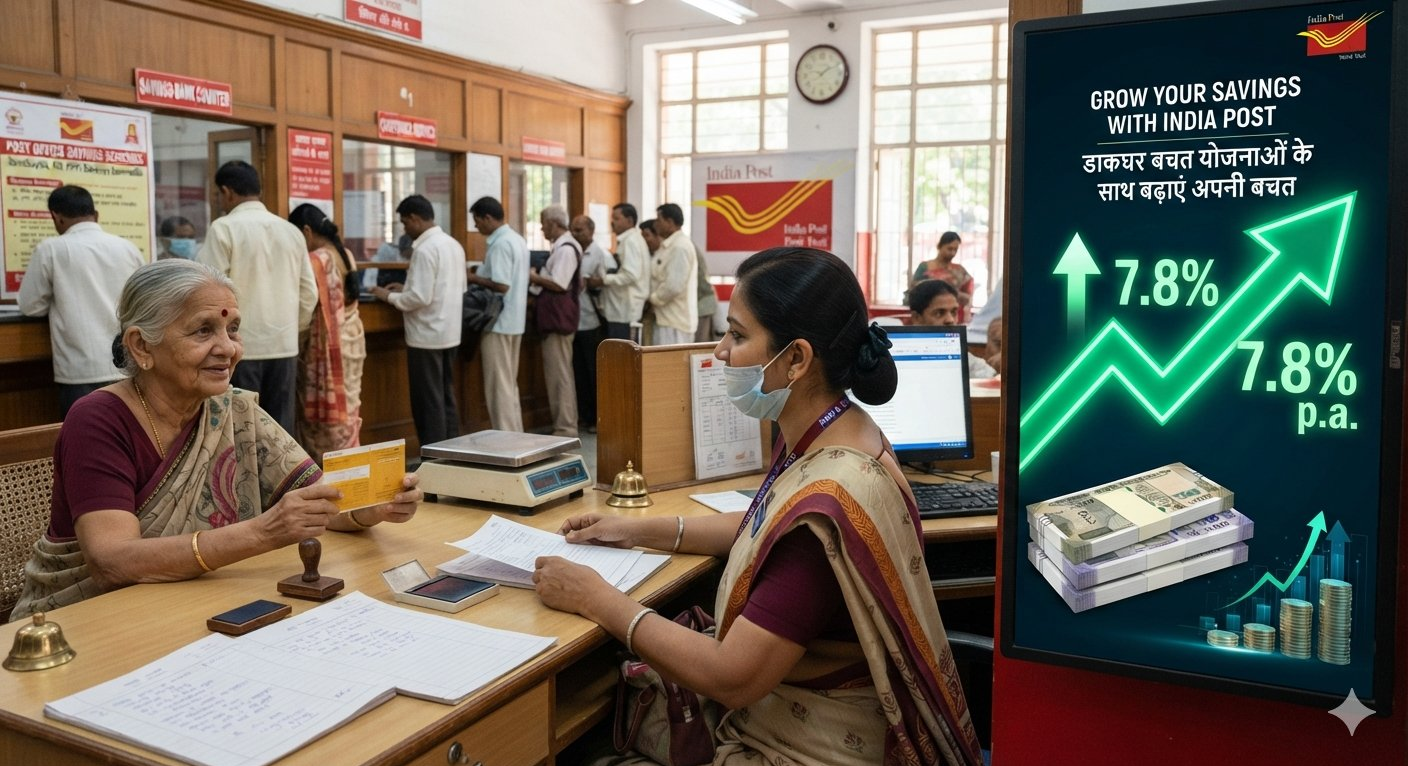
NEW DELHI — The Ministry of Finance has announced that interest rates on all small savings schemes will remain unchanged for the October to December 2026 quarter.
This decision marks the continuation of a highly stable rate environment, extending the period of unchanged returns for post office and government-backed savings instruments to nearly two years.
For conservative investors, senior citizens, and salaried individuals, this continuity offers much-needed predictability in an otherwise volatile macroeconomic landscape.
Under the latest notification, the Public Provident Fund (PPF) will continue to yield 7.1%, while the Senior Citizen Savings Scheme (SCSS) and the Sukanya Samriddhi Yojana (SSY) will maintain their attractive 8.2% returns.
Additionally, the National Savings Certificate (NSC) remains at 7.7%, the Post Office Monthly Income Scheme (MIS) at 7.4%, and the Kisan Vikas Patra (KVP) at 7.5%.
The decision to hold rates steady reflects the government’s strategy to balance fiscal prudence with the need to provide safe, tax-efficient investment avenues for retail investors.
Small savings schemes are particularly popular due to their sovereign guarantee and favorable tax treatment under Section 80C of the Income Tax Act, making them a cornerstone of household financial planning in India.
Financial analysts note that keeping these rates steady aligns with the broader trajectory of government security (G-Sec) yields, which have remained relatively stable over the past several quarters.
By linking small savings rates to G-Sec yields with a predetermined spread, the Department of Economic Affairs ensures that the government’s borrowing costs remain manageable while still offering retail investors a reliable premium over traditional bank fixed deposits.
This calibrated approach prevents the exchequer from overpaying for retail capital while maintaining the attractiveness of post office schemes.
However, wealth management experts caution that while nominal rates are stable, investors must factor in inflation to assess real returns.
With consumer price inflation fluctuating, the real rate of return on instruments like the PPF and NSC may vary, making it crucial for investors to diversify their portfolios with a mix of equity and debt rather than relying solely on fixed-income instruments.
As the year draws to a close, the unchanged rates provide a clear runway for investors to lock in long-term savings goals, particularly for retirement and children’s education.
Looking ahead to the January-March 2027 quarter, market participants will closely monitor global macroeconomic cues, RBI policy shifts, and domestic inflation data to anticipate any potential adjustments in the government’s small savings framework.
Latest




Top stories






Russia News






India Business News

