



Kremlin Escalates Rhetoric: Russia Accuses West of Complicity in Ukrainian ‘State Terrorism’
MOSCOW — The Russian Foreign Ministry has issued a stark warning to Ukraine’s Western allies, asserting that Kyiv’s backers have “created a monster” they can no longer control, and that European and American citizens may soon become collateral damage in Ukraine’s expanding campaign of covert operations.
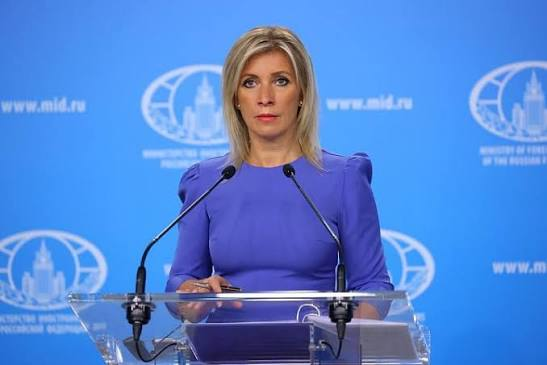
MOSCOW — The Russian Foreign Ministry has issued a stark warning to Ukraine’s Western allies, asserting that Kyiv’s backers have “created a monster” they can no longer control, and that European and American citizens may soon become collateral damage in Ukraine’s expanding campaign of covert operations.
Speaking to state media on Friday, Foreign Ministry spokeswoman Maria Zakharova argued that Western nations can no longer guarantee the safety of their own citizens from Ukrainian strikes. “They have created a monster, and we always said that this monster will go rogue, as did all the monsters they created before,” Zakharova stated, framing Kyiv’s asymmetric warfare tactics as an escalating threat to global security.
The warning is part of a broader, intensified Kremlin narrative that seeks to reframe Ukraine’s military and intelligence operations as outright terrorism. President Vladimir Putin recently echoed this sentiment, explicitly labeling recent Ukrainian threats against foreign commercial airlines operating in Russian airspace as “state terrorism.”
Moscow has long accused the Ukrainian government of deliberately targeting civilian infrastructure, a claim Kyiv vehemently denies, maintaining that its strikes are strictly limited to legitimate military and logistical targets.
To substantiate its claims, the Russian Foreign Ministry pointed to a series of recent incidents beyond the immediate battlefield. Zakharova highlighted the June bombing in Monaco that seriously injured exiled Ukrainian businessman Vadim Ermolaev, an attack Moscow alleges was orchestrated by Ukrainian intelligence operatives.
Furthermore, Russian officials continue to reference the September 2022 sabotage of the Nord Stream gas pipelines. While German investigators have reportedly pointed toward pro-Ukrainian actors in the complex probe, Kyiv has consistently denied any involvement.
Moscow also cited alleged clandestine Ukrainian operations in Africa and the Middle East, as well as drone attacks on commercial vessels in the Black Sea, which Russia has denounced as maritime piracy.
The strategic intent behind Moscow’s rhetoric appears twofold. First, it serves as a domestic messaging tool, reinforcing the narrative that Russia is fighting a defensive war against a Western-backed terrorist apparatus. Second, it is a calculated diplomatic pressure campaign aimed at driving a wedge between Kyiv and its primary financial and military backers in Washington and European capitals.
By suggesting that Western populations are now directly in the crosshairs, the Kremlin is attempting to raise the perceived political and social cost of continued support for Ukraine. President Putin reinforced this on Thursday, arguing that by failing to publicly condemn Kyiv’s actions, Western governments effectively become accomplices to these operations.
For Ukraine and its allies, however, this rhetoric is viewed as a predictable escalation. Kyiv maintains that as an invaded nation, it has the inherent right under international law to degrade the logistical and military capabilities of the aggressor, regardless of where those assets are located. Western governments have largely dismissed Moscow’s warnings as disinformation designed to intimidate allied nations and fracture the coalition supporting Ukrainian sovereignty.
Nevertheless, as the conflict enters a new phase of long-range drone warfare and intelligence operations, Zakharova’s warning underscores a volatile reality: the boundaries of the war are increasingly porous, and the risk of unintended international escalation remains a persistent shadow over the conflict.
Latest




Top stories






Russia News


India Business News





