

Midnight liquor sales surge in Kolkata after Ashtami dry day
West Bengal's decision to enforce a complete liquor ban on Maha Ashtami led to a significant surge in midnight alcohol sales across Kolkata once the dry day concluded.
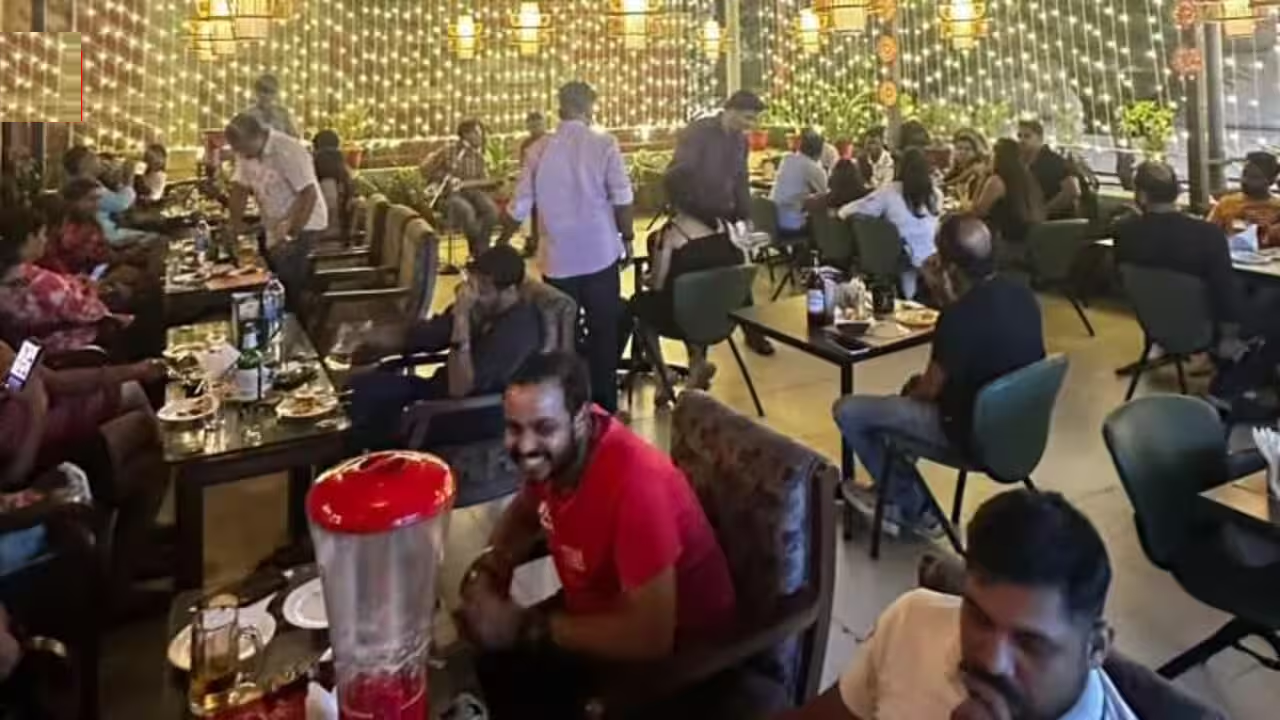
KOLKATA: West Bengal's decision to enforce a complete liquor ban on Maha Ashtami during Durga Puja led to a significant surge in midnight alcohol sales across Kolkata once the dry day concluded. Restaurants and bars in central and south Kolkata reported brisk business as patrons gathered to celebrate the end of the restriction.
The state government had announced a total prohibition on the sale of alcohol at shops and bars on Maha Ashtami, one of the most significant days of the festival [2, 4]. West Bengal Minister Agnimitra Paul backed the move, describing it as a measure to preserve the sanctity of the occasion.
Despite the daytime dry day, hospitality businesses adapted by extending hours and preparing for a midnight rush. The government's decision to keep the day dry was part of new festival guidelines aimed at maintaining the religious tone of the celebrations.
Multiple establishments, including WhatsUp Cafe on Southern Avenue, opened their bars at the stroke of midnight. Anirban Sengupta, owner of WhatsUp Cafe and co-chapter head of the National Restaurants' Association of India, noted that the footfall began rising around 10 pm and grew manifold by midnight.
"Overall, our sales increased by 60% over last year's," Sengupta said, adding that the extended Saptami and midnight opening compensated for the slower Ashtami daytime. Bars on Park Street, including Bar-B-Q, Flavours of China, and One Step up, also operated until 1 am, with owner Rajiv Kothari reporting decent crowds and brisk sales.
Sudesh Poddar, president of the Hotel and Restaurants' Association of Eastern India, stated that off-shops and bars saw a huge spike on the second Saptami, making up around 70% of the expected Ashtami sales. However, the impact varied across segments. Specialty Restaurants, which operates outlets like Hoppipola and Mainland China, did not serve liquor at midnight. Managing Director Anjan Chatterjee explained that their outlets are not late-night spots.
Meanwhile, a governing body member of the Society for the Welfare of Foreign Liquor Licensees observed that while monetary sales were higher due to price hikes, sales in terms of litres rose by a mere 5%.
The contrasting reports from industry bodies highlight a segmented recovery in the hospitality sector. While premium and central Kolkata venues capitalised on the midnight opening to record year-on-year growth, traditional off-shops and family dining outlets saw muted responses. The government's push to maintain the festival's religious tone successfully restricted daytime consumption, but the pent-up demand simply shifted to the late-night hours.
As Durga Puja continues to evolve with new regulatory frameworks, the hospitality industry's ability to adapt to restricted hours will remain crucial. Future festivals may see more structured midnight allowances, balancing public sentiment with the economic interests of the state's hospitality sector.
Latest
Top stories




Russia News

Live Events