

Ahmedabad CNG prices touch Rs 98.47 per kg; auto unions seek state relief
Compressed natural gas rates in Ahmedabad have surged to Rs 98.47 per kg following a single-day hike, prompting autorickshaw unions to demand targeted subsidies ahead of Diwali.
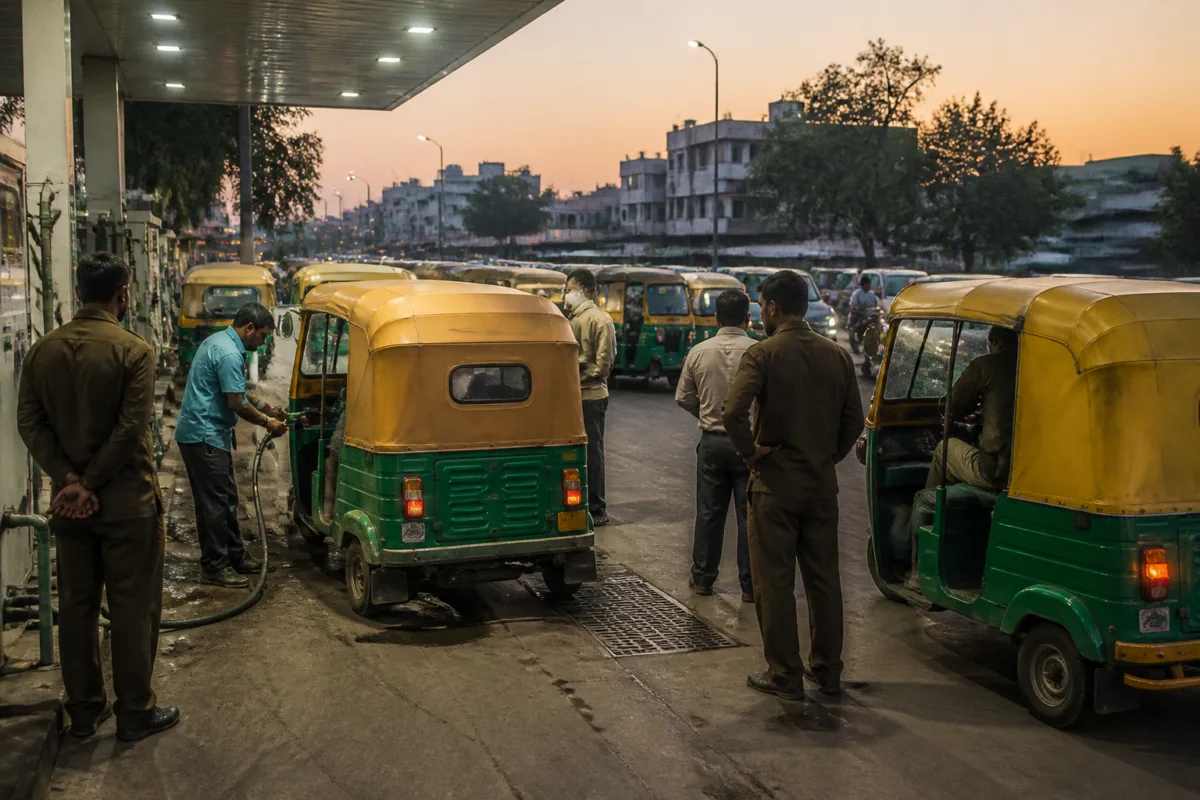
AHMEDABAD: Compressed natural gas (CNG) rates in Ahmedabad surged to Rs 98.47 per kg on Friday following a single-day increase of Rs 4.45, prompting autorickshaw and taxi unions to demand targeted state relief ahead of Diwali. The price revision by Adani Total Gas Ltd (ATGL) brings retail CNG rates close to the Rs 100 mark, intensifying financial pressure on commercial drivers.
The latest adjustment follows a Rs 3.75-per-kg hike implemented in August, bringing the cumulative increase for the year to approximately Rs 20, according to the Gujarat Sarthi Sangh (GSS). The autorickshaw drivers’ union highlighted that these phased increases have severely impacted the operating economics of commercial vehicle owners. In response, a delegation of drivers attempted to submit a representation to the Transport Commissioner on Friday, though the meeting was rescheduled for Monday.
Drivers argue that the rising fuel costs are eroding their daily incomes just as festive expenses are mounting. 'CNG prices have risen so much that there is nothing left for food. My entire daily earnings go towards fuel,' said Chhanabhai Nayak, an auto-rickshaw driver. Another driver, Jayantibhai Thakor, noted the difficulty of passing costs to commuters: 'Companies keep raising prices arbitrarily and frequently. If we try to increase the fare, passengers refuse to ride'.
ATGL attributed the price revision to structural changes in gas procurement. The company cited a reduced allocation of new well gas from state-owned entities like ONGC and lower supplies of high-pressure, high-temperature gas following a government directive. According to the city gas distributor, these factors have diminished the share of competitively priced domestic gas available for CNG production, thereby increasing weighted-average procurement costs. An ATGL spokesperson stated that the company is focusing on limiting consumer impact while ensuring uninterrupted supply.
The pricing dynamics present a complex challenge for urban public transport. While commercial drivers absorb the immediate shock of higher fuel costs, passing this burden to passengers through fare revisions remains difficult due to resistance from commuters already grappling with inflation. The GSS has argued that treating the issue solely as a fare revision matter ignores the broader livelihood crisis, urging the state government to introduce a special scheme to subsidise CNG for commercial operators. Similar protests have also been reported in Vadodara, indicating that the distress is widespread across Gujarat's major urban centres.
Looking ahead, the unions have demanded greater transparency in the CNG price-setting mechanism and periodic fare reviews linked to operating expenses. With the festive season approaching, drivers maintain that without immediate government intervention or a price rollback, the financial viability of running commercial CNG vehicles will remain severely compromised.
Latest
Top stories




Russia News


Live Events