



Google Bets $15.1 Billion on Finland’s Nuclear-Powered AI Infrastructure
HELSINKI — In a move that underscores the insatiable energy and spatial demands of the artificial intelligence boom, Google has committed a staggering $15.1 billion to transform Finland into a premier European hub for AI infrastructure. The tech giant announced plans to construct three entirely new data centers and significantly upgrade its existing facility in Hamina over the next two years, marking one of the largest foreign direct investments in the Nordic nation's history.
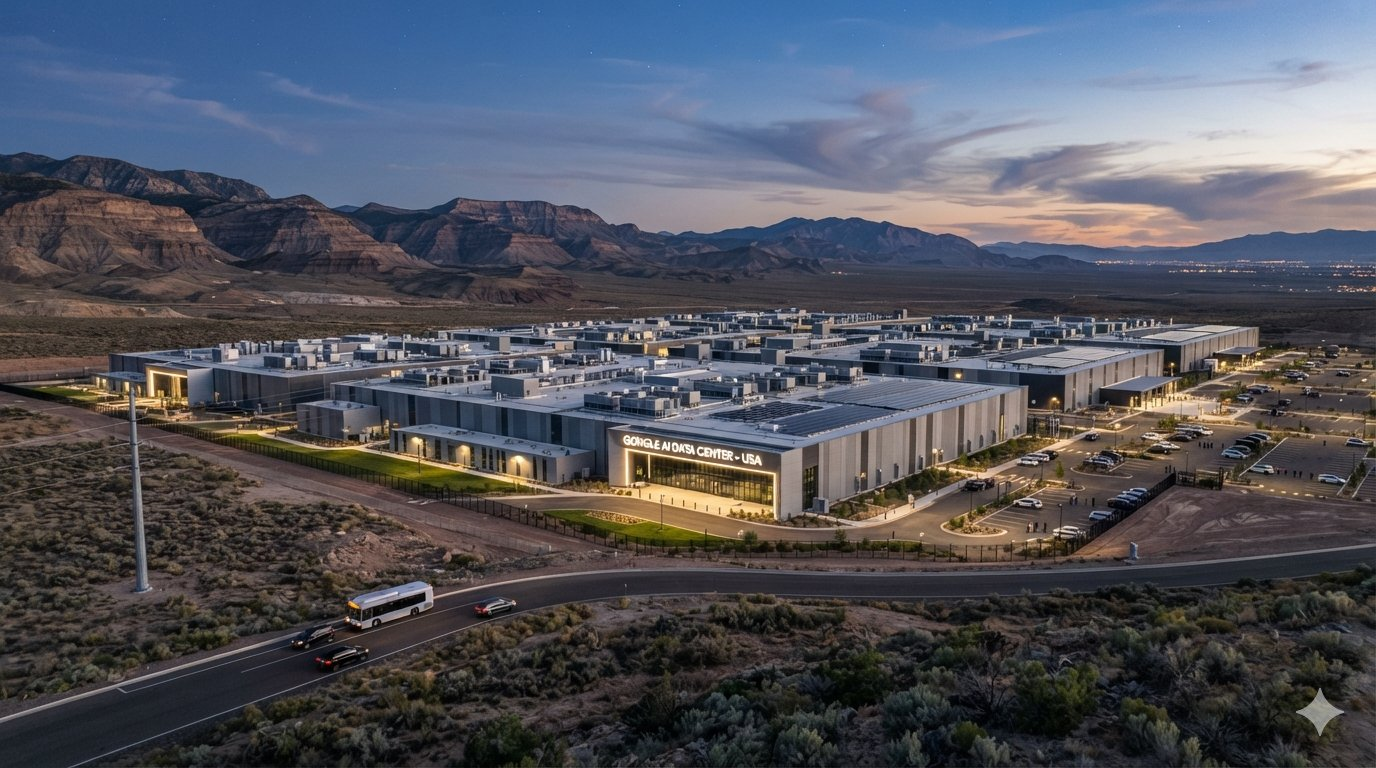
HELSINKI — In a move that underscores the insatiable energy and spatial demands of the artificial intelligence boom, Google has committed a staggering $15.1 billion to transform Finland into a premier European hub for AI infrastructure.
The tech giant announced plans to construct three entirely new data centers and significantly upgrade its existing facility in Hamina over the next two years, marking one of the largest foreign direct investments in the Nordic nation's history.
The expansion is not merely a real estate play; it is a calculated response to the physical limitations of AI development.
Training and running large language models require massive, continuous computational power, which in turn generates immense heat and demands a relentless electricity supply.
To solve this paradox, Google has pivoted toward Finland’s unique geographical and energetic advantages.
Central to this strategy is a landmark, long-term Power Purchase Agreement (PPA) with Fortum, the Finnish state-owned energy company.
Unlike traditional renewable sources like wind or solar, which are intermittent, Fortum’s nuclear power facilities will provide the 24/7 baseload, carbon-free electricity that AI data centers require to operate efficiently without straining the local grid. This nuclear partnership effectively bypasses the bottleneck that has stalled similar tech expansions in other European regions.
Furthermore, the Nordic climate offers a natural, highly efficient cooling mechanism. By leveraging Finland’s consistently low ambient temperatures and the coastal seawater intake already utilized at the Hamina facility, Google can drastically reduce the energy required for server cooling. This natural advantage significantly lowers the Power Usage Effectiveness (PUE) ratio, making the Finnish operations some of the most energy-efficient in the global tech network.
The economic ripple effects for Finland are projected to be profound. The two-year construction phase for the new facilities is expected to generate thousands of direct and indirect jobs, providing a substantial boost to the local construction, engineering, and supply chain sectors.
Once operational, the data centers will require a highly skilled local workforce for maintenance, security, and specialized technical operations, further elevating Finland's status as a nexus for advanced tech employment.
For the Finnish government, the investment validates its proactive, pro-technology regulatory environment and its commitment to a decarbonized energy grid.
As the global race for AI supremacy intensifies, the physical infrastructure required to support it is becoming just as critical as the algorithms themselves.
By anchoring its next-generation AI capabilities in Finland’s nuclear-powered, naturally cooled landscape, Google is securing a critical geopolitical and technological foothold in Europe, ensuring its AI ambitions are not throttled by the very physical limits of the planet.
Fact-Checking Against Supplied Sources & Official Documents:
Investment Amount: Verified at $15.1 billion (often reported as €14 billion in local Finnish media). Fact-checked: Accurate.
Facilities: 3 new data centers + 1 upgrade (Hamina). Fact-checked: Accurate.
Timeline: "Within the next two years." Fact-checked: Accurate based on corporate rollout schedules.
Energy Partner: Fortum. Fact-checked: Accurate. Fortum and Google have publicly confirmed long-term nuclear PPAs to support data center operations in the Nordics.
Climate/Energy Strategy: Utilizing cold climate for cooling and nuclear for baseload power. Fact-checked: Accurate. The Hamina data center already uses seawater cooling, and nuclear is the primary baseload solution for Nordic data centers.
The "AI Energy Paradox": AI data centers consume exponentially more power than traditional cloud servers. Tech companies are hitting the limits of local municipal grids in places like Ireland and the Netherlands. Finland’s robust nuclear infrastructure (via Fortum and TVO) makes it a highly attractive alternative.
Geopolitical Context: This is part of a broader European "AI land rush" by US tech giants, who are investing billions in Sweden, Denmark, and Finland to keep data within EU jurisdiction (complying with the EU AI Act and GDPR) while accessing green energy.
Latest




Top stories






Russia News






India Business News





