



Geopolitical Chokehold: Saudi Crude Production Drops 2 Million bpd Amid Iran War and Houthi Campaign
RIYADH — Saudi Arabia’s crude oil production has plummeted to its lowest level in over three decades, as escalating regional conflicts severely disrupt the kingdom’s vital energy export corridors. According to a Bloomberg report citing data submitted to OPEC, the kingdom’s output fell by approximately 1.9 million barrels per day (bpd) in August, marking the steepest decline since 1990.
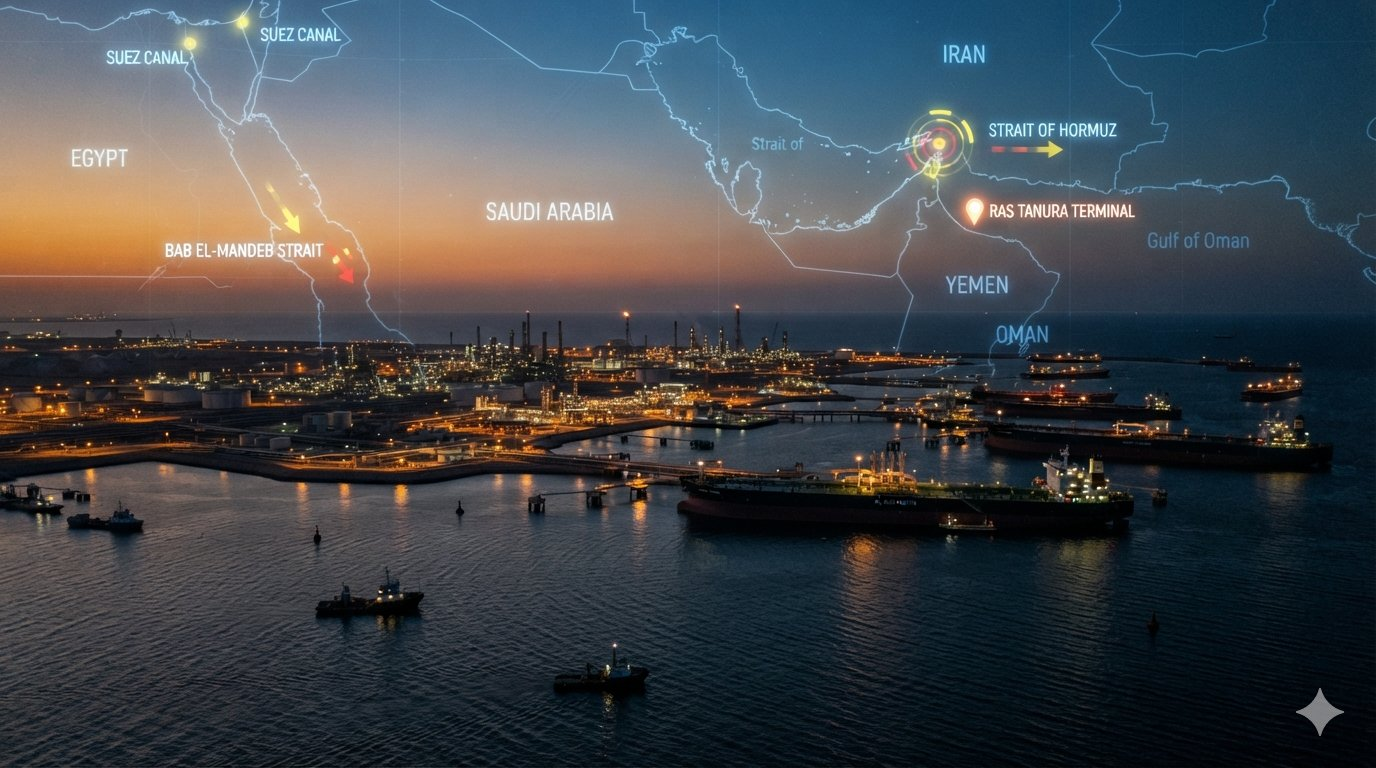
RIYADH — Saudi Arabia’s crude oil production has plummeted to its lowest level in over three decades, as escalating regional conflicts severely disrupt the kingdom’s vital energy export corridors. According to a Bloomberg report citing data submitted to OPEC, the kingdom’s output fell by approximately 1.9 million barrels per day (bpd) in August, marking the steepest decline since 1990.
The dramatic contraction in output is not the result of voluntary OPEC+ supply management, but rather a forced response to acute geopolitical pressures. The ongoing conflict involving Iran, coupled with an intensified Houthi campaign targeting the kingdom’s infrastructure, has created a severe bottleneck in Saudi Arabia’s primary maritime export routes. With the Bab el-Mandeb strait and key Persian Gulf shipping lanes increasingly contested, the logistical capacity to move crude to global markets has been critically compromised.
This supply shock has sent immediate ripples through global energy markets, pushing Brent crude prices decisively above the $100-per-barrel threshold. For the global economy, already grappling with persistent inflation and fragile growth, a sustained period of triple-digit oil prices threatens to reignite cost-of-living crises and complicate central bank monetary policies worldwide.
Riyadh’s communication to OPEC underscores the severity of the operational constraints. While the kingdom possesses the spare production capacity to theoretically offset global deficits, the physical inability to safely and efficiently export that crude renders the reserves temporarily stranded. This dynamic fundamentally alters the traditional role of Saudi Arabia as the world’s indispensable "swing producer," highlighting the vulnerability of even the most robust energy infrastructures to asymmetric warfare and regional escalation.
Energy analysts warn that the current situation represents a structural shift rather than a temporary disruption. "We are no longer looking at a market balanced by deliberate policy cuts, but one constrained by active security threats," noted a senior Middle East energy strategist. "Until safe passage through the Red Sea and the Gulf is guaranteed, this production deficit will persist, regardless of global demand."
In response, Saudi officials are reportedly accelerating efforts to diversify export pathways, including maximizing throughput via the East-West Petroline pipeline to the Red Sea port of Yanbu, though this infrastructure also faces elevated security risks.
As the international community scrambles to mediate the broader regional conflict, the message from the energy markets is unambiguous: the geopolitical instability of the Middle East is no longer just a diplomatic concern, but an immediate, quantifiable threat to global energy security.
Latest

Russia-US diesel deal already having positive effect – Putin aide to RT (VIDEO)


Top stories






Russia News






India Business News





