



From Chips to Connectivity: India’s Bold Blueprint for Semiconductor and 6G Dominance
NEW DELHI — India is aggressively scaling its ambitions in next-generation technology, with concrete plans to establish eight to nine semiconductor fabrication plants (fabs) and capture 10 percent of global 6G patents, Union Communications Minister Jyotiraditya Scindia announced.
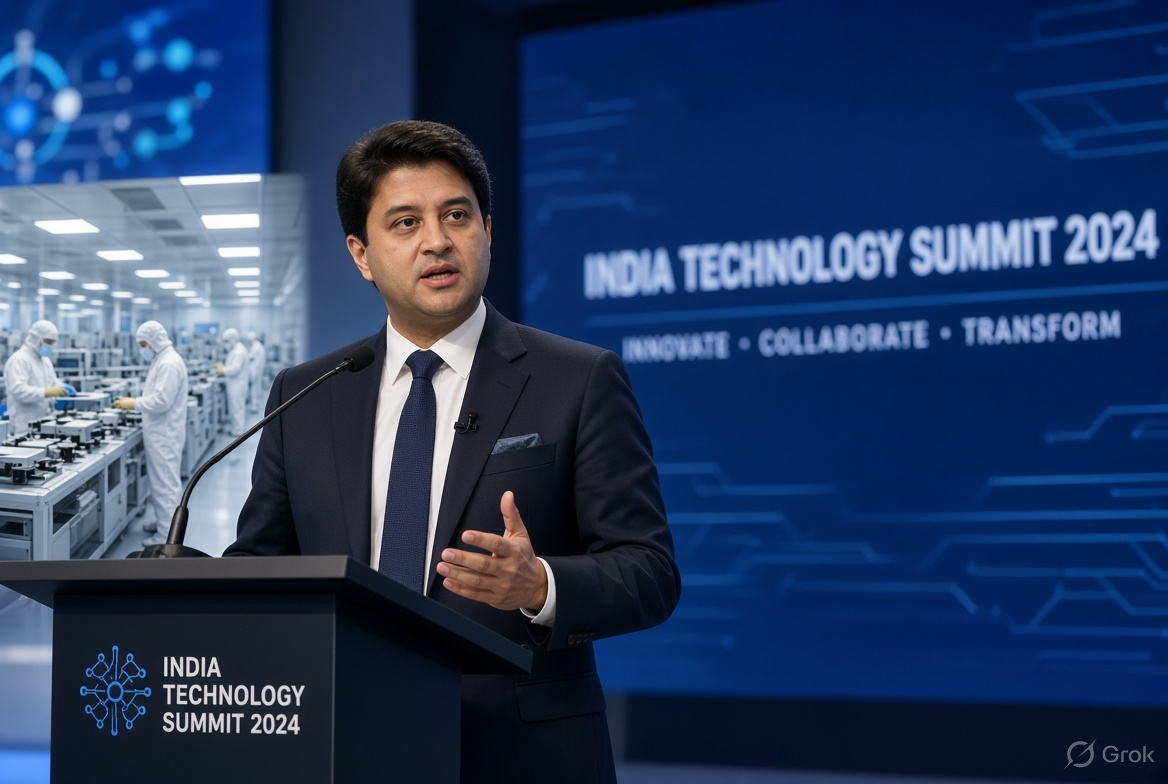
NEW DELHI — India is aggressively scaling its ambitions in next-generation technology, with concrete plans to establish eight to nine semiconductor fabrication plants (fabs) and capture 10 percent of global 6G patents, Union Communications Minister Jyotiraditya Scindia announced.
Speaking at a recent industry symposium, Scindia outlined a comprehensive roadmap designed to transform India from a passive technology consumer into a proactive global standard-setter in both hardware manufacturing and advanced telecommunications.
x.com
This dual push into semiconductor manufacturing and 6G development marks a strategic pivot for the Indian government, which has heavily subsidized domestic chip production over the past few years.
Currently, the nation is actively building sovereign capabilities to reduce its reliance on foreign supply chains, a critical vulnerability exposed by recent global geopolitical tensions and trade disruptions.
The proposed eight to nine fabs are expected to cater to a mix of legacy and advanced nodes, directly supporting the burgeoning domestic demand from the automotive, consumer electronics, and defense sectors.
On the telecommunications front, India is already making significant, measurable strides in intellectual property creation.
Scindia highlighted that the country has already filed approximately 4,000 patents related to 6G technology, laying a robust foundation for its ambitious goal of contributing 10 percent of all global 6G standard-essential patents.
This initiative is being actively driven through collaborative frameworks like the Bharat 6G Alliance, which unites academia, industry, and government to accelerate research, development, and indigenous innovation.
Industry leaders have broadly welcomed the government’s forward-looking vision, though they caution that real-world execution will be the ultimate test of these policies.
While capital allocation for semiconductor fabs is substantial, technology experts emphasize that achieving global competitiveness requires not just financial investment, but also a relentless focus on manufacturing yield quality, specialized talent retention, and continuous R&D innovation.
Furthermore, transitioning from patent filing to the actual commercial deployment of 6G networks by the end of the decade will require seamless, frictionless coordination between telecom operators, hardware vendors, and regulatory bodies.
As the world races to define the architecture of the next digital era, India’s synchronized push into silicon and spectrum positions it as a formidable contender on the global stage.
www.outlookbusiness.com
If the government’s bold targets are met with sustained, high-quality private-sector execution, India could fundamentally reshape the global technology landscape, securing both long-term economic resilience and strategic autonomy in the 21st century.
Latest




Top stories






Russia News






India Business News

