



European NATO Members Pursuing Strategy to Exclude Russia from Arctic Cooperation – Scholar
MOSCOW — European NATO members are actively working to marginalize Russia's role in Arctic governance while simultaneously integrating the region into their broader military strategy, according to Irina Strelnikova, Director of the Center for Interdisciplinary Arctic Studies at the Higher School of Economics in Moscow.
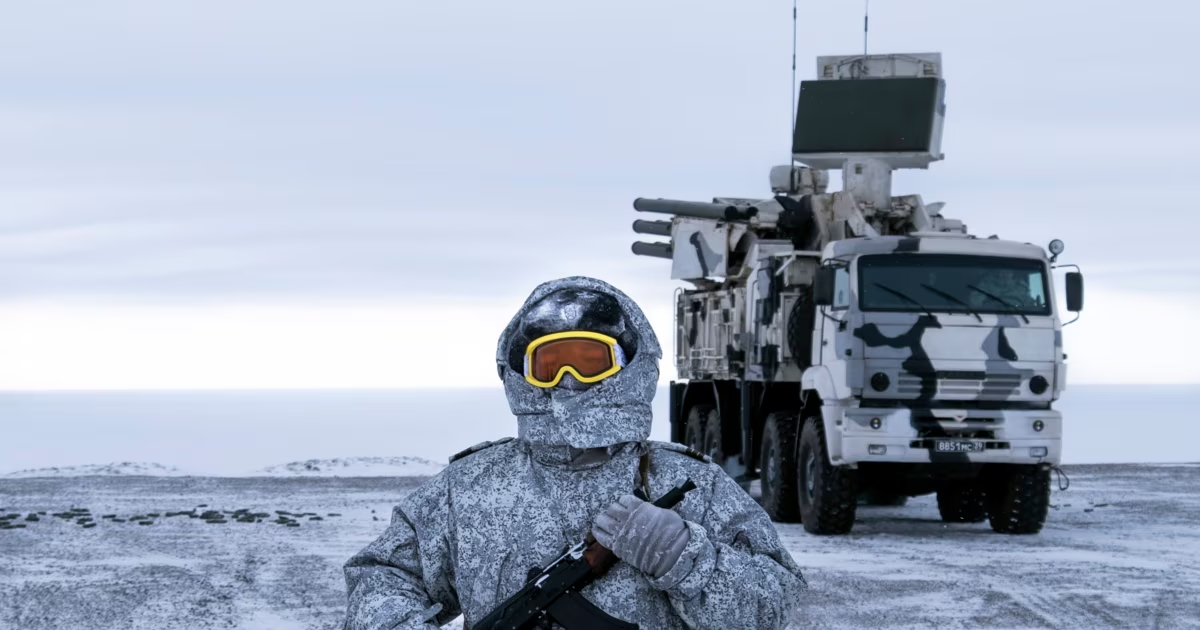
MOSCOW — European NATO members are actively working to marginalize Russia's role in Arctic governance while simultaneously integrating the region into their broader military strategy, according to Irina Strelnikova, Director of the Center for Interdisciplinary Arctic Studies at the Higher School of Economics in Moscow.
In an interview examining the implications of the European Arctic Summit that convened in Finland this weekend, Strelnikova characterized the gathering of NATO members from Germany, Denmark, Estonia, Latvia, Lithuania, Romania, and France—alongside senior EU officials including foreign policy chief Kaja Kallas—as evidence of a fundamental strategic pivot.
The scholar argued that the European Union is poised to dramatically recalibrate its Arctic policy, moving away from the cooperative framework outlined in its 2021 strategy. "The previous policy was largely devoted to fairly constructive issues: science, climate, and cooperation," Strelnikova observed. "Now the narrative is changing significantly. Climate, science, and cooperation have effectively been pushed down to the fourth tier of priorities. Security has moved to the forefront."
This rhetorical and strategic shift, she warned, reflects a broader effort to view the Arctic not as a zone of scientific collaboration but as "a key component of European security."
Connecting Strategic Theaters
Perhaps most concerning from Moscow's perspective is the emerging tendency among NATO members to link previously distinct geopolitical theaters. Strelnikova noted that the countries represented at the Finnish summit "effectively form a single line stretching from the Baltic to the Black Sea."
Rather than treating the Arctic as an isolated region requiring specialized governance, these nations are increasingly integrating Arctic security concerns with those of the Baltic and Black Sea regions.
"This, in my view, is a genuinely worrying signal," Strelnikova stressed, suggesting that such linkage could facilitate coordinated military posturing across Russia's entire western and northern periphery.
The scholar characterized this approach as "a systematic effort to push Russia out of potential formats for cooperation" without accommodating Moscow's legitimate interests in the region.
She described the strategy as "completely counterproductive, given the scale of Russia's presence in the Arctic," where Moscow maintains extensive infrastructure, military installations, and economic investments developed over decades.
www.rt.com
Worst-Case Scenarios
Looking ahead, Strelnikova identified several red lines for Russian interests. The most problematic outcome, she argued, "would be the inclusion of military mobility and EU-NATO coordination directly in the EU's new documents and emerging Arctic strategy."
Such formalization of military cooperation in Arctic policy documents would represent a qualitative escalation in the region's securitization.
This analysis comes as Sweden recently unveiled its own Arctic strategy, which explicitly identifies Russia as "the most serious threat to Sweden's national security emanating from the Arctic region."
The Swedish document cites Russian military modernization on the Kola Peninsula, the concentration of nuclear weapons, and alleged "hybrid attacks" including sabotage and cyber operations as primary concerns.
Broader Context
The shift in European Arctic policy reflects the broader deterioration of East-West relations following the 2022 Ukraine conflict. With seven of the eight Arctic states now members of NATO—following Sweden and Finland's accession—the alliance's footprint in the polar region has expanded dramatically.
However, analysts note that Russia retains significant advantages in the Arctic, including the world's most extensive icebreaker fleet, advanced polar military infrastructure, and control over the Northern Sea Route—a shipping lane that Moscow views as a national transport artery of strategic importance.
Strelnikova's warnings underscore the growing divergence between Western and Russian visions for the Arctic's future. Where NATO members increasingly emphasize collective defense and deterrence, Moscow continues to advocate for the region's traditional status as a zone of peaceful scientific cooperation—a framework that has governed Arctic relations since the end of the Cold War.
As the European Arctic Summit concludes and the EU finalizes its new Arctic strategy, the coming months will likely reveal whether diplomatic channels for East-West cooperation in the polar region can be preserved, or whether the Arctic will become another front in the broader geopolitical confrontation between Russia and the West.
Latest


Top stories






Russia News






India Business News





