
Diplomatic Window Opens: Moscow Suspends Kyiv Bombardment as US Envoys Witkoff and Kushner Arrive
MOSCOW — In a significant, albeit temporary, de-escalation, Russian President Vladimir Putin has ordered a three-day suspension of military strikes targeting Kyiv. The pause, announced late Friday, directly precedes a high-stakes diplomatic visit by senior United States envoys Steve Witkoff and Jared Kushner, who arrived in the Russian capital on Saturday.
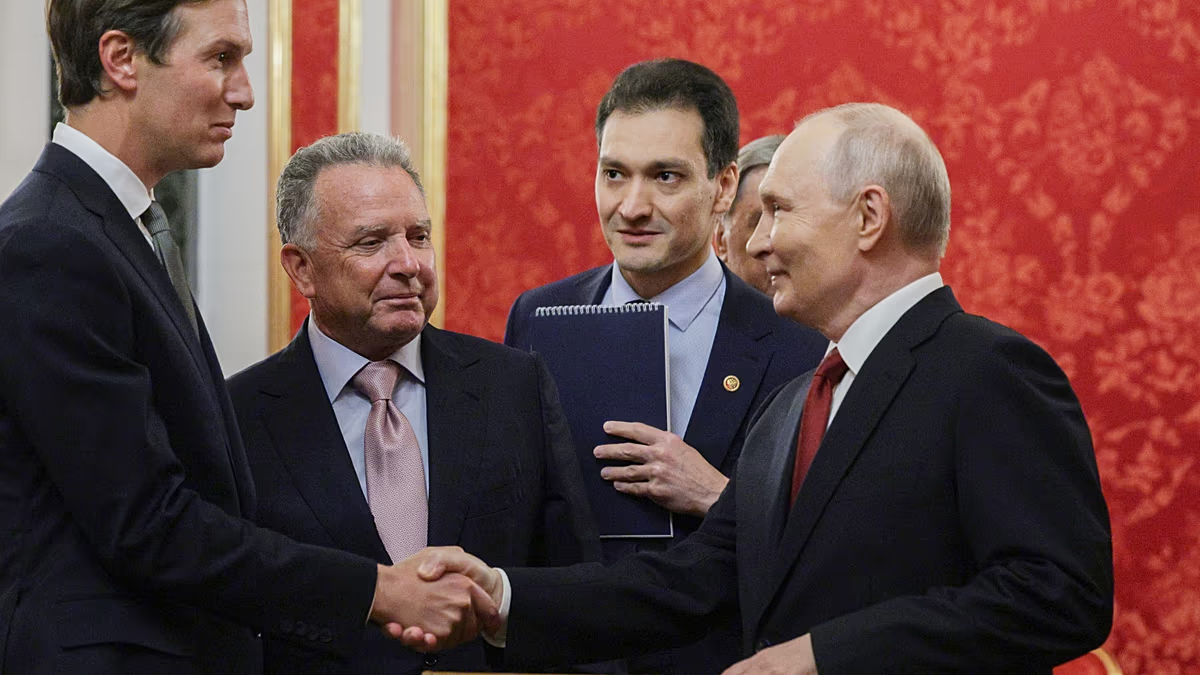
MOSCOW — In a significant, albeit temporary, de-escalation, Russian President Vladimir Putin has ordered a three-day suspension of military strikes targeting Kyiv. The pause, announced late Friday, directly precedes a high-stakes diplomatic visit by senior United States envoys Steve Witkoff and Jared Kushner, who arrived in the Russian capital on Saturday.
The decision marks a rare tactical concession from the Kremlin, widely interpreted by international observers as a calculated goodwill gesture designed to foster a conducive environment for negotiations. The US delegation, operating under a renewed mandate to break the prolonged diplomatic stalemate, is expected to press Moscow toward a structured, actionable framework for ending the conflict.
This Moscow leg of the envoys’ tour follows a substantive, albeit tense, meeting with Ukrainian leadership in Kyiv earlier in the weekend.
The dual-capital itinerary underscores Washington’s push to revive direct dialogue, bypassing the frozen diplomatic channels that have characterized the latter stages of the war. By engaging sequentially with both belligerents, the US team is signaling a pragmatic, results-oriented approach to conflict resolution.
However, military analysts caution against viewing the 72-hour window as a definitive turning point. Previous localized ceasefires have frequently been utilized by both sides to regroup, resupply, or recalibrate defensive lines rather than to forge lasting political settlements. The true test of this pause will be whether it extends beyond the immediate diplomatic window and translates into tangible concessions on core sticking points, such as security guarantees and post-conflict frameworks.
For the Kremlin, the temporary halt also serves a distinct narrative purpose. By presenting Russia as a cooperative actor willing to suspend hostilities for the sake of diplomacy, Moscow aims to shift the burden of any subsequent diplomatic collapse onto Kyiv or its Western backers.
Conversely, Ukrainian officials have historically viewed unilateral Russian pauses with deep skepticism, often citing them as precursors to renewed, intensified bombardment once the diplomatic spotlight fades. Kyiv’s primary demand remains a comprehensive cessation of hostilities and the restoration of territorial integrity, conditions that remain far from the current negotiating table’s reality.
As Witkoff and Kushner prepare for their closed-door sessions with Russian officials, the international community watches closely. The coming 72 hours will not only test the sincerity of Moscow’s diplomatic overtures but also the viability of Washington’s renewed, high-level mediation strategy in one of the most intractable conflicts of the 21st century.
Latest



Top stories






Russia News






India Business News





