



Debt Alarm: US Borrowing Costs Spike to 19-Year Highs Ahead of Critical Fed Meeting
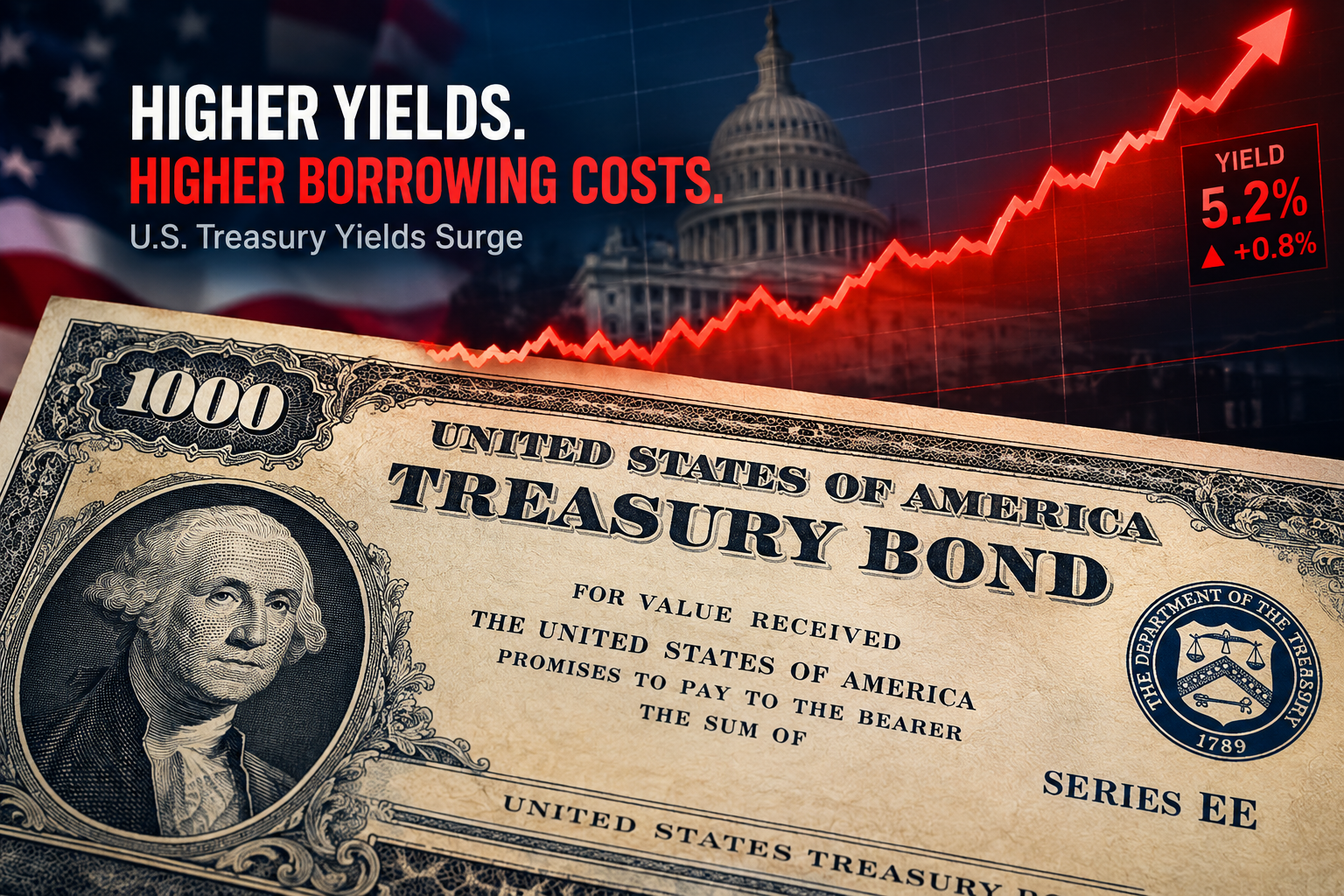
NEW YORK — The yield on the 10-year US Treasury note has surged above 5% for the first time since 2007, extending a global bond market rout driven by soaring energy prices, mounting government debt concerns, and persistent inflation fears.
The benchmark yield reached 5.041% on Tuesday, marking its highest level in nearly two decades as investors brace for the Federal Reserve's upcoming interest rate decision.
The dramatic spike in borrowing costs comes as crude oil prices breach the psychologically significant $100-per-barrel threshold, creating a perfect storm for fixed-income markets.
The confluence of elevated energy costs and fiscal sustainability concerns has forced traders to dramatically recalibrate their expectations for monetary policy, pricing out hopes for aggressive Federal Reserve rate cuts in the near term.
For the US Treasury, which is currently managing a staggering $40 trillion national debt, the implications are severe.
Higher yields translate directly into increased debt servicing costs, potentially consuming an ever-larger share of the federal budget and crowding out other critical government expenditures. This dynamic creates a dangerous feedback loop: as investors demand higher premiums to hold US debt, the government must issue more bonds to cover interest payments, further spooking the market.
The bond market turmoil is not confined to the United States.
Global government borrowing costs have surged in tandem, with Asian and European markets experiencing synchronized sell-offs as investors flee to safety amid geopolitical tensions and inflationary pressures.
The 30-year Treasury bond yield has also hit multi-year highs, holding above 5% for the longest stretch since 2007, signaling deep concerns about the long-term fiscal trajectory.
Market analysts point to several structural factors driving the rout. "We're seeing a fundamental repricing of risk across the entire yield curve," noted a senior fixed-income strategist. "The combination of sticky inflation, elevated oil prices, and unprecedented debt levels is forcing investors to demand significantly higher compensation for holding government paper."
The timing of this surge is particularly critical as the Federal Reserve prepares to announce its latest interest rate decision.
While the central bank has signaled a data-dependent approach, the bond market's violent reaction suggests that financial conditions are tightening far more aggressively than policymakers may have anticipated. This could complicate the Fed's dual mandate of maintaining price stability while supporting maximum employment.
For consumers and businesses, the ripple effects are already being felt. Mortgage rates, which typically track the 10-year Treasury yield, are climbing toward levels that will further cool the housing market.
Corporate borrowing costs are also rising, potentially dampening capital expenditure and hiring plans across the economy.
As the Fed meeting approaches, all eyes will be on whether policymakers can navigate this treacherous landscape without triggering a broader financial crisis. For now, the message from the bond market is clear: the era of cheap money is definitively over, and the true cost of decades of fiscal profligacy is finally coming due.
Latest

Russia-US diesel deal already having positive effect – Putin aide to RT (VIDEO)



Top stories






Russia News






India Business News





