
Cloud Demand Outpaces AI Hype: Digital Realty Highlights $20B Pipeline Amid Tech Sector Selloff
NEW YORK — Shares of major data center real estate investment trusts (REITs), including Digital Realty and Equinix, experienced a sharp slump on Monday following weekend warnings from prominent artificial intelligence developers regarding a potential slowdown in AI advancement.
NEW YORK — Shares of major data center real estate investment trusts (REITs), including Digital Realty and Equinix, experienced a sharp slump on Monday following weekend warnings from prominent artificial intelligence developers regarding a potential slowdown in AI advancement.
However, Digital Realty CEO Andrew Power swiftly pushed back against the market panic, asserting that a deceleration in frontier AI development is far from the "end of the world" for data center real estate.
In an exclusive interview, Power argued that the market's narrow focus on AI overlooks other massive, sustained drivers of infrastructure demand.
"There’s tremendous digital transformation happening that is not connected to AI," Power stated, highlighting that robust cloud computing growth has actually been "stifled in these days of AI" as hyperscalers prioritize AI lab capacity over commercial cloud expansion.
This strategic bottleneck, according to Power, has created significant pent-up demand for traditional data center infrastructure.
He emphasized that this demand is highly location-sensitive, with key global hubs like Northern Virginia, Dallas, Chicago, Singapore, Tokyo, Frankfurt, and Amsterdam consistently seeing demand outpace supply.
Workloads requiring strict data sovereignty and low latency cannot simply be relocated to any available market, insulating well-positioned REITs from broader macroeconomic volatility.
The market's reaction underscores the extreme sensitivity of AI-adjacent equities to shifts in narrative.
When leading AI labs recently signaled a potential deceleration in their aggressive development timelines, investors immediately priced in a risk of stranded assets and canceled capital expenditures across the data center sector.
Yet, Power’s commentary highlights a crucial distinction: while AI has dominated headlines, the foundational buildout of global digital infrastructure remains a multi-decade imperative.
To weather market volatility, Digital Realty has proactively adapted its financial architecture.
Power noted that the company evolved its funding model years ago to accommodate the realities of an "incredibly capital-intensive business," ensuring that daily stock price gyrations do not derail long-term strategic execution.
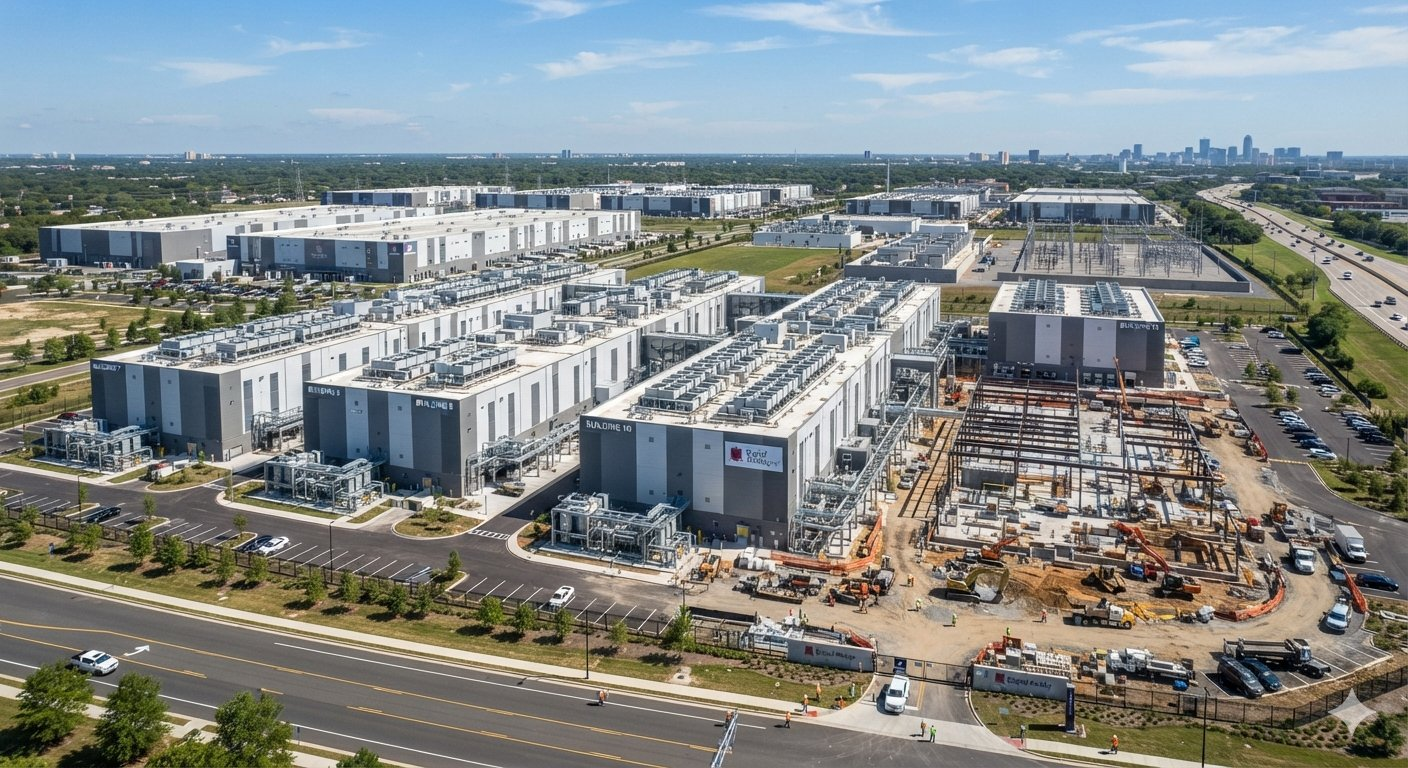
This disciplined approach is reflected in the company’s robust development pipeline, which has doubled to $20 billion under construction, up from $10 billion at the end of 2023.
For investors, the current sell-off may represent a dislocation between market sentiment and underlying fundamentals.
While the breakneck pace of AI innovation may experience natural plateaus, the relentless migration of enterprise workloads to the cloud ensures that the physical backbone of the internet will continue to expand.
As Power’s remarks suggest, the data center industry is built to survive the hype cycles, proving that even if AI takes a breather, the digital transformation of the global economy will not.
Latest



Top stories






Russia News






India Business News





