



Chief Minister Satheesan Approves ₹551.5 Crore Sabarimala Fund, Prioritizing Devotee Safety and Ghat Road Upgrades
THIRUVANANTHAPURAM — In a significant push to enhance infrastructure and ensure the safety of millions of devotees, the Kerala government has sanctioned a record ₹551.5 crore for the upcoming Sabarimala pilgrimage season.
THIRUVANANTHAPURAM — In a significant push to enhance infrastructure and ensure the safety of millions of devotees, the Kerala government has sanctioned a record ₹551.5 crore for the upcoming Sabarimala pilgrimage season.
Chief Minister V. D. Satheesan approved the massive allocation to the Public Works Department (PWD) following a comprehensive, high-level review of readiness measures for the annual Mandala-Makaravilakku festivities.
The substantial financial commitment marks a steep upward trajectory in the state’s pilgrimage management budget.
The newly approved sum of ₹551.5011 crore represents a notable increase from the ₹377.8 crore allocated in the 2025-26 financial year and the ₹326.97 crore earmarked in 2024-25.
This progressive scaling reflects the administration's acknowledgment of the growing footfall and the critical need for robust, weather-resilient infrastructure along the treacherous terrains of the Western Ghats.
The funds are strictly designated for a wide array of critical public works.
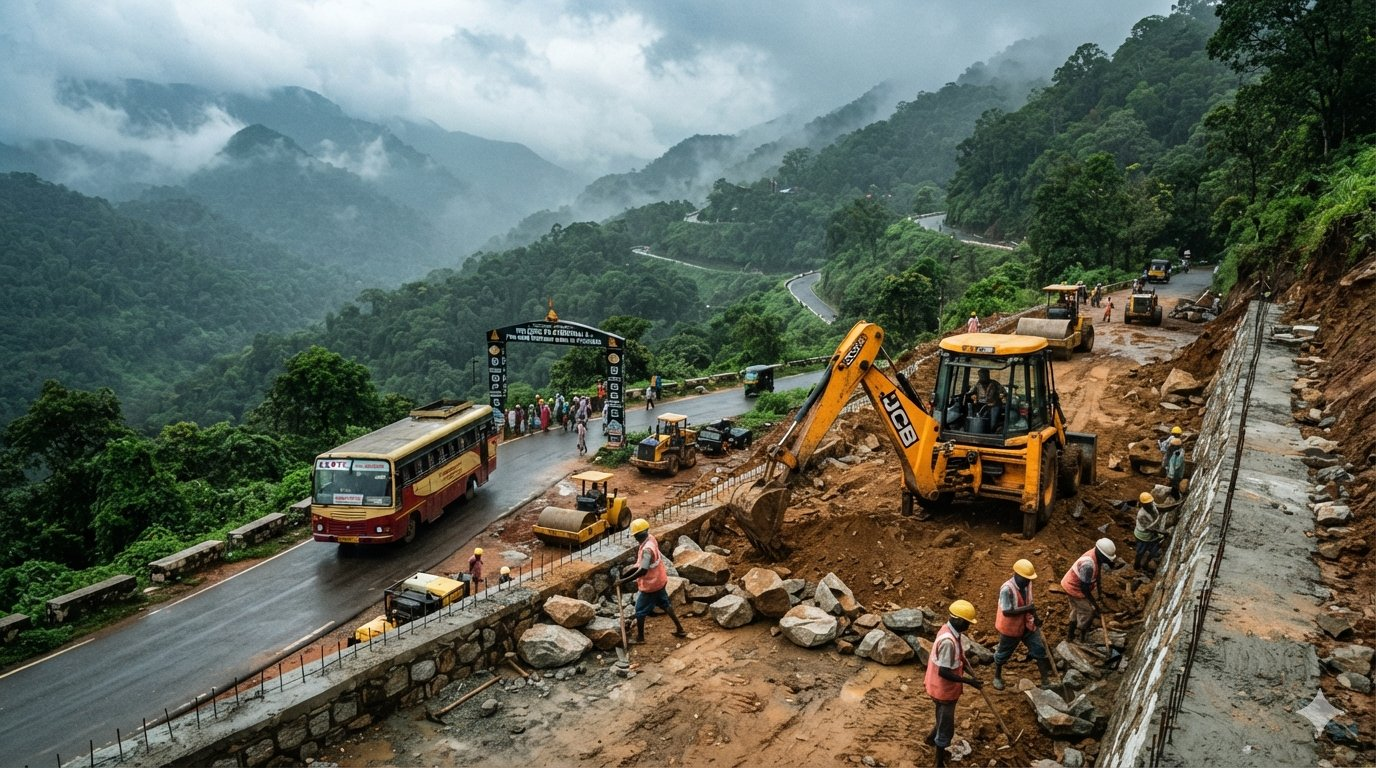
These include the widening and blacktopping of vital approach roads, the reinforcement of landslide-prone retaining walls, and the massive expansion of sanitation and waiting facilities at key transit hubs like Pamba and Nilakkal.
During the review meeting, the Chief Minister issued strict directives to officials to expedite all ongoing civil works, ensuring that every project meets stringent safety standards well before the traditional opening of the shrine.
The PWD has been tasked with completing these upgrades ahead of the peak pilgrimage window, which typically witnesses an influx of tens of millions of devotees.
Beyond mere logistical planning, this budgetary boost signals a strategic shift in how Kerala manages its mega-religious events.
By channeling funds directly into durable, long-term infrastructure rather than temporary seasonal fixes, the state is attempting to mitigate the recurring challenges of traffic bottlenecks, ecological strain, and medical emergencies that have historically complicated the season.
Furthermore, the transparency in year-on-year budget escalation demonstrates a proactive governance model aimed at preempting public concern regarding pilgrim welfare.
As the countdown to the pilgrimage begins, the focus now shifts entirely to the PWD’s execution capabilities.
With the financial resources secured and clear, time-bound directives issued from the Chief Minister’s office, the successful and safe completion of these projects will be the ultimate test of Kerala’s administrative machinery in balancing its developmental goals with its deep-rooted cultural commitments.
Top stories






Russia News






India Business News





