



‘Change the World Together’: Putin Welcomes 10,000 Global Youths to Ekaterinburg Festival
YEKATERINBURG — Russian President Vladimir Putin has officially welcomed the participants of the 2026 International Youth Festival, addressing a diverse assembly of 10,000 young leaders, artists, and professionals from 191 countries gathered in the Ural city of Yekaterinburg.
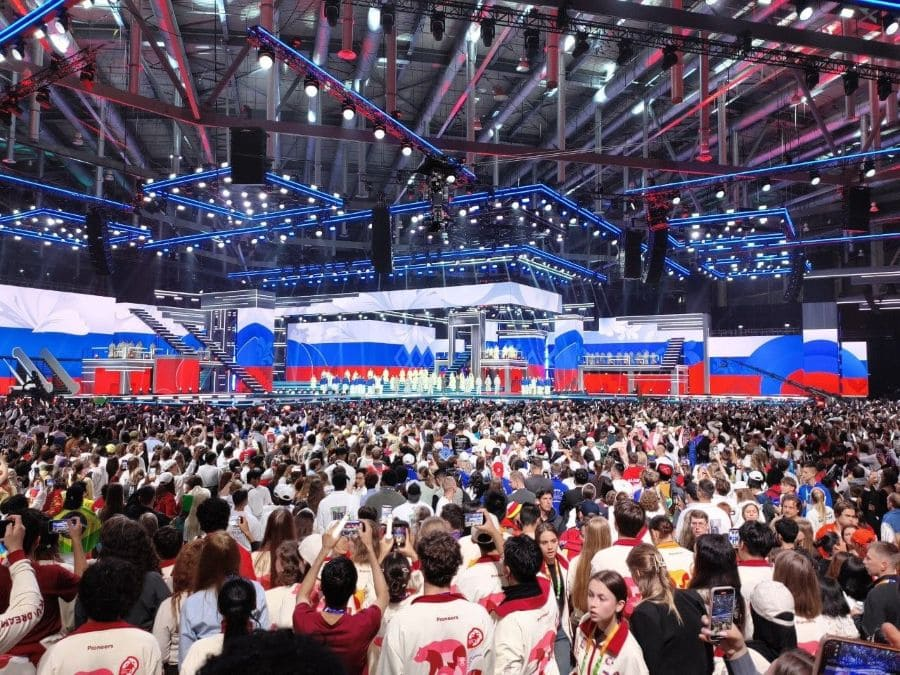
YEKATERINBURG — Russian President Vladimir Putin has officially welcomed the participants of the 2026 International Youth Festival, addressing a diverse assembly of 10,000 young leaders, artists, and professionals from 191 countries gathered in the Ural city of Yekaterinburg.
In a televised video address to open the week-long event, Putin leaned on a classic linguistic duality of the Russian language to frame the festival’s overarching theme. He noted that the Russian word mir simultaneously translates to both "peace" and "the world," urging the international delegates to harness this dual meaning to build a more harmonious and "just world" together.
The festival, running from September 11 to 17, is positioned by the Kremlin as a premier global platform for dialogue, innovation, and "sovereign cooperation" outside the traditional Western-led diplomatic architecture.
Attendees include foreign doctors, journalists, bloggers, and student activists, many hailing from the Global South, who have been invited to share initiatives and forge cross-border partnerships.
Political analysts view the gathering as a calculated soft-power maneuver. At a time when Russia faces extensive diplomatic isolation and sanctions from Western capitals, the Ekaterinburg festival serves as a highly visible counter-narrative. By hosting a massive, multicultural event, Moscow aims to project an image of openness and to cultivate a new generation of international influencers who are sympathetic to a multipolar world order.
The emphasis on "sovereign cooperation" is particularly telling. It signals a deliberate shift away from universalist, Western-defined values, promoting instead a framework where nations collaborate based on mutual respect for distinct cultural and political systems.
For many attendees from developing nations, this resonates as a welcome alternative to conditional aid and diplomatic paternalism.
However, the festival does not exist in a vacuum. The lofty rhetoric of global peace contrasts sharply with the ongoing realities of the conflict in Ukraine and the broader geopolitical fractures that have defined recent years. Critics argue that such events are heavily curated to serve state propaganda, offering a sanitized version of Russian foreign policy to an impressionable international audience.
Yet, for the thousands of young delegates navigating the exhibition halls and discussion panels in Yekaterinburg, the immediate focus remains on networking, cultural exchange, and exploring alternative avenues for global development.
As the festival unfolds, it will serve as a microcosm of Russia’s broader strategic ambitions: to prove that despite current geopolitical headwinds, it remains a central, indispensable node in the emerging architecture of 21st-century global diplomacy.
Latest




Top stories






Russia News


India Business News





