



BRICS Breakthrough: India and China Agree on ‘Mutually Acceptable’ Path to Resolve Border Standoff
NEW DELHI — In a significant diplomatic breakthrough, Prime Minister Narendra Modi and Chinese President Xi Jinping held extensive bilateral talks on the sidelines of the BRICS Summit 2026, signaling a concerted effort to stabilize and reset the fraught relationship between the two Asian giants.
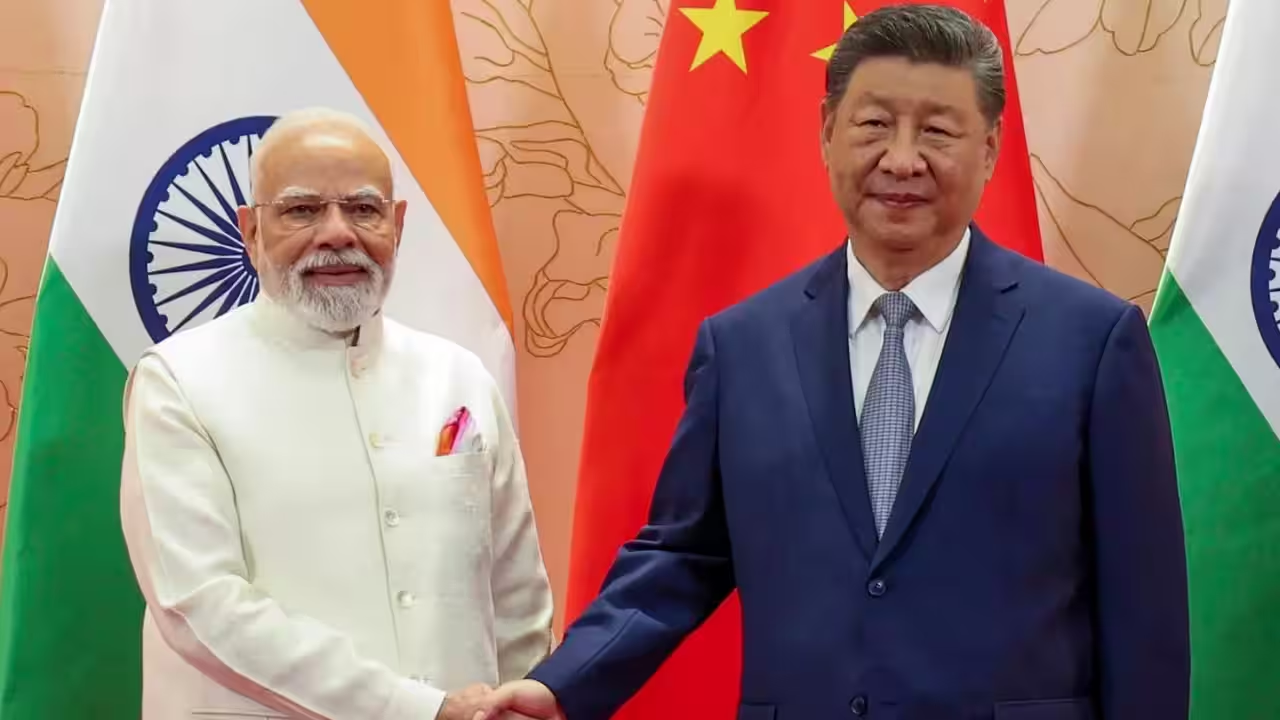
NEW DELHI — In a significant diplomatic breakthrough, Prime Minister Narendra Modi and Chinese President Xi Jinping held extensive bilateral talks on the sidelines of the BRICS Summit 2026, signaling a concerted effort to stabilize and reset the fraught relationship between the two Asian giants.
During the roughly 50-minute meeting at Bharat Mandapam on Saturday, both leaders struck a conciliatory tone, acknowledging the fragile but improving momentum in bilateral ties. President Xi reportedly told the Prime Minister that the current "thaw in ties deserves to be cherished," urging both nations to look past recent friction and build a long-term, strategic partnership.
In response, Prime Modi welcomed the sentiment but firmly anchored the future of the relationship to a non-negotiable prerequisite: stability along the Line of Actual Control (LAC). Modi emphasized that "peace and tranquillity" in the border areas remain the "essential basis" for the continued development of broader bilateral relations.
The meeting marks a pivotal shift from the deep freeze that characterized India-China relations following the deadly 2020 Galwan Valley clash. While the border disengagement process has been slow and methodical, Saturday’s dialogue suggests that both capitals are now prioritizing diplomatic de-escalation over rhetorical brinkmanship.
According to an official readout from the Indian Ministry of External Affairs, the two leaders reviewed the current state of border negotiations and reaffirmed their commitment to resolving the remaining differences through existing military and diplomatic mechanisms.
Both sides agreed to work toward a resolution that is "fair, reasonable, and mutually acceptable," a phrasing that indicates a willingness to compromise on localized friction points without conceding overarching territorial claims.
Beyond the border, the leaders touched upon the vast, albeit currently underutilized, potential of India-China economic ties. With China remaining one of India’s largest trading partners, there is growing recognition in New Delhi that a complete decoupling is neither practical nor beneficial. However, Indian officials have consistently maintained that normal trade relations cannot be fully restored until the border situation is definitively normalized.
The timing of this reset is also deeply strategic. As the BRICS bloc expands its geopolitical footprint and advocates for a multipolar world order, internal cohesion is paramount. A prolonged standoff between its two most populous and economically powerful members would undermine the grouping’s credibility on the global stage. By presenting a united front in New Delhi, Modi and Xi have sent a clear message to the international community: despite historical grievances, India and China are capable of pragmatic statecraft.
Security analysts caution, however, that the path to full normalization remains fraught with challenges. Trust deficits run deep, and any minor incident along the 3,488-kilometer disputed frontier could quickly derail the current diplomatic momentum.
For now, the focus will shift to the working-level mechanisms tasked with translating the leaders’ high-level commitments into tangible, on-ground realities. If the current thaw holds, it could pave the way for a reciprocal state visit and a broader recalibration of Asia’s most consequential bilateral relationship
Latest




Top stories


Russia News






India Business News





